Top 10 Types of Mens Hats for Every Style

Mens Hats can change the feel of an outfit without demanding a new wardrobe. A soft beanie adds warmth on a windy morning. A structured fedora brings a sharper line to a coat. British milliner Stephen Jones has described a hat as “a flag, a shield, a piece of armour” and “the ultimate piece of personal expression.” His words capture why shape and personal taste matter as much as fashion.

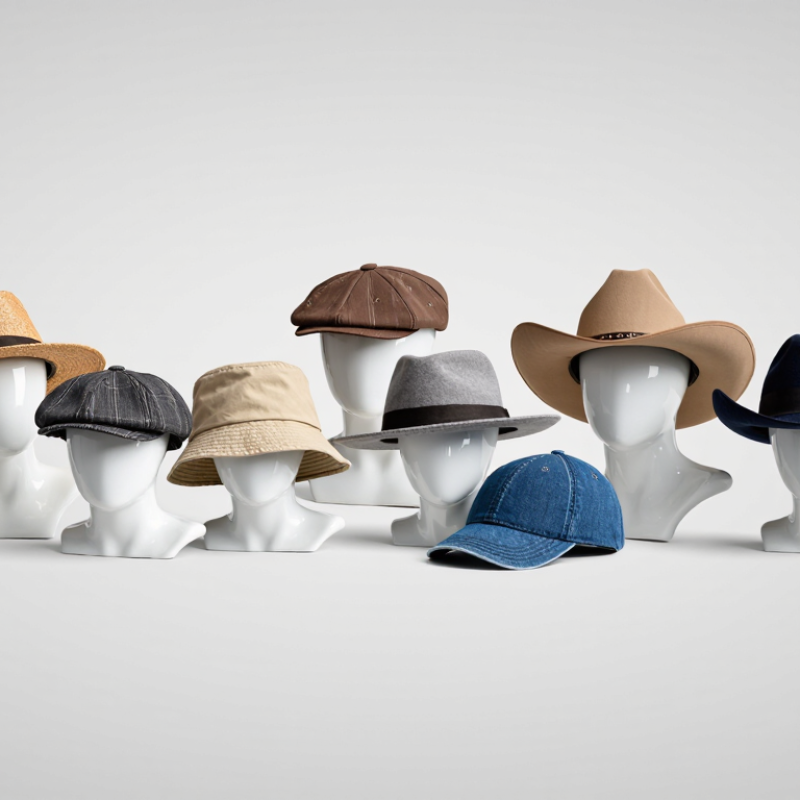
This guide explores ten familiar styles, from baseball caps and bucket hats to flat caps, newsboy caps, and Panama hats. Each has its own character. A Panama hat, traditionally woven from Ecuadorian toquilla straw, feels light in warm weather. A wool flat cap offers a closer fit and a quieter profile. The cowboy hat and pork pie hat make stronger statements, while the trilby and fedora can look deceptively similar on a shop shelf.

Small details matter. Check the crown height, brim width, material, and fit around your temples. A hat that looks striking in a photograph may feel awkward after an hour. No ranking can settle every taste. That is worth remembering. Head shape, local climate, and daily routine all influence what works. The styles ahead offer a practical starting point, not a strict rulebook, for choosing Mens Hats with confidence—and perhaps changing your mind once you try one on.
Top 10 Types of Mens Hats for Every Style

How Men’s Hats Are Classified by Crown, Brim, and Material

Men’s hats are easier to compare when you look at three parts: crown, brim, and material. The crown covers the head. A high, pinched crown creates a sharper outline, while a low, rounded crown feels more relaxed. A flat crown often looks clean and modern. Shape affects how a hat sits, so measurements alone do not tell the whole story.

Brim width changes both appearance and function. Narrow brims look tidy with tailored clothes, while wider brims provide more shade and feel casual. Curved edges can soften a formal shape; flat edges appear bolder. Fit matters most. Check that the brim stays level and does not press against your ears. A hat that looks good on a shelf may feel awkward after an hour.

Material adds another layer. Wool felt holds a defined shape and suits cooler, dry days; straw is lighter and more ventilated for warm weather. Cotton and canvas are softer choices for everyday caps, though they may crease or lose structure. Small details count. Stiffness, lining, and sweatband comfort can matter more than labels like “dress” or “casual.” There is no perfect chart: crown and brim terms vary, and proportions change the impression. Compare the hat on your head, not only in a product photo. Check care instructions, since heat and moisture can alter some materials.

Baseball Caps, Beanies, Bucket Hats, and Berets: Casual Styles

Baseball caps, beanies, bucket hats, and berets can make everyday outfits feel more considered without looking formal. A baseball cap pairs easily with a cotton shirt and jeans; choose a curved brim for a softer look or a flat brim for sharper lines. Fit matters. The crown should sit securely without pressing your temples. Beanies work well on cool days, especially with a wool coat or a simple sweatshirt. A thin knit suits mild weather, while a ribbed, heavier style adds warmth. I sometimes find oversized beanies swallow my face, so check the shape in a mirror.

Bucket hats bring a relaxed, slightly playful feel to shorts, loose trousers, or a lightweight jacket. A cotton version is breathable, while a firmer brim keeps its shape better. Berets feel more expressive, but they need little else competing for attention. Wear one slightly angled, then adjust it until it feels natural rather than staged. Small details matter. A hat that looks good on a shelf may sit differently once you move around.

Tips: Match the hat’s weight to the season, and consider your hairstyle before choosing a close-fitting cap. Keep colors near your usual wardrobe palette if you want more outfit options. Check the fit outdoors, too; wind can expose a hat that seemed secure indoors. Don’t force a style that feels unlike you.

Top 10 Types of Men's Hats for Every Style

This chart compares common forms of ten casual hat styles. A value of 1 means the style typically has a brim; 0 means it typically does not. Individual designs can vary.

Fedoras, Trilbies, Panama Hats, and Cowboy Hats: Brimmed Styles

Fedoras, trilbies, Panama hats, and cowboy hats all use a brim, but their shapes change the mood and practical feel. A fedora’s pinched crown and medium brim work with a wool coat or a relaxed linen jacket. Check that the brim does not brush your shoulders when you turn. A trilby has a shorter brim, often angled down at the front and up at the back. It feels neat, though it offers less shade around the face. Small detail. Crown height matters too: a low crown can feel cramped on a larger head.

A Panama hat, traditionally woven from toquilla straw, suits warm days and breathable fabrics. Look for an even weave and a brim that holds its shape; delicate straw can crease under pressure. Cowboy hats bring a wider brim and a taller crown, useful for outdoor settings but visually bold with city clothes. A Grand View Research report estimated the global hats and caps market at 26.5 billion US dollars in 2022, with projected annual growth of 6.2 percent from 2023 to 2030. That broad market figure does not measure these styles separately, so it is not proof of a particular trend. Fit is less tidy than fashion guides suggest. Try the hat on, walk in it, and check whether it stays level without pinching.

Top 10 Types of Mens Hats for Every Style - Fedoras, Trilbies, Panama Hats, and Cowboy Hats: Brimmed Styles

Hat Type Typical Shape Common Materials Style and Use
Fedora Soft, indented crown with a pinched front and a medium brim that may be shaped up or down. Felt; lighter versions may use straw or fabric. A versatile dress hat that pairs well with smart-casual and tailored outfits.
Trilby Pinched, indented crown with a relatively short brim, often turned up at the back. Felt, straw, or lightweight fabric. A compact, dressy option suited to casual jackets and contemporary outfits.
Panama Hat Usually a lightweight, pinched crown with a brim that can vary in width. Hand-woven toquilla straw, traditionally made in Ecuador. A breathable warm-weather choice for summer events and travel.
Cowboy Hat High crown and broad brim, often shaped with an upturned brim at the sides. Felt or straw. A practical Western-style hat that provides shade and makes a distinctive outfit statement.
Bowler (Derby) Firm, rounded crown with a short, curled brim. Traditionally stiff felt. A structured, heritage-inspired style that works best with polished or vintage-influenced clothing.
Pork Pie Hat Low, flat-topped crown with a circular crease and a short brim that often turns up. Felt, straw, or cloth. A compact, distinctive option for relaxed smart-casual looks.
Boater Flat crown and flat, level brim, commonly finished with a hatband. Stiff straw. A traditional warm-weather hat associated with formal summer and vintage-inspired outfits.
Wide-Brim Sun Hat Flexible crown with a broad brim designed to shade the face and neck. Straw, cotton, canvas, or other lightweight fabrics. A practical choice for outdoor activities and sunny-weather travel.
Safari Hat Structured or soft crown with a brim that provides all-around shade; some styles include ventilation eyelets. Cotton, canvas, or other durable lightweight fabrics. An outdoors-oriented style suited to hiking, travel, and casual utility clothing.
Homburg Stiff crown with a lengthwise crease and a brim that is typically curled at the edge. Felt, often made in a structured finish. A formal hat that complements suits and other tailored clothing.

Flat Caps and Newsboy Caps: Two Structured Heritage Styles

Flat caps and newsboy caps share a heritage feel, but their shapes create different impressions. A flat cap has a low, close-fitting crown and a short brim, often secured with a small snap. Its clean profile works well with a wool coat, a textured sweater, or simple jeans. Newsboy caps have fuller, paneled crowns and a button at the top. They add more volume and draw the eye, especially when paired with a plain jacket. Small details matter. Check that the brim sits level and the crown does not pull at the seams.

Fit changes how both styles look. A flat cap should feel snug without pressing your temples; a newsboy cap needs enough room for its crown to keep its shape. Try each with your usual hairstyle and outerwear, since a thick coat can make a cap seem smaller. I find the newsboy style charming, though its extra fabric can feel fussy on a windy walk. The flat cap is easier to wear daily, but it may look too narrow on some faces. There is no universal rule. Choose a shape that feels comfortable and balanced, then give it a few ordinary outings before deciding.

UPF 50+ Fabric Blocks at Least 98% of UV Radiation (AATCC TM183)

A hat can finish an outfit and shade exposed skin. On a sunny walk, look for a clear UPF rating, not just thick-looking fabric. UPF 50+ fabric blocks at least 98% of ultraviolet radiation, allowing roughly 2% through under test conditions. AATCC TM183 measures ultraviolet transmission through textile materials, giving the rating a measurable basis. Coverage still matters. The test assesses fabric, not how much skin a particular hat covers. A loose brim that flips up in the wind may expose ears and cheeks.

Style can guide the shape. Wide-brim hats provide shade around the face and neck, while bucket hats offer a softer, packable option. Baseball caps suit casual outfits, but leave ears and the back of the neck exposed unless paired with other sun protection. The American Academy of Dermatology estimates that one in five Americans will develop skin cancer in their lifetime. That statistic is sobering, though a hat alone cannot eliminate risk. Choose a UPF 50+ design with a brim that suits your routine, and check that it stays put when you turn your head. Fit matters, too. A little imperfect coverage is still imperfect coverage.