How to Choose the Best Felt Hats for Women in 2026

In 2026, the right felt hat should feel considered, not costume-like. Felt Hats For Women range from soft wool styles to denser fur-felt designs, affecting weight, finish, price, and care. Start with fit. A brim that shades your eyes without overwhelming your shoulders is more likely to become a regular choice. Check the inner band, crown depth, and shape after gentle handling.

Material transparency matters, too. Textile Exchange’s Materials Market Report 2024 estimated global fiber production at 124 million tonnes in 2023. That figure does not measure hat quality, but it highlights the scale behind material choices. Ask what the hat contains, how it is made, and whether its care instructions suit your routine. British milliner Stephen Jones has described a hat as “a flag, a loudspeaker, a symbol,” capturing its power to shape an outfit. Treat that as a design lens, not a buying rule.

This guide compares wool and fur felt, explains shape and sizing, and shows how to assess construction, labeling, and care. It also explores where price may reflect craftsmanship—and where it may not. Some judgments remain subjective. That is worth admitting. Use the advice to match a hat to your climate, hairstyle, daily commute, and preferred level of upkeep before you buy.
How to Choose the Best Felt Hats for Women in 2026

Measure Head Circumference; 56 cm Usually Corresponds to US Hat Size 7

A felt hat should feel secure without pressing hard at the temples. Measure your head before choosing a size, since labels can vary between makers. Use a soft tape measure and wrap it around your head, just above your ears and across the middle of your forehead. Keep the tape level, but do not pull it tight. Hair can change the fit, so measure it as you expect to wear it. Write down the result in centimeters.

A 56 cm circumference usually corresponds to US hat size 7. Treat that as a starting point, not a guarantee. Sizing charts differ, and a rounded measurement may fall between sizes. If your result is near a boundary, check the specific chart and consider how the hat’s inner band feels. It should stay in place when you turn your head, without leaving a deep mark. A quick check helps. Head shape and hairstyle can affect comfort, too, so the number alone may not settle the choice.

Tips: Measure twice, especially if the tape slips behind your ears. Try the hat with your usual hairstyle. If it feels snug after a few minutes, reconsider the fit; comfort is easy to underestimate in a brief try-on.

How to Choose the Best Felt Hats for Women in 2026

Measure your head circumference to find an approximate US hat size. A measurement of 56 cm usually corresponds to size 7.

How to measure: Wrap a flexible tape measure around your head just above your ears and across the middle of your forehead. Keep it snug, not tight. Size conversions are approximate, and fit can vary by hat style.

Compare Wool and Fur Felt by Fiber, Construction, Warmth, and Weight

Wool felt is made from sheep’s fleece, while fur felt commonly uses rabbit, hare, or beaver underfur. The fibers and finishing shape the feel: wool hats often have a slightly textured surface, while well-finished fur felt can feel smoother and hold a crisp brim.

Neither label guarantees quality. Fiber selection, felting density, and blocking matter just as much.

Textile Exchange’s Materials Market Report 2024 estimates global fiber production at about 124 million tonnes in 2023, with wool accounting for less than 1 percent. That figure describes the wider textile market, not hat performance, but it shows how specialized wool is. Fur felt is often lighter for comparable structure, though a thick, tightly finished hat can outweigh a softer wool one.

Feel the difference. Check the crown and brim, not just the label. A warm hat should cover the ears comfortably without pressing at the temples. Warmth depends on felt thickness, fit, and wind exposure; fiber alone cannot predict it. The trade-off is not perfectly neat: a lighter hat may feel less substantial, but added weight does not automatically mean greater warmth.

Match Crown Shape and Brim Width to Face Shape and Intended Use

How to Choose the Best Felt Hats for Women in 2026

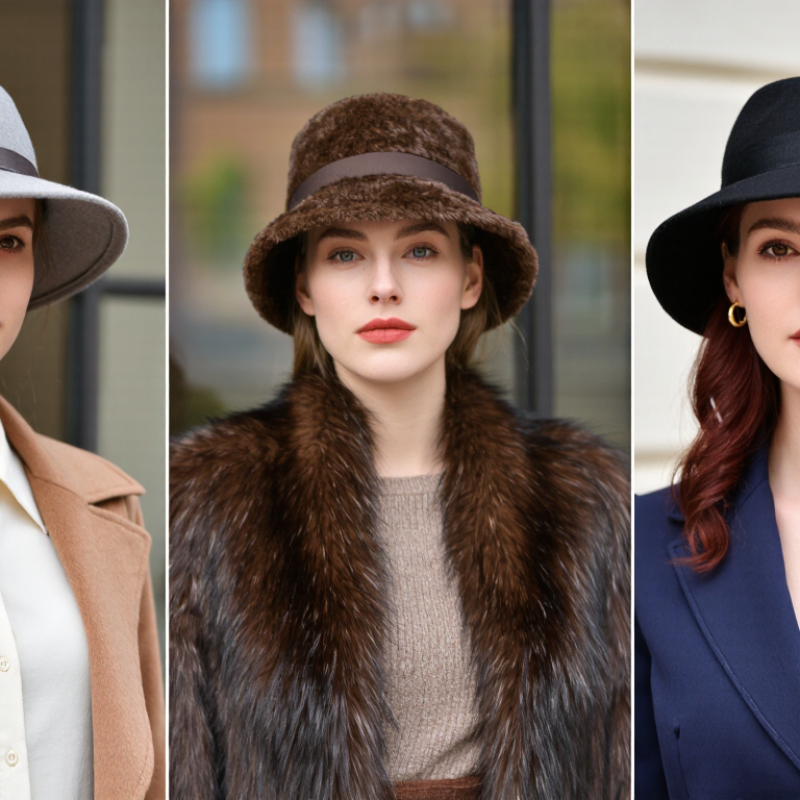
Start with the crown. A taller, pinched crown can add a longer visual line to a round face, while a lower, softly rounded crown may complement sharper features. For a longer face, a wider brim can create balance; on a petite frame, a very broad brim may feel overpowering. These are useful starting points, not rules. Glasses, hairstyle, and personal taste can change the effect. Try the hat with your usual coat, then check the silhouette from the side.

Match the brim to the job, too. A compact brim is practical on crowded streets, while a wider one offers more shade on bright walks. The World Health Organization’s Global Solar UV Index guide recommends sun protection when the UV Index reaches 3 or higher. The American Academy of Dermatology also recommends a wide-brimmed hat outdoors. Felt alone does not guarantee a specific level of UV protection, so do not treat it as your only safeguard. Check the fit. The hat should sit securely without pressing your temples, and the brim should not block your view when you look down.

How to Choose the Best Felt Hats for Women in 2026 - Match Crown Shape and Brim Width to Face Shape and Intended Use

Face Shape or Need Crown Shape to Consider Brim Width to Consider Why It Can Work Best-Suited Use Fit and Styling Notes
Round face Pinched or tapered crown with some height Medium to moderately wide; a softly angled brim can add definition Added vertical lines and crown height can visually balance fuller, rounded contours. Everyday wear, city outings, and smart-casual outfits Try a slight tilt rather than a low, level position. Avoid a very short, rounded crown if it makes the overall silhouette appear wider.
Oval face Most crown shapes, including teardrop, pinched, and cattleman styles Most widths; choose in proportion to your height and outfit Oval proportions tend to accommodate a broad range of hat silhouettes. Daily wear, travel, events, and dressier occasions Check that the crown does not sit so low that it obscures the face. Overall comfort and personal style can guide the choice.
Square face Rounded or softly tapered crown Medium or wide with a gentle curve Curved lines can soften the visual effect of a broader jaw and angular features. Casual outfits, outdoor gatherings, and relaxed occasions Avoid brim shapes that are extremely flat and sharply squared if you prefer a softer look.
Heart-shaped face Low-to-medium crown, such as a rounded or softly pinched style Medium or moderately wide A balanced crown and brim can complement a wider forehead and narrower chin. Everyday outfits, brunch, and social events Wear the hat level or with a subtle tilt. An especially tall crown may draw extra attention to the upper face.
Long or oblong face Lower, rounded crown or a crown with less vertical height Medium to wide, with a mostly level brim A broader horizontal line can help balance a longer facial outline. Daywear, travel, and outdoor occasions Avoid an especially tall crown paired with a narrow brim if you want to minimize the appearance of added length.
Petite frame Low-to-medium crown with a clean, proportionate profile Narrow to medium A more compact silhouette is less likely to overwhelm the wearer’s proportions. Daily wear and outfits with tailored or lightweight layers Use the hat’s overall scale as a guide; a wide brim can still work if it suits the outfit and does not obstruct vision.
Tall frame or broad shoulders Medium-to-tall crown, depending on personal preference Medium to wide A larger hat silhouette can look visually balanced with a taller frame or substantial outerwear. Coats, outdoor events, and statement styling Make sure the brim remains practical in crowded spaces and does not interfere with movement.
Sun-conscious outdoor use Comfortable crown that stays secure in light wind Wide brim for greater shade coverage A wider brim can shade more of the face, but coverage varies with brim shape, sun angle, and hat position. Walks, gardens, and daytime outdoor events Felt is not automatically rated for UV protection. Check product details and use sunscreen and other sun protection as appropriate.
Cool-weather everyday wear Teardrop or pinched crown in a comfortable, stable fit Narrow to medium for easy pairing with coats and scarves A versatile profile is easier to wear regularly and store between outings. Commuting, errands, and casual winter outfits Choose a size that sits securely without pressure. Wool felt is commonly used for warmth, but warmth depends on construction and conditions.
Dressy or event wear Structured crown that complements the outfit Choose a width that suits the venue and does not block others’ view Defined structure can create a polished look while keeping proportions intentional. Outdoor ceremonies, garden events, and special occasions Consider venue etiquette, weather, and seating. A compact brim is often easier indoors.
Frequent packing or travel A shape that holds its form and is easy to protect Narrow to medium for easier storage A less oversized silhouette is generally simpler to pack and handle. Trips and regular transport Do not assume a felt hat is crushable. Follow the care instructions and use a hat box or protective storage where possible.

Selection tip: Face-shape suggestions are starting points, not strict rules. Before buying, measure your head where the hat will sit, check the maker’s size chart, and consider crown height, brim coverage, comfort, and care requirements. Felt may be made from wool or other fibers, so inspect the product’s material and cleaning instructions.

Choose UPF 50+ Certification for at Least 98% UV Protection

When choosing a felt hat for women in 2026, look for a clear UPF 50+ certification. Under testing conditions, UPF 50+ fabric allows no more than 2% of UV radiation through, blocking at least 98%. Check that the rating applies to the hat’s material, not just a separate fabric sample. A dense, even felt surface can feel reassuring, but appearance alone cannot confirm UV performance. Read the care label, too; wear, stretching, or damage may affect how well a hat performs.

Tips Choose a brim that shades your face and ears. Try it outdoors at midday. Check that it stays put when you turn your head.

Fit and coverage matter alongside certification. A narrow brim may leave your cheeks or neck exposed, especially when sunlight comes from the side. Pair the hat with sunglasses and other sun-protective clothing for areas it cannot cover. Felt can also feel warm on a bright day, so consider the season and how long you’ll wear it. I’ve found that a hat that looks perfect indoors can feel heavy after a short walk. Comfort matters; otherwise, it may stay on the hook.

Check Fit, Sweatband Construction, and Care Requirements Before Buying

A felt hat should feel secure without pressing a red line across your forehead. Measure around your head where the hat will sit, then compare that number with the seller’s size chart. Try it with your usual hairstyle; thick curls can change the fit. The brim should stay level when you look down, but a tight crown can become uncomfortable after an hour. Fit varies. Don’t trust size alone.

Check the sweatband’s seams, lining, and adjustability. A soft, replaceable band can make small fit changes easier, while rough stitching may rub near the temples. Material matters, too: the International Wool Textile Organisation notes that wool can absorb up to 35% of its weight in moisture before feeling wet. That figure describes wool fibre, not every felt hat or sweatband. Ask what the felt is made from, and follow its care label. Water, heat, and vigorous brushing may alter its shape.

Tips: Try the hat late in the day, when your head may be slightly larger. Check whether the band can be cleaned or replaced. Store the hat on a support that preserves its crown, and use a soft brush in one direction. I’ve found care instructions can be vague; when in doubt, ask a specialist cleaner before spot-treating felt.