
Choosing a Wood Humidor Box means protecting premium cigars within a carefully controlled, natural environment. It is more than attractive furniture. Properly selected wood can support stable humidity, reduce sudden moisture changes, and preserve aroma over time. Spanish cedar remains a respected interior material because it absorbs and releases moisture gradually. Its subtle scent can also complement a cigar’s character without overpowering it.
Daniel Marshall, a veteran humidor designer and founder of Daniel Marshall Cigars, has said, “A humidor is a living environment, not merely a container.” That idea explains why craftsmanship matters. A tight-fitting lid, accurate hygrometer, quality humidification system, and evenly finished wood can make a noticeable difference. Open the box, and the details should feel practical: smooth hinges, a clean cedar aroma, and cigars resting without dry edges or excess dampness.
Still, wood is not magic.
A premium Wood Humidor Box can fail when placed beside a radiator, in direct sunlight, or within an overly dry room. Many buyers focus on appearance first. I understand why. Dark walnut looks impressive. Yet calibration and maintenance matter more than dramatic grain patterns. Humidity readings should be checked regularly, while the box should remain dedicated to lawful storage where permitted. Even experienced owners can misjudge seasonal changes. That is worth admitting. The best choice balances beauty, material science, daily habits, and honest expectations. This guide explores those factors, helping readers evaluate storage quality before trusting a polished exterior.
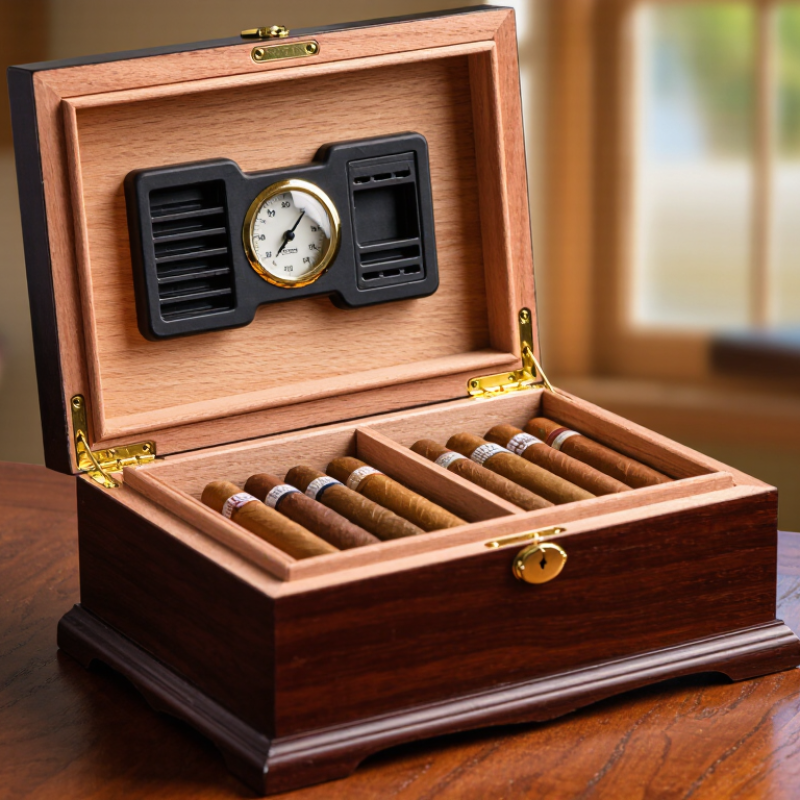
A wood humidor box is a purpose-built container for storing legal, humidity-sensitive products. Its wooden walls help moderate moisture instead of changing conditions suddenly. Many models use cedar or another stable, aromatic wood. The interior usually includes a hygrometer and a humidification device. The hygrometer measures relative humidity. The humidification device releases or absorbs moisture as conditions change.
The system works through balance. When the air becomes too dry, the humidifier adds controlled moisture. When the air becomes damp, the wood and ventilation help reduce rapid changes. A tight lid slows outside air exchange, but it should not create a completely sealed environment. I have found that stable humidity matters more than chasing one perfect number. The suitable range depends on the stored item, local climate, and storage instructions. Temperature also matters. Heat can accelerate drying and damage.
A wooden box needs preparation before regular use. I once underestimated this step, and the interior absorbed moisture unevenly. The contents later felt drier than expected. Conditioning the wood gradually can prevent that problem. Place the box away from windows, heaters, and kitchen steam. Check the hygrometer regularly, and compare it with a calibrated reference when possible. Do not pour water directly onto the wood. That shortcut may cause stains, swelling, or mold. Small adjustments work better. Some advice online sounds universal, but storage conditions are rarely identical.
What Is a Wood Humidor Box and How Does It Work?
| Storage dimension | Typical data or range | How it works in a wood humidor box | Practical benefit |
|---|---|---|---|
| Primary purpose | Controlled storage for moisture-sensitive products | A sealed or semi-sealed enclosure slows moisture exchange with the surrounding air. | Helps reduce rapid changes in humidity during normal indoor use. |
| Relative humidity target | Approximately 65%–72% RH is commonly used for cigar storage | A humidification device adds water vapor, while the box and seal slow its escape. | Supports moisture balance when the box is correctly seasoned and maintained. |
| Temperature range | About 18–21°C (64–70°F) is commonly recommended for cigar storage | Wood provides limited thermal buffering, but it does not actively cool or heat the interior. | Stable room placement is still necessary; avoid direct sunlight, heaters, and hot vehicles. |
| Interior wood | Spanish cedar is a traditional interior material; other woods may also be used | Porous wood can absorb and release small amounts of moisture as surrounding humidity changes. | Creates a moisture-buffering interior and contributes a characteristic cedar aroma when used. |
| Humidification method | Passive packs, water-based reservoirs, or electronic systems | The humidifier releases moisture gradually; the enclosure helps retain it. | Allows users to select a maintenance method suited to box capacity and usage frequency. |
| Humidity measurement | Digital or analog hygrometer; accuracy varies by instrument | The hygrometer displays the air’s relative humidity so adjustments can be made. | Provides an observable reference instead of relying only on touch or appearance. |
| Seasoning requirement | Required for unfinished, absorbent wood interiors before regular use | The wood is gradually brought to the intended humidity level before products are added. | Reduces the risk of the box drawing excessive moisture from stored items. |
| Air circulation | Gentle, even circulation is preferred; forced airflow is not always necessary | Trays, dividers, and spacing allow humidity to distribute around stored items. | Helps limit localized dry or overly damp areas inside the box. |
| Seal quality | A consistent lid fit and intact gasket are important design factors | A tighter seal reduces uncontrolled air exchange and humidifier workload. | Improves humidity stability and can reduce refill frequency. |
| Light protection | Opaque wood blocks most direct visible light | The wooden structure shields the contents from direct exposure more effectively than clear containers. | Useful for products whose packaging or surface quality may be affected by prolonged light exposure. |
| Maintenance indicators | Check RH and temperature regularly; refill or replace humidification media as needed | The box is a passive storage environment and cannot correct poor conditions without maintenance. | Routine monitoring helps identify leaks, depleted humidifiers, or unsuitable room conditions early. |
A quality wood humidor moderates humidity through hygroscopic wood, not electronic cooling. Cedar lining absorbs moisture when the air becomes damp. It releases moisture during drier periods. This creates a slower, steadier internal climate. Wood also adds thermal mass, so brief room-temperature changes reach stored products less aggressively. It cannot cool a hot room. That limitation matters.
For legal tobacco storage, many specialists target approximately 18–21°C and 65–70% relative humidity. ASHRAE’s 2021 Handbook commonly uses 30–60% RH for indoor comfort, showing why humidors need a different target. The National Institute of Standards and Technology also stresses measurement uncertainty in humidity instruments. A display reading of 68% may not be exact. Small errors accumulate. I learned this after trusting one inexpensive sensor for too long.
Tips: Use a calibrated digital hygrometer. Check it monthly. Keep the box away from sunlight, heaters, and air-conditioning vents. Add moisture gradually, because over-humidification can cause swelling, staining, or surface mold. Leave space between items and the walls. Airflow is modest, but necessary. Inspect the wood joints, too. A beautiful box can still leak.
Wood quality matters because premium cigar storage is a climate-control task, not decoration. Stable, kiln-dried wood absorbs and releases moisture gradually. This buffering effect helps reduce sudden humidity swings inside the box. The USDA Forest Products Laboratory’s equilibrium-moisture tables place many woods near 11% moisture content at 20°C and 60% relative humidity. That figure is a useful reference, though real storage conditions vary.
ISO 3402:2023 conditions tobacco products at 22°C and 60% relative humidity before testing. A humidor operates differently, but this standard shows why temperature and moisture deserve measured control. Dense, well-seasoned wood usually creates a more predictable interior environment. Poorly dried wood may warp, crack, or compete with the humidity system. Small details matter. Check the lid fit, grain stability, and interior finish.
Wood species also influence aroma. Spanish cedar is traditionally selected because it tolerates humid conditions and can support gradual moisture exchange. Yet stronger cedar character is not always better. Overly aromatic wood may dominate the stored tobacco’s natural scent. I have found that “premium” construction can still disappoint when the timber was rushed through drying. A digital hygrometer helps, but it cannot repair unstable wood. That is the part many product descriptions leave out.
A humidor protects flavor, aroma, and freshness by controlling moisture changes. A stable environment helps prevent leaf products from becoming brittle, flat, or overly soft. Professional storage guidance commonly targets 65–70% relative humidity and about 18–21°C.
These numbers are practical, not magical.
The USDA Forest Products Laboratory’s Wood Handbook, 2021, reports that wood reaches about 9% equilibrium moisture content near 50% relative humidity. At 70% humidity, that figure rises to roughly 12.5%. This explains why wood can absorb and release moisture gradually. Spanish cedar also contributes a gentle, distinctive aroma, although too much contact may influence delicate flavors. That detail is easy to overlook.
A tight-fitting lid matters. Small gaps can dry the interior within days. A calibrated digital hygrometer offers better control than touch alone. ASHRAE Handbook—Fundamentals, 2021, emphasizes that temperature and humidity work together during moisture control. A cool room with sudden humidity swings still creates risk.
I have seen attractive wooden boxes fail because owners trusted appearance instead of measurements. Wood is helpful, but it is not self-regulating. Regular checks, careful seasoning, and restrained opening keep the internal air more stable.
Why Choose a Wood Humidor Box for Premium Storage?
What to Consider When Choosing a Wood Humidor Box
Choosing a wood humidor box requires more than admiring its polished surface. The interior wood should hold moisture steadily without creating sharp humidity swings. Cedar is often selected because it offers a stable environment and a naturally gentle aroma. However, the scent should not overpower the stored materials.
Check the seal carefully. Close the lid and notice whether it meets the base evenly. A weak seal allows moisture to escape and makes the humidity gauge unreliable. A precise hygrometer is essential, preferably one that can be calibrated. Small readings matter. A few percentage points may affect texture over time.
Size also deserves attention. Extra space can improve airflow, but an oversized box may be difficult to condition evenly. Before use, the wood usually needs gradual seasoning with a suitable humidity source. Rushing this step is a common mistake. I have found that a simple design is often easier to maintain than an ornate box with hidden gaps. Inspect the hinges, corners, and finish under bright light. One flaw can become a daily problem. Temperature matters too, so keep the box away from windows, heaters, and damp walls. Personal preference still matters, but reliable construction should come first.