Why Choose a Hat Maker for Custom Hats?

A custom hat is more than a finishing touch. It must fit your head, suit your face, and work with the way you dress. That is where a Hat Maker can make a real difference. Rather than choosing a standard size and hoping for the best, you can discuss shape, materials, color, and fit with the person making your hat. Small details matter: the curve of a brim, the feel of a wool felt crown, or a lining that stays comfortable through a long day.

The market context is notable. Grand View Research valued the global headwear market at USD 29.66 billion in 2023 and projected a 6.4% compound annual growth rate from 2024 to 2030. That broad category includes many products, so it does not prove that custom hats are growing at the same rate. Still, it shows how widely headwear is purchased. Milliner Stephen Jones is often credited with the line, “A hat is the cherry on the cake.” The image is apt, though craftsmanship matters beneath the decoration.

Choosing a Hat Maker can help you weigh fit, construction, and personal style before committing. Ask how the hat will be shaped, what materials suit your intended use, and whether adjustments are possible. A custom piece may cost more and take longer than an off-the-shelf option. It may also require a second fitting. Not every detail will be perfect on the first attempt. A clear process, careful measurements, and honest conversations make the result more dependable—and more distinctly yours.
Why Choose a Hat Maker for Custom Hats?

Understanding Custom Hats and Their Purpose

A custom hat is made for a particular person, purpose, or setting rather than a standard size and shape. It may shade a gardener’s face, finish an event outfit, or help a work team look consistent. Its purpose guides practical choices: a broad brim offers more shade, while a lightweight fabric can feel cooler in warm weather. Details matter.

Fit comes first. A hat maker can measure head circumference, check crown depth, and adjust the band so the hat feels secure without pressing at the temples. The maker can also discuss fabric weight, brim stiffness, and how the hat will be used. For example, a hat worn outdoors for hours may need a different lining from one used briefly for a ceremony. Small adjustments can change comfort noticeably.

Customization is not automatically an improvement. Extra trim may snag, and a dramatic brim may be awkward in crowded spaces. A careful maker asks about daily use, then explains the trade-offs before construction. A fitting or sample can reveal problems that measurements alone miss. That takes testing. The final design should suit the wearer, not just look distinctive.

What a Hat Maker Contributes to the Customization Process

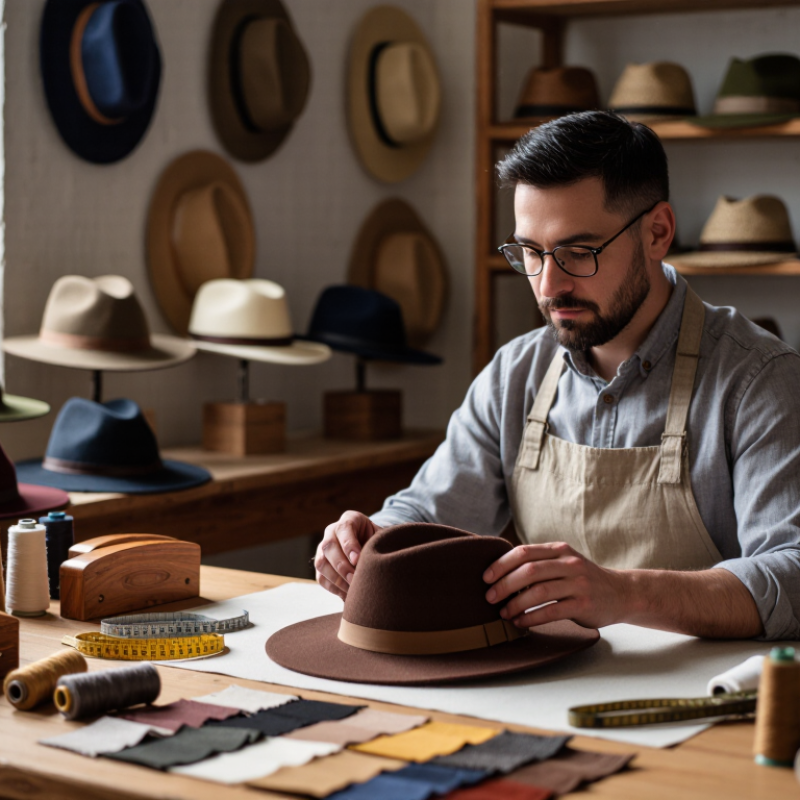
A hat maker turns a broad idea into decisions that can be tested: crown shape, brim width, fabric weight, lining, and decoration. They check head measurements and explain how different crown profiles may sit on the same wearer. A low crown can feel close; a taller one gives more room above the head. Small choices matter. The maker can match thread color to fabric and adjust embroidery placement so it does not distort a curved panel. During sampling, they inspect seams, balance, and comfort before approving a larger order. A paper sketch helps, but it cannot reveal every fit issue.

The value is practical guidance, not just craftsmanship. McKinsey & Company’s 2021 Next in Personalization report found that 71% of consumers expect personalized interactions. It also found that 76% feel frustrated when those interactions are missing. These figures cover consumers broadly, not hat buyers alone, so they offer context rather than proof of demand for custom hats. Fit comes first. A careful maker can recommend a sample and flag trade-offs, such as a detailed design that may not reproduce cleanly on textured fabric. Even then, the first sample may need changes; that part is easy to underestimate. A wearer’s feedback on pressure at the temples or brim angle can reveal what measurements miss.

Why Choose a Hat Maker for Custom Hats? — What a Hat Maker Contributes to the Customization Process
Customization Dimension What the Hat Maker Contributes What the Customer Can Decide
Fit and measurements Takes or reviews head measurements and explains how sizing, fit, and the hat’s intended wear affect the pattern and construction. Provides accurate measurements and describes preferred fit, such as snug, relaxed, or suitable for particular hairstyles.
Shape and proportions Advises on crown height, crown shape, brim width, and overall proportions, taking the chosen style and materials into account. Chooses a preferred silhouette and shares reference images or practical requirements.
Materials Explains the feel, structure, weight, and care considerations of available materials, and helps match them to the design and intended use. Selects from suitable material options based on appearance, comfort, season, and care preferences.
Construction method Recommends appropriate techniques—such as sewing, blocking, or shaping—based on the hat style, material, and desired finish. Confirms the desired look and discusses any construction or durability priorities.
Color and finish Helps coordinate color, lining, trim, edge treatments, and other finishing details so they work with the design and materials. Chooses colors and finishes and identifies details that are essential to the final design.
Personal details Assesses how requested additions—such as a band, bow, pin, embroidery, or other trim—can be incorporated into the hat. Chooses personal details and communicates placement, size, and style preferences.
Design review Clarifies specifications before work begins and, where the process allows, reviews a sketch, sample, or fitting to check proportions and details. Reviews the proposed design, asks questions, and confirms adjustments before final construction.
Care and maintenance Provides material-appropriate guidance on storage, cleaning, and handling to help maintain the hat’s shape and finish. Follows the care instructions and considers maintenance needs when choosing materials and finishes.

How Hat Makers Tailor Design, Materials, and Fit

A custom hat begins with a conversation about where and how it will be worn. A maker may ask about sun exposure, daily use, hairstyle, and preferred silhouette before sketching a shape. A slightly wider brim can provide more shade, while a lower crown may feel less bulky. Small changes matter. The sketch is only a starting point; the wearer’s features and practical needs guide the final proportions.

Material affects both appearance and performance. Felt holds a structured crown, while woven straw allows airflow and may soften with regular wear. The maker can explain how each option responds to handling, moisture, and storage, rather than promising that one material suits every person. Then comes measurement: head circumference is checked alongside the shape of the head and how the hat should sit above the ears. A fitting may reveal pressure at the temples or a brim that tips forward. Fit takes patience. Adjustments to the inner band, crown, or brim can improve comfort, though not every first fitting will feel perfect. That is useful feedback, not a failure.

Craftsmanship and Quality in Handmade Hats

A custom hat’s quality begins with the materials and the hands that shape them. A skilled maker blocks the crown, trims the brim, and checks the fit against the wearer’s measurements. The felt or woven straw should feel consistent, without thin patches or rough edges. Feel the difference. Textile Exchange’s 2024 Materials Market Report estimates that global fiber production reached 124 million tonnes in 2023. That scale makes material questions worthwhile: ask what the hat is made from and how the fibers are finished. A careful answer is part of good craftsmanship.

Handmade construction also allows close attention to details that affect daily wear. A maker can adjust the sweatband, balance the brim, and reinforce stitches where tension gathers. Inspect the inside: the band should sit smoothly, and seams should not scratch the forehead. Small details matter. Slight variations in a hand-shaped crown may be normal, but they should not compromise comfort or structure. Perfect symmetry is not always the point; a hat still needs to hold its shape and feel secure. Fit it in the light you usually wear it, then check whether the brim clears your vision and the band stays comfortable after a few minutes.

Factors to Consider When Choosing a Hat Maker

Choosing a hat maker starts with the details your wearer will feel: crown fit, brim stiffness, seam placement, and the softness of the sweatband. Request a physical sample, then check it under ordinary use, not just studio lighting. Ask how the maker controls sizing, color consistency, and stitch quality across repeat orders. Textile Exchange’s Materials Market Report 2024 estimates global fiber production reached 124 million tonnes in 2023. That figure makes material sourcing worth discussing: request fiber-content details and, where relevant, documentation tracing materials to suppliers. Ask for proof. A maker who explains what can and cannot be verified is more useful than one offering broad promises.

Production capacity matters too. Confirm minimum order quantities, sample fees, lead times, and how revisions affect cost and schedule. Ask what inspections happen before shipment, and whether you can agree on measurable tolerances for dimensions and visible defects. Details matter. Compare the maker’s written process with the sample you approved. A polished sample does not guarantee every production hat will match; fabric lots and hand-finishing can introduce variation. I would not treat a low quote as a warning by itself, but unclear specifications make it harder to judge value. Choose a partner who answers specific questions plainly and records decisions before production begins.