
What Are the Top Types of Hotel Carpet?

Hotel Carpet does more than soften a guestroom floor. It absorbs footsteps, shapes the room’s first impression, and faces rolling suitcases, spills, and daily cleaning. The right choice depends on where it will be installed, how much traffic it receives, and how the hotel maintains it. A plush cut pile may feel inviting beside a bed, while a dense loop pile can suit a busy corridor. Patterned broadloom can disguise small marks, though it may be harder to replace seamlessly after damage.

“Choose hotel carpet for the traffic it must handle, not only for the sample’s appearance.” — Martin Hale, hospitality flooring consultant

That practical principle helps frame a comparison of the top types of hotel carpet. Broadloom offers a continuous surface and flexible design options. Carpet tiles allow targeted replacement when a section becomes stained or worn. Axminster and Wilton carpets can deliver detailed patterns and a tailored look, often appealing in public areas. Each option brings trade-offs in cost, installation, comfort, and upkeep.

The details matter. Think of a luggage wheel crossing a corridor seam, or a damp cleaning pass near a guestroom entrance. These everyday moments reveal weaknesses that a showroom swatch cannot. No single carpet type works best everywhere, and appearance alone is an imperfect guide. This overview compares common choices and the settings where they may perform well, while recognizing that local traffic and maintenance routines can change the answer.
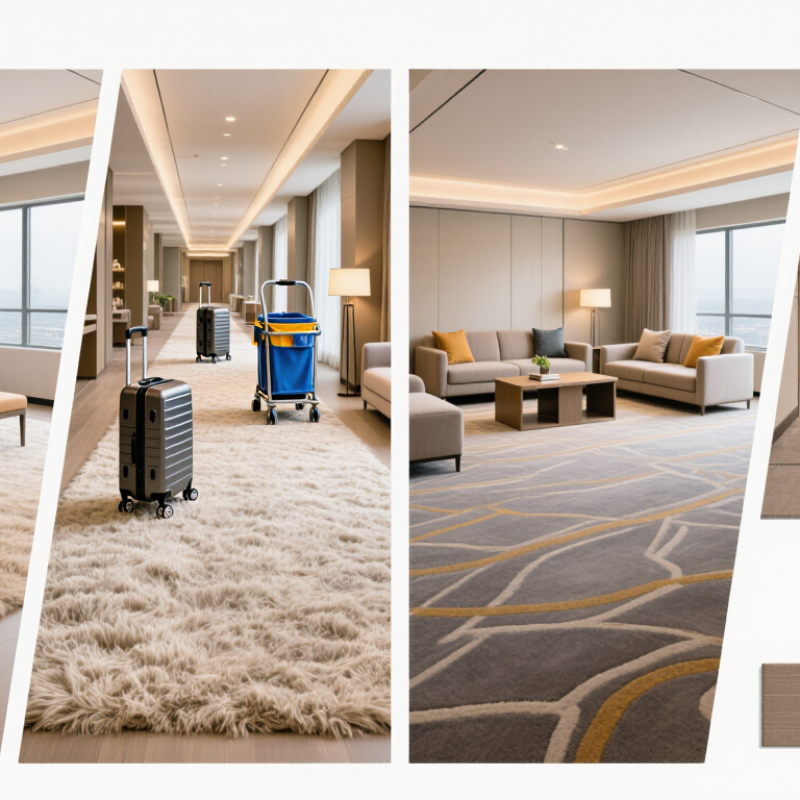
What Are the Top Types of Hotel Carpet?

How Hotel Carpets Are Classified by Construction and Fiber

Hotel carpets are commonly classified by how they are constructed and which fibers they use. Construction affects texture, pattern, repair options, and how the carpet handles daily foot traffic. Fiber influences feel, stain response, and long-term appearance. Both matter.

Tufted carpet is widely used because it can offer varied pile styles and patterns. Loop pile has a firm, textured surface that can suit busy corridors. Cut pile feels softer underfoot, while cut-and-loop designs add visible pattern and texture. Woven carpet often supports detailed designs, though its cost and installation requirements may be higher. Carpet tiles make local replacement easier: a stained tile near an elevator can be changed without lifting an entire hallway. Seams still need careful planning.

Nylon fibers are valued for resilience in high-traffic areas, while wool offers a natural feel and distinctive texture. Polyester can provide rich color and softness, but performance depends on the product and use conditions. No fiber is perfect. A soft surface may show wear sooner in a busy lobby, and a durable one may feel less plush. Ask for samples, then view them under the hotel’s lighting. A small test area can reveal more than a specification sheet.

Broadloom Carpet for Seamless Coverage

Broadloom Carpet for Seamless Coverage

Broadloom carpet is installed wall to wall, giving guest rooms and corridors a continuous, finished appearance. Because it comes in wide rolls, installers can often reduce the number of visible joins across a room. Few visible seams. That can make furniture layouts feel calmer and help large spaces look cohesive.

The result depends on careful planning. Installers should measure rooms, check the subfloor, and position seams away from doorways and other high-traffic spots where possible. In a corridor, tightly secured edges matter: rolling luggage repeatedly crosses the same narrow paths. Commercial-grade carpet with a suitable pile and backing can handle regular foot traffic, but the best specification depends on cleaning routines and expected use. Ask for samples under the hotel’s actual lighting; a shade that looks warm in a showroom may appear cooler beside daylight.

Broadloom can also soften footsteps and add comfort underfoot, useful in guest areas near sleeping rooms. It is not maintenance-free, though. A spill can spread, and damage may require replacing a larger section than with individual tiles. That trade-off deserves attention. I would also avoid promising perfectly invisible seams; lighting, pile direction, and installation quality can make joins noticeable. Room layouts and a skilled installation plan help limit that risk.

What Are the Top Types of Hotel Carpet? - Broadloom Carpet for Seamless Coverage

Carpet type Typical format or construction Common hotel locations Main advantages Things to consider
Broadloom carpet Wide rolls, commonly around 12 ft (3.66 m) wide; installed wall-to-wall. Guest rooms, corridors, meeting rooms and ballrooms. Creates a continuous appearance with few visible seams; offers a wide choice of patterns and colors. Repairs may require cutting and patching; installation generates offcuts, especially in irregular rooms.
Carpet tiles Modular squares or rectangles; common square sizes include 50 × 50 cm and 24 × 24 in. Business centers, back-of-house areas, meeting rooms and selected corridors. Individual damaged tiles can be replaced; useful for phased installation and access to floor services. Joints remain visible, and directional patterns require careful layout and installation.
Woven Axminster Woven patterned carpet, often made to order with multiple colors and detailed designs. Ballrooms, public areas, corridors and formal guest spaces. Supports intricate patterns and can help disguise everyday soil and wear. Typically requires a larger project budget and careful matching of pattern repeats at seams.
Tufted patterned carpet Tufted pile with color or texture patterns; available as broadloom and, in some ranges, tiles. Guest rooms, corridors and general public areas. Offers varied design options and is widely used for commercial interiors. Performance depends on pile construction, backing, fiber and maintenance; assess samples under expected traffic.
Solution-dyed nylon carpet Fiber type rather than a format; commonly used in tufted broadloom and carpet tiles. High-traffic corridors, lobbies and guest rooms. Color is added during fiber production, which can support colorfastness and routine cleaning performance. Compare pile density, construction and care instructions; fiber type alone does not determine durability.
Wool or wool-blend carpet Natural wool pile or a blend with synthetic fibers; commonly produced as broadloom. Guest rooms and lower- to moderate-traffic public spaces. Provides a soft feel and a natural appearance; blends can balance feel with practical performance. Usually needs care suited to wool and may require a higher initial investment than some synthetic options.

Typical formats and applications vary by product and project. Confirm roll or tile dimensions, traffic suitability, fire-code requirements, cleaning guidance and installation details with the project specification.

Carpet Tiles for Easy Maintenance and Replacement

In busy hotels, carpet tiles make routine floor repairs more precise. If a drink spills near a lift, staff can remove the stained tile and install a clean one without replacing a whole corridor section. That can reduce disruption while rooms and walkways remain in use. Keep spare tiles. Store them flat, dry, and away from sunlight; fading can make replacements look noticeably different. Before fitting a new tile, check its pile direction and alignment with neighboring pieces.

Good maintenance still starts with regular vacuuming and prompt treatment of spills. Follow the carpet manufacturer’s cleaning guidance, and avoid soaking the backing, which may weaken adhesive or leave damp odors. During replacement, inspect the subfloor for grit or moisture; either can prevent a tile from sitting level. Tiles are not a perfect fix. Chair wheels and luggage can wear high-traffic routes, while seams may become visible if installation is uneven. A small trial area helps reveal color or texture differences before a larger repair.

What Are the Top Types of Hotel Carpet?

Carpet Tiles for Easy Maintenance and Replacement

Carpet tiles are generally easiest to maintain and replace locally because individual tiles can be lifted and replaced. Broadloom, Axminster, and Wilton carpets can suit hotel interiors, but repairs may require matching patterns or replacing a larger area. Ratings are qualitative comparisons of typical maintenance and localized replacement practicality, not standardized test results.

Nylon Carpets for High-Traffic Hotel Areas

Nylon carpet suits hotel corridors, elevator lobbies, and busy reception areas because its fibers generally recover well after repeated compression. A wheeled suitcase can press the pile flat; shoes grind fine grit into it. Nylon is not indestructible, though. Dense construction, suitable pile height, and regular vacuuming matter just as much as fiber choice.

STR’s 2023 U.S. hotel performance report recorded average occupancy of 63.0%. That is not a corridor footfall count, but it indicates sustained guest turnover across the year. For carpet selection, consider the busiest paths separately from quieter guest rooms. A patterned, solution-dyed nylon can help disguise small marks between cleans, though patterns may not hide everything.

Ask suppliers for documented wear-test results, not just “commercial grade” claims. ASTM D5252 uses a Hexapod drum method to simulate traffic and assess changes in carpet appearance. Compare tested samples under the same conditions, and check the rating system used. One practical detail is often missed: darker carpet can show pale lint, while lighter carpet may reveal tracked-in soil. There is no perfect choice; inspect a sample under the hotel’s actual lighting.

Wool and Wool-Blend Carpets for Premium Spaces

Wool carpet suits premium hotel spaces where guests notice the feel of a room, not just its appearance. Its naturally crimped fibers can recover from compression, helping pile retain a fuller look under regular foot traffic. Wool also absorbs moisture from the surrounding air, which can moderate short-term humidity changes; it does not replace proper ventilation. Soft underfoot. Not indestructible. In a busy lobby, dense construction and suitable pile height matter as much as fiber choice.

Wool blends offer a practical compromise. A wool-and-nylon construction can improve resistance to wear, while keeping some of wool’s warmth and texture; results depend on yarn, pile, and backing. Textile Exchange’s Materials Market Report 2024 puts wool at roughly 1% of global fiber production in 2023, underscoring its relatively small place in the wider fiber market. That figure describes supply, not carpet quality. I would not specify wool everywhere: wet entrances, food-service zones, and corridors may need tougher specifications or more frequent care. Ask for test data on abrasion, pile recovery, and stain response, then assess a sample under the actual lighting. One detail is easy to overlook: even premium wool can look tired if vacuuming and prompt spill treatment are inconsistent.