2026 Top Robotic Pool Cleaners for Every Pool Type
A clean pool is not just about clear water; it is about spending less time brushing walls and collecting leaves. A Robotic Pool Cleaner can take on routine floor and wall cleaning, but no single model suits every pool. Shape, surface, depth, steps, and nearby trees all affect which features matter. A compact above-ground pool has different needs from a large, irregular in-ground pool. Small details count.
This guide to the 2026 top robotic pool cleaners compares practical features across pool types, including navigation, filtration, cable or cordless design, cleaning coverage, and ease of maintenance. It also considers how a unit handles fine dust, larger debris, and areas that may be easy to miss. These are useful points to check against manufacturer specifications and your own pool conditions, rather than promises of identical results everywhere. A powerful cleaner may still struggle with tight corners, unusual steps, or heavy debris. Even the best fit needs regular filter care and occasional inspection. That part is easy to overlook. The aim is to help you weigh convenience, coverage, and upkeep before choosing a cleaner that fits your pool and routine.
How Robotic Pool Cleaners Work
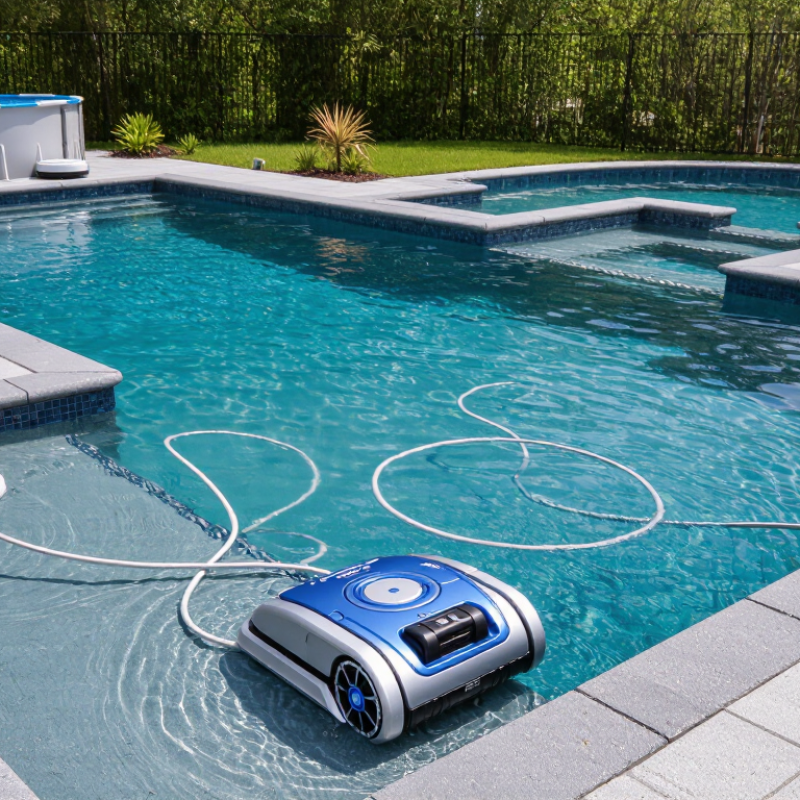
A robotic pool cleaner moves through the water on its own power, using wheels or tracks to cross the pool floor. Rotating brushes loosen algae, grit, and leaf fragments. An internal pump draws the debris-laden water through a filter, then sends the water back into the pool. The cleaner does not simply “vacuum” like a household machine; its movement, brush contact, and water flow work together.
Sensors help the unit detect walls and change direction. Depending on its design, it may climb walls and clean the waterline, where sunscreen residue and oils can collect. Navigation is not perfect. A cleaner can miss a tight corner or repeat part of its route, especially when obstacles or unusual pool shapes interfere. Not magic.
Most models collect debris in a removable basket or cartridge. Fine dust may pass through a coarse filter, so matching the filter to the pool’s typical debris makes a practical difference. After a cycle, check the basket rather than assuming it is clean because the pool looks clear. Rinse folded filter surfaces carefully; grit can remain tucked in the corners. The cleaner also does not replace routine water testing or proper chemical balance.
Key Features That Define a Top Pool Cleaner in 2026
A top robotic pool cleaner in 2026 should suit the pool, not just advertise extra features. On a concrete pool with tight corners, accurate navigation and reliable wall climbing can matter more than a flashy app. For vinyl-lined pools, check surface compatibility and how gently the cleaner contacts the walls. Read the manual.
Strong navigation can reduce missed strips, while an accessible fine filter helps capture small debris without making cleanup frustrating. Look for stated runtime, charging time, and pool-size limits. These details beat vague promises of smart cleaning. A tangle-resistant cable helps corded models move freely. Cordless models need enough battery for the pool’s shape and debris load. Sensors may improve coverage, but they cannot guarantee every step or waterline gets cleaned. Small leaves still win sometimes.
Check how easily the filter basket lifts out, whether rinse points are accessible, and whether wear parts can be replaced. These details can save time over a season. Compare warranty terms and independent test conditions, since results vary with water depth, steps, and debris. Even a capable cleaner may need occasional brushing around ladders or shallow ledges. That is not necessarily failure; it is a practical limit worth considering.
Top Robotic Pool Cleaners for Different Pool Types
Pool shape and surface should guide the choice more than a long feature list. The Pool & Hot Tub Alliance’s industry statistics estimate about 10.7 million residential pools in the United States, spanning varied sizes and construction types. A compact above-ground pool may need a lighter unit with a short cable and simple controls. For a deep concrete pool, look for reliable wall climbing, waterline scrubbing, and brushes suited to a rougher surface. Details matter.
Vinyl liners call for gentler contact; aggressive brushes can cause wear over time. Fiberglass surfaces are smoother, so traction and steady navigation matter more than hard scrubbing. For pools beneath trees, a roomy debris basket saves interruptions when leaves arrive in clusters. Fine dust is different. Check whether the filter can capture it without clogging quickly. For irregular pools, observe whether the cleaner misses corners or repeatedly circles the same step. Still, fit varies. Pool dimensions, steps, slopes, and debris load all affect coverage, so published specifications cannot promise a spotless result. I would treat surface compatibility as a starting point, not a guarantee; sometimes the cleaner needs a few runs before its weak spots become obvious.
Standard lap-pool lengths provide a useful sizing reference when choosing a robotic cleaner. A 25-yard course is 22.86 meters; short-course metric and Olympic-size courses are 25 and 50 meters. Pool length alone does not determine cleaner suitability—also check the cleaner’s rated capacity and compatibility with your pool’s surface and shape.
How to Compare Cleaning Performance, Coverage, and Maintenance
Compare cleaning performance by debris type, not advertised cycle time. A large leaf basket may handle autumn leaves but miss fine dust. Check whether the unit covers the floor, climbs walls, and reaches the waterline. Steps, benches, and tight corners often expose gaps. I still find coverage claims easy to overrate.
Maintenance matters just as much. CDC’s 2016 MMWR analysis of 2013 public-pool inspections found that 12.1% resulted in immediate closure. A robot cannot correct water chemistry or replace routine checks. It can, however, reduce visible debris when its filter suits the pool’s typical mess. Note how easily the basket opens, and whether hair wraps around the rollers or tracks.
For energy comparisons, read the test conditions carefully. The U.S. Department of Energy’s dedicated-purpose pool-pump rulemaking evaluates pumps under defined test conditions; it does not rate robotic cleaners. Avoid treating pump-efficiency figures as robot performance data. Compare cleaning time, debris capacity, filter access, and cord handling in your own pool. A cleaner that misses the shallow end may need extra manual brushing. That’s not a deal-breaker, but it changes the maintenance workload.
How to Choose the Right Robotic Pool Cleaner for Your Pool
Choosing a robotic pool cleaner starts with the pool itself, not a feature list. Note its length, width, depth, and surface material, then check each cleaner’s stated compatibility. A vinyl liner, rough concrete, and delicate tile can call for different brushes or track designs. For example, a cleaner that handles a flat floor may not climb a steep wall or reach a shallow tanning ledge. Check the details.
Debris matters, too. A pool under pine trees may collect needles and seed pods, while an open pool may mostly gather fine dust. Match the filter basket to that load, and consider how easily it opens for rinsing. A large pool may need longer runtime or more coverage than a small plunge pool. Corded models avoid battery charging, but the cable can snag around ladders or corners. That matters.
Look closely at stairs, benches, and waterline cleaning claims; coverage varies by model. Read the manual for pool shape, depth, and surface limits, rather than assuming “all pool types” means yours. It is easy to overvalue app controls and overlook basket capacity or storage space. Measure twice. A cleaner that fits your pool but is awkward to lift from a wet deck may quickly become a less convenient choice.
