
2026 Top Organic Socks Suppliers for Global Buyers

Global buyers entering the 2026 Organic Socks market need more than attractive catalogs. They need evidence, consistency, and practical supply-chain visibility. This guide examines leading suppliers serving international customers with certified organic fibers, responsible manufacturing, and dependable export processes.

La Rhea Pepper, a longtime organic cotton advocate and Textile Exchange co-founder, said, “Organic agriculture is about more than avoiding chemicals; it is about rebuilding soil, protecting farmers, and restoring ecosystems.” Her point remains highly relevant to sock sourcing. A credible supplier should explain fiber origin, certification scope, dyeing methods, factory location, and labor standards. Buyers should also request current transaction certificates, product test reports, sample comparisons, and clear minimum-order quantities. Small details matter. A ribbed cuff that loses shape can damage an entire retail launch.

This overview compares suppliers through a buyer-focused lens. It considers cotton quality, recycled material content, knitting expertise, private-label flexibility, packaging options, lead times, and communication reliability. It also highlights factories suited to different needs, from boutique collections to high-volume retail programs. Certification alone is not enough. Documents can expire, and product claims can become vague across distributors. Buyers must verify each shipment and review contract terms carefully.

No supplier is perfect. Pricing, capacity, and sustainability goals can conflict. That tension deserves honest attention. A strong partnership depends on transparent answers, realistic timelines, and repeatable quality. For global buyers, the best Organic Socks supplier is not simply the cheapest option. It is the partner that can prove its claims, manage production pressure, and improve when problems appear.
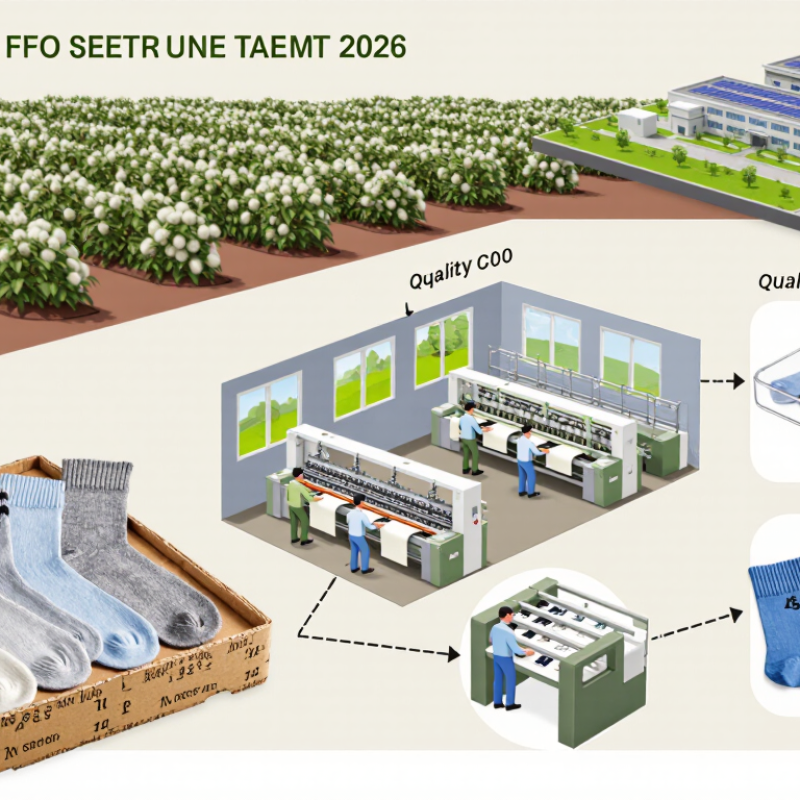
2026 Top Organic Socks Suppliers for Global Buyers

What Makes an Organic Socks Supplier Globally Competitive in 2026

A globally competitive organic socks supplier in 2026 must prove more than a green claim. Buyers should request valid organic-fiber certification, transaction records, and clear production documentation. Traceability should connect the cotton field, spinning mill, dye house, and finished pair.

Reliable suppliers also control comfort, durability, and consistency. They test yarn strength, colorfastness, shrinkage, and seam performance before shipment. A useful factory can provide samples with measured specifications, not vague promises. It should manage different sizes, seasonal demand, and repeat orders without changing the fabric unexpectedly. Small details matter, such as carton moisture protection and accurate pair counts.

Communication is another competitive advantage. Response times, inspection reports, and corrective actions should be easy to verify. Ethical labor practices and wastewater controls also influence long-term purchasing decisions. Local compliance knowledge helps suppliers prepare labels and documents for different markets. That reduces avoidable delays.

No supplier is perfect. A factory may offer excellent organic materials but struggle with urgent orders. Another may deliver quickly but lack deep traceability. Buyers should compare these weaknesses openly. A practical evaluation includes factory audits, pre-shipment inspections, production samples, and a written quality agreement. The strongest supplier is not always the cheapest. It is the one that can repeat the same standard, explain problems honestly, and improve after a failed batch.

2026 Top Organic Socks Suppliers for Global Buyers

What Makes an Organic Socks Supplier Globally Competitive in 2026?

Globally competitive organic socks suppliers typically provide certified organic fibers, full supply-chain traceability, verified processing facilities, responsible chemical management, and reliable documentation for international buyers. The chart compares the minimum organic-fiber thresholds used by major textile certification claims. GOTS requires at least 70% organic fibers for the “Made with Organic” label and 95% for the “Organic” label. OCS Blended allows products with at least 5% organic fibers, while OCS 100 requires at least 95%.

Key Certifications and Standards for Organic Sock Manufacturing

2026 Top Organic Socks Suppliers for Global Buyers

Key Certifications and Standards for Organic Sock Manufacturing

Reliable organic sock sourcing starts with traceable fiber claims. The Global Organic Textile Standard checks organic content, processing, chemical controls, and social criteria. Buyers should request a current scope certificate and a transaction certificate for each shipment. The Organic Content Standard verifies organic fiber content and chain of custody, but it does not assess every production process. Look closely. A certificate is not proof of every batch.

OEKO-TEX Standard 100 focuses on harmful-substance testing in finished socks. It supports product safety, but it does not prove organic farming. ISO 14001 may show structured environmental management, while social audits can support responsible workplace practices. Check the certificate holder, factory address, product category, validity dates, and certification scope. Compare these details with factory records and test reports. Paperwork can look complete and still hide weak traceability. That risk deserves attention.

Tips: Ask for fiber test results, dyeing records, and recent audit evidence. Confirm whether elastic, sewing thread, labels, and packaging follow your specification. Request samples from actual production, not only showroom pieces. Review shrinkage, colorfastness, odor, and seam strength after washing. Requirements differ by destination market, so verify current import and labeling rules with qualified local professionals. Mistakes happen, especially when recycled fibers and organic fibers appear in one product. Record every approval in writing.

2026 Top Organic Socks Suppliers for Global Buyers - Key Certifications and Standards for Organic Sock Manufacturing

Standard or Certification What It Verifies Relevant Sock Manufacturing Stages Organic-Fiber Requirement Chain-of-Custody or Traceability Evidence Global Buyers Should Request Buyer Relevance
Global Organic Textile Standard (GOTS) Organic-fiber processing and manufacturing requirements, including environmental and social criteria. Fiber processing, yarn production, knitting, dyeing, finishing, packaging, and labeling. Products must meet the applicable GOTS organic-fiber content threshold. The exact label grade should be checked on the certificate. Requires documented supply-chain control through certified operators and transaction documentation. Valid Scope Certificate, product details, certification body, certificate number, and Transaction Certificate when required. Very high
Organic Content Standard (OCS) Verification of organic material content and its controlled movement through the supply chain. Organic-fiber handling, spinning, knitting, manufacturing, and trading activities within the certified scope. Applies to products containing certified organic material; OCS 100 and OCS Blended have different content requirements. Uses chain-of-custody controls to track certified organic inputs and outputs. Current Scope Certificate, product scope, approved materials, certification body, and Transaction Certificate for shipments where applicable. Very high
OEKO-TEX Standard 100 Testing of textile components for harmful substances according to the applicable product class. Yarn, knitted fabric, dyes, elastics, labels, sewing thread, and finished socks may be covered separately or together. Does not verify that fibers are organically grown or that the supply chain is organic. Product-based testing and certification; it is not an organic chain-of-custody standard. Certificate number, product class, covered components, validity date, and test report or label authorization. High for product safety
ISO 9001:2015 Quality-management system requirements for consistent processes and continual improvement. Purchasing, production planning, knitting, inspection, packing, complaint handling, and corrective actions. No organic-fiber requirement. Supports documented procedures and records but does not certify organic content. Certificate scope, issuing certification body, validity, factory address, and covered production activities. High for quality control
ISO 14001:2015 Environmental-management system for controlling environmental impacts and improving performance. Dyeing, washing, wastewater management, chemical handling, energy use, waste management, and compliance monitoring. No organic-fiber requirement. System-level environmental controls; it does not trace organic fiber from farm to finished product. Certificate scope, environmental aspects covered, site address, audit status, and validity date. High for environmental management
SA8000 Audited social-accountability requirements covering areas such as child labor, forced labor, health and safety, discrimination, working hours, and remuneration. Factory employment practices and management systems across knitting, finishing, packing, and related operations. No organic-fiber requirement. Social-performance certification; it is not an organic-material traceability standard. Current certificate, certified site address, scope, certification body, and audit status. High for social compliance
Fairtrade Textile Standard Social, labor, environmental, and worker-participation requirements for textile production under the applicable standard and licensing rules. Applicable textile-processing stages and worker conditions, depending on the certified scope. Does not automatically mean the fiber is organically grown; organic claims require separate substantiation. Certification and product-claim controls depend on the applicable Fairtrade program and scope. Valid certificate or license, covered site and product scope, claim authorization, and supporting transaction records. Useful for ethical sourcing
Restricted Substances List (RSL) and Manufacturing RSL (MRSL) Controls substances restricted in finished products and chemicals restricted during manufacturing. Dyeing, printing, finishing, washing, chemical storage, and finished-product testing. No organic-fiber requirement. Chemical and product-control documentation; it does not establish organic origin. Latest customer-approved RSL/MRSL, chemical inventory, supplier declarations, laboratory reports, and corrective-action records. High for chemical risk control
Buyer verification note: A certification applies only to the named legal entity, facility, products, processes, and validity period shown on the certificate. Before placing an order, match the certificate scope with the actual organic fiber, yarn, knitting, dyeing, finishing, packaging, and shipment activities. Organic-content certification and product-safety certification are separate claims and should not be treated as interchangeable.

Leading Organic Socks Suppliers for International Buyers in 2026

International buyers need more than a low quotation when selecting organic socks suppliers in 2026. Reliable suppliers should provide clear fiber documentation, recent factory audit records, and traceable production details. Organic cotton claims must match recognized certification requirements, not only a printed label.

Ask for samples before approving a large order. Check softness, elastic recovery, toe-seam comfort, shrinkage, and color consistency after washing. A useful sample review includes the actual sock weight and packaging dimensions. Suppliers should also explain minimum order quantities, production timelines, payment terms, and export experience. Small details often reveal larger process gaps.

Communication matters across time zones. A capable supplier answers technical questions directly and reports delays early. International buyers should confirm testing for colorfastness, restricted substances, and material composition through independent laboratories. These records support professional purchasing decisions and reduce customs problems.

No supplier file is perfect. Some certificates may be current but incomplete. Some samples look excellent but fail after repeated washing. That is why buyers should compare documents with factory evidence, not promises. I would also leave room for improvement: seasonal cotton availability, freight changes, and packaging revisions can affect final costs. A written specification sheet helps both sides manage these uncertainties. Clear records build trust. Test every claim.

How to Compare Quality, Pricing, Capacity, and Customization Options

2026 Top Organic Socks Suppliers for Global Buyers

Comparing organic sock suppliers requires more than checking a sustainability claim. Ask for current fiber certificates, farm-to-factory traceability, and test reports for colorfastness, shrinkage, and abrasion. A reliable supplier should explain yarn composition clearly, including organic cotton percentages, recycled fibers, elastane, dyes, and finishing treatments. Request pre-production samples in the exact knit structure and size range you plan to order. Samples matter.

Pricing should be compared by landed cost, not unit price alone. Include packaging, tooling, inspection, freight terms, duties, and possible testing fees. A low quotation may reflect thinner yarn, fewer quality checks, or an unrealistic production schedule. I have found that small price differences can disappear after correcting uneven stitching or incorrect sizing. Get a written breakdown. It reduces confusion.

Capacity should be measured against your seasonal demand, not a supplier’s largest monthly figure. Ask about machine numbers, daily output, minimum order quantities, and backup production plans. Customization may include rib patterns, heel construction, labels, packaging, and special colors. Confirm approval stages and sample revision limits. Factory visits or independent inspections add useful evidence, but they are not perfect. Workers may prepare for inspection days. Keep checking performance across repeated orders, because one successful shipment proves less than a consistent record.

Steps for Selecting and Importing Organic Socks from Overseas Suppliers

2026 Top Organic Socks Suppliers for Global Buyers

Steps for Selecting and Importing Organic Socks from Overseas Suppliers

Start with the fiber claim, not the product photos. Textile Exchange reported that organic cotton represented only about 0.3% of global cotton production in its latest market analysis. This small share makes traceability important. Request the supplier’s valid organic scope certificate and transaction certificate. Check the certified facility, fiber percentage, production date, and product description. A factory may produce organic socks, but not every style is certified.

Order samples before negotiating volume. Inspect toe seams, cuff recovery, shrinkage, odor, and color consistency after washing. Ask for test reports covering fiber composition, colorfastness, pH, and restricted substances. GOTS certification can strengthen verification, but confirm the certificate directly through the certifier’s records. Textile Exchange’s Materials Market Report also projects total global fiber production could reach 160 million tonnes by 2030. Supply pressure may increase, especially during harvest disruptions.

Calculate landed cost carefully. Include unit price, sampling, packaging, freight, insurance, duties, inspection, and destination charges. Confirm the HS code with a customs professional in the importing country. Agree on payment stages, delivery terms, carton markings, and a remedy for defective goods. I prefer a small pilot order first. It exposes weak elastic and inaccurate sizing early. A spreadsheet can still lie. Compare actual carton weight with the commercial invoice. Keep every certificate, test report, approved sample, and inspection record together. That file becomes useful when customs or customers ask difficult questions.