
Selecting a reliable Silicone Baby Bib supplier takes more than comparing prices and product photos. Buyers need clear evidence of consistent materials, careful workmanship, and dependable communication. A bib should feel flexible without seeming flimsy, with smooth edges, secure fasteners, and a pocket that holds its shape. Small details matter.
This guide examines supplier qualities that global buyers can assess before placing an order. It covers product specifications, sample reviews, production capacity, packaging options, lead times, and the documents suppliers can provide for material and quality checks. Requesting samples can reveal issues that a catalog may not show, such as uneven thickness, strong odors, or snaps that are difficult to adjust. Samples help.
Supplier claims should be checked rather than accepted at face value. Ask how materials are identified, how batches are inspected, and what happens when products fail agreed specifications. Confirm that testing documents match the exact product and intended market; requirements can differ by destination. A polished presentation does not guarantee a smooth order. Even experienced buyers can overlook practical details, especially when timelines are tight. That is worth reflecting on. The right supplier is not necessarily the one with the lowest quote, but one whose quality, capacity, and communication hold up under careful review.
Silicone baby bibs occupy a practical niche in the wider baby-care market. Grand View Research estimated the global baby products market at about US$320.65 billion in 2023, with projected growth through 2030. This figure covers many product types, not bibs alone. UN DESA’s World Population Prospects 2022 estimated roughly 134 million births worldwide in 2021, indicating the scale of the potential customer base. Yet demand differs by region, retail channel, and family budget.
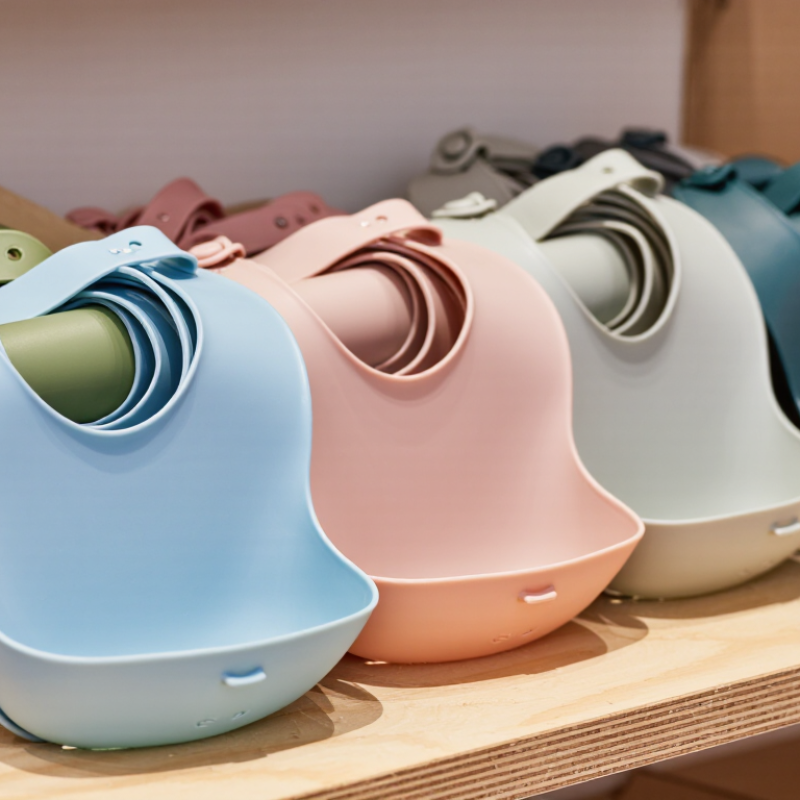
Soft silicone, a deep food-catching pocket, and wipe-clean surfaces make these bibs useful during messy meals. Buyers comparing suppliers should check material specifications, finished-product quality controls, packaging options, and consistent production capacity. Ask for documented test results and sample units; a neat sample does not always represent every production batch. Silicone bib market figures are rarely separated from wider baby-product categories, so precise global sales claims deserve caution. Demand is not perfectly predictable.
Tips: Check pocket depth and neck fit on different-sized babies. Request samples in more than one color, and inspect for odor, rough edges, or weak fasteners. Short lead times help, but verify them against actual production schedules.
When comparing silicone bib suppliers, ask for a test report tied to the exact product, color, and factory. A generic certificate may not cover a changed pigment or mold. Check food-contact testing for your target market, batch traceability, and written controls for material changes. Ask how each production lot is inspected. Ask for the lot.
Inspect samples after repeated washing, not just straight from the box. Look for sharp edges, lingering odor, sticky surfaces, and pockets that collapse when filled. Request evidence of checks for dimensions, tear strength, and color consistency, plus clear defect and replacement procedures. OECD’s Global Plastics Outlook (2022) reports 353 million tonnes of plastic waste generated in 2019, with only 9% recycled. That figure is not about silicone bibs; it is a useful reminder to verify material and environmental claims instead of relying on labels. Check whether any recycling claim names the actual material, collection route, and destination. Smell matters. One imperfect point: supplier audits can miss problems between visits. Ask for dated batch records, recent test results, and a sample from routine production. Confirm monthly capacity, lead times, packaging protection, and how the supplier handles a failed inspection. A low unit price is less useful if the next shipment feels different.
| Evaluation Dimension | What to Verify | Useful Evidence | Why It Matters to Global Buyers |
|---|---|---|---|
| Food-contact compliance | Confirm that the bib’s silicone, colorants, coatings, and any attached components meet the food-contact requirements applicable in the destination market. | Current test reports and declarations that identify the tested product, materials, test methods, and destination-market requirements. | Requirements vary by market and material. Documentation should match the actual product and intended use, rather than rely on a general claim of being “food grade.” |
| Material and formulation control | Ask how silicone grade, pigments, additives, and material changes are controlled between production runs. | Material specifications, approved-material lists, change-control procedures, and traceable batch records. | Consistent input materials help reduce unexpected changes in odor, color, flexibility, or test performance. |
| Product safety and design | Review neck openings, fasteners, edges, pocket shape, and the bib’s intended age range and use instructions. | Product drawings, risk assessments, applicable safety-test reports, and clear care and use instructions. | Design details affect fit, everyday usability, and potential hazards. Buyers should check applicable child-product rules in each sales market. |
| Testing and report traceability | Check that reports cover the correct model, color, material, and relevant production version, and that the issuing laboratory can be identified. | Complete reports with sample description, test dates, methods, results, and laboratory details; verify report authenticity where possible. | A report for a different item or an undocumented sample may not provide meaningful assurance for the product being ordered. |
| Quality management | Assess incoming-material checks, production inspections, defect handling, corrective actions, and final inspection procedures. | Quality procedures, inspection records, nonconformance logs, corrective-action examples, and audit access where available. | Documented controls help identify defects consistently and support corrective action when issues arise. |
| Production capacity and lead time | Confirm available production capacity, order scheduling, peak-season constraints, and the process for communicating delays. | Written production plans, capacity information, sample-to-production timelines, and agreed order milestones. | Capacity and realistic schedules help buyers plan launches, replenishment, and seasonal inventory without relying on unsupported delivery promises. |
| Customization and packaging | Clarify options for colors, shapes, artwork, labels, retail packaging, and carton configuration, including approval steps. | Approved artwork proofs, packaging specifications, sample sign-off records, and written change approvals. | Clear specifications reduce mismatches between approved samples, finished goods, labeling, and packaging requirements. |
| Order terms and commercial clarity | Review minimum order quantities, pricing basis, tooling charges, payment terms, and responsibility for freight and duties. | A detailed quotation, written purchase terms, and clearly stated shipping terms, such as the agreed Incoterm and named place. | Transparent terms make supplier comparisons more meaningful and help prevent misunderstandings about total landed cost. |
| Export and logistics readiness | Check experience preparing export documents, carton details, shipping marks, and product information required by the destination market. | Sample shipping documents, packing specifications, and a defined process for handling document corrections. | Accurate documentation and packing information support smoother customs clearance and receiving operations. |
| Communication and after-sales support | Evaluate response clarity, named points of contact, issue-escalation steps, and procedures for handling complaints or recalls. | Written communication protocols, complaint-handling records, and an agreed process for investigation and corrective action. | Responsive, documented support is important when product concerns arise after shipment or during market surveillance. |
| Responsible sourcing and transparency | Ask about factory oversight, subcontracting, labor practices, and whether production locations can be disclosed and audited. | Factory details, relevant audit summaries, subcontractor controls, and documented policies or corrective-action plans. | Visibility into production and sourcing can help buyers manage supply-chain, ethical-trade, and continuity risks. |
A capable silicone baby bib supplier should show more than attractive samples. Ask for material specifications, batch traceability, colorant records, and test reports relevant to the destination market. The ISO Survey 2023 recorded 1,265,216 valid ISO 9001 certificates worldwide, across industries. That scale is useful context, not proof that any factory’s bibs are safe or consistent. ISO 9001 concerns quality-management systems; buyers still need product-specific evidence. Request recent test results, production tolerances, and a clear process for handling failed batches. Small details matter. A bib that warps after repeated washing can turn a low unit price into costly returns.
Customization should be tested against real production limits. Discuss mold ownership, minimum order quantities, sampling fees, color matching, logo placement, and lead times before approving artwork. Check the bib’s neck opening, strap adjustment, pocket depth, edge finish, and flexibility on a physical sample. Ask how dimensions are checked across batches, not just on the first article. A deep pocket may catch food well but fold awkwardly in storage. There is no perfect shape. One common weakness in sourcing is treating a polished sample as evidence of stable mass production. Set written acceptance criteria, approve a sealed reference sample, and review inspection records before shipment.
Global buyers comparing silicone baby bib suppliers should look beyond unit price. Regional strengths often show up in sample rooms and production schedules. East Asian manufacturing hubs may offer dense networks of mold makers, packaging suppliers, and freight services. That can make design changes quicker. However, factory capacity varies, and peak-season orders may take longer than expected.
Southeast Asian suppliers can be worth assessing for buyers seeking additional production options. Ask how they source silicone, control batch consistency, and manage custom colors or packaging. A clear answer matters more than a polished catalogue. Request samples with the same thickness, fastening details, and surface finish planned for bulk production. Small differences can affect how a bib folds, cleans, or sits against a child’s clothing.
European manufacturers may suit buyers who value closer regional communication or shorter delivery routes within nearby markets, though costs and available capacity differ by supplier. Compare written specifications, production timelines, and relevant independent test documentation. Check that reports match the material and product being quoted. A low price can conceal extra charges for tooling, inspection, or shipping. Still, this regional comparison is only a starting point; factory-level checks reveal more than geography alone.
Global buyers should verify a silicone baby bib supplier with evidence, not polished product photos. Request material specifications, batch traceability, and recent test reports from an independent laboratory. Confirm that testing covers the intended market’s food-contact requirements and the finished bib, including its colors and coatings. A report for raw silicone alone may not tell the whole story.
Review a pre-production sample for odor, flexibility, smooth edges, and fastener strength. Then compare it with a sample from a later production run. Differences can reveal weak process controls. Ask about factory capacity, inspection steps, defect handling, and packaging protection. If possible, arrange a video walkthrough or an in-person audit. No checklist guarantees consistent quality; a sample may look better than a busy production line. Ask again.
Tips: Put key requirements in writing, including dimensions, color tolerances, labeling, and delivery dates. Request photos of packed cartons and keep approval samples. Check how quickly the supplier answers specific questions. A slow reply is not proof of poor quality, but it is worth noting. Small details matter.