
Who Are the Top Ankle Socks Manufacturers in China?

Choosing a reliable supplier is not just a matter of comparing prices. Ankle Socks may look simple, but their comfort and durability depend on yarn quality, cuff tension, toe-seam finishing, and consistent sizing. A useful manufacturer shortlist should consider these details alongside production capacity, customization options, quality-control practices, and communication. Small details matter.

This guide explores how to assess leading ankle sock manufacturers in China without treating a polished catalog as proof of performance. Buyers can ask for samples, inspect stitching and fabric feel, and confirm whether a factory can reproduce the same specifications across larger orders. Clear answers about materials, minimum quantities, lead times, and packaging are practical signs of a more organized supplier. Claims still need checking.

There is no single “top” manufacturer for every buyer. A sportswear brand may prioritize moisture-managing yarns and reinforced heels, while a private-label retailer may focus on color matching, packaging, and dependable repeat orders. Rankings can also shift with product type, order size, and service needs. That deserves reflection.

The sections ahead offer a grounded way to compare Chinese suppliers, spot questions worth asking, and identify evidence behind their capabilities. They do not replace factory audits or sample testing. Use them as a starting point, then verify details directly before making a sourcing decision.
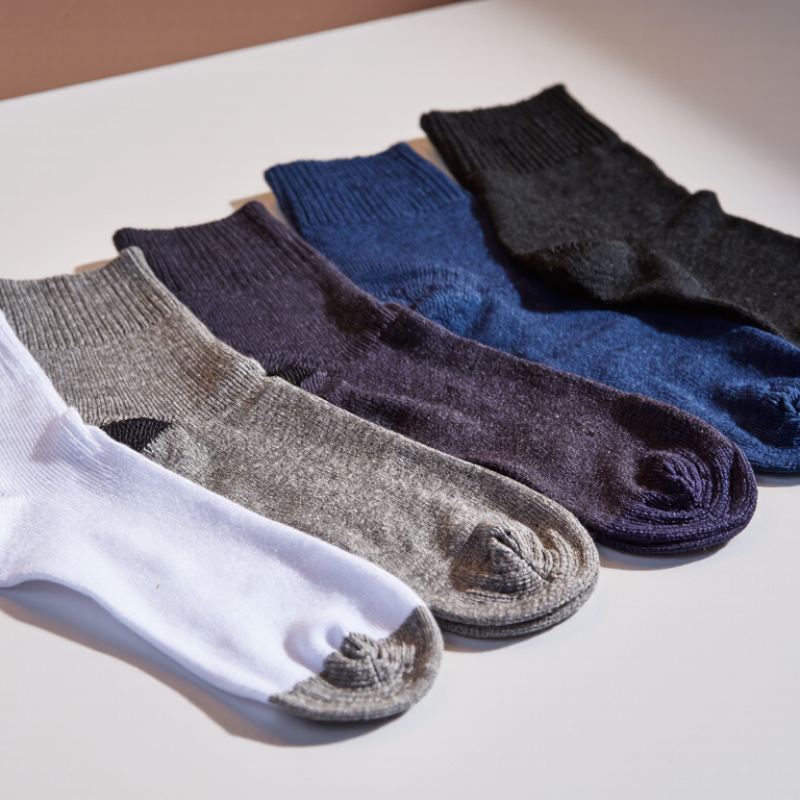
Who Are the Top Ankle Socks Manufacturers in China?

What Defines an Ankle Sock Manufacturer in China?

An ankle sock manufacturer in China does more than knit a short sock. A capable supplier can explain how yarn choice, machine settings, and finishing affect fit and durability. Cotton blends may feel soft, while synthetic fibers can help manage moisture. The right mix depends on the intended use. Small details matter. Ask how the factory controls cuff tension, heel shaping, toe seams, and size grading. These choices affect whether socks stay in place inside everyday shoes.

Reliable production also depends on repeatable checks, not just a convincing sample. A manufacturer should describe how it inspects yarn, measures finished socks, and checks them after washing. Request product specifications and sample records, then compare them with bulk production. A polished sample is not enough. Review production capacity, lead times, and how the team handles defects or changes. Certifications can be useful, but verify their scope and validity rather than relying on a logo. Even experienced factories can miss a detail; clear communication and documented checks help catch problems early.

How Are China’s Leading Ankle Sock Manufacturers Identified?

China’s leading ankle sock manufacturers are identified through verifiable capabilities, not polished catalogues. Buyers can ask how long a factory has made ankle socks, what equipment it uses, and whether it handles knitting, linking, and finishing in-house. Clear answers matter. So do production records and quality checks. Request details about yarn composition, size grading, cuff recovery, and seam comfort. These specifics reveal whether a supplier understands daily-wear performance or simply offers a broad product list.

Tips: Request samples in your intended yarn and thickness. Wash them several times, then inspect shrinkage, loose threads, and cuff stretch. A sample is only a starting point.

Reliable evaluation also includes checking capacity against your order size and delivery schedule. Ask for a sample inspection report, a factory profile, and references from comparable projects when available. If visiting is practical, observe how workers check pairs for holes, uneven knitting, and mismatched sizing. Remote buyers can request dated production photos or a live video walkthrough, though neither replaces independent verification. Be cautious of unusually broad claims without supporting records. A strong first sample can still disappoint in bulk production, so confirm how defects are handled and whether pre-shipment checks are documented. Even careful screening leaves some uncertainty; that is worth acknowledging.

How to Identify Leading Ankle Sock Manufacturers in China

Suggested evaluation weights for comparing manufacturers, rather than measured scores for specific companies.

Use these criteria as a consistent screening framework: verify quality and compliance documentation, assess production capacity, review customization capabilities and export experience, and check sustainability and supply-chain transparency. The percentages are proposed assessment weights and do not represent independently collected industry statistics.

Profiles of Notable Ankle Sock Manufacturers in China

China’s ankle sock sector includes export-focused factories, specialist knitting workshops, and larger integrated producers. A Zhejiang-based factory profile often centers on flexible production: circular knitting machines handle cotton blends, while a small sample room tests cuff height, toe shape, and color. Buyers should ask for material specifications and pre-production samples. A neat sample is not proof of consistent bulk quality.

In Guangdong, some manufacturers work closely with trading and design teams, making it easier to adjust packaging, sizing, and seasonal colors. Their strength may be quick communication rather than unusual knitting technology. Check how they record yarn lots and inspect finished pairs. Ask to see measurements after washing, not only straight from the machine.

Larger producers in Jiangsu may offer knitting, linking, boarding, and packing under one roof. That can simplify coordination, though in-house production does not guarantee better socks. Examine toe seams, elastic recovery, and fabric density under normal handling. Small details matter. Factory profiles can change, and online descriptions may omit subcontracting. Request a current production walkthrough or a third-party inspection plan before placing a substantial order.

Who Are the Top Ankle Socks Manufacturers in China? — Profiles of Notable Ankle Sock Manufacturers in China
Manufacturer Profile Common Manufacturing Base Typical Ankle Sock Focus Common Production Capabilities What Buyers Should Verify
Hosiery-cluster specialist Datang, Zhuji, Zhejiang Everyday cotton-blend ankle socks and high-volume basic styles Knitting, linking or toe closing, boarding, inspection, and packing; capabilities vary by factory Factory address, production equipment, sample quality, capacity for the requested specification, and whether processes are in-house
Export-oriented private-label producer Zhejiang manufacturing and trade centers, including the Yiwu area Custom colors, size ranges, packaging, and buyer-specific designs Product development and export coordination, often supported by a network of production partners Which legal entity manufactures the socks, traceability of subcontracted work, export experience, and packaging accuracy
Performance-sock specialist Manufacturing locations vary across China Sport and training ankle socks, including cushioned soles or engineered ventilation zones Specialized knitting and finishing options may be available depending on machinery and yarn selection Fiber composition, construction details, fit and durability samples, test reports, and performance claims
Organic or recycled-material focused producer Manufacturing locations vary across China Ankle socks made with specified organic, recycled, or other traceable fibers Material sourcing and production depend on supplier documentation and the factory’s handling controls Current transaction certificates or other applicable documents, material percentages, chain of custody, and certification scope
Small-batch customization producer Regional factories and supplier networks across China Shorter runs, custom patterns, promotional socks, and product sampling Sampling and customization options depend on minimum-order requirements and available knitting programs Minimum order quantity, sample and setup charges, lead times, color matching, and repeat-order consistency

Note: These are industry profile types, not company-specific rankings or verified factory records. Capabilities, certifications, minimum order quantities, and lead times should be confirmed directly with each prospective supplier.

What Products and Services Do These Manufacturers Offer?

Chinese ankle sock manufacturers commonly offer no-show, low-cut, crew, and athletic styles. Materials may include combed cotton, recycled polyester, nylon, and elastane, depending on the requested feel and performance. Buyers can specify cushioning under the heel, mesh ventilation across the instep, or reinforced toe and heel zones. Small details matter.

Many factories provide development services, including yarn selection, size grading, color matching, and sample revisions. Some support custom knitting patterns, embroidery, labels, and retail packaging. Before bulk production, buyers should review a physical sample and confirm measurements after washing. Fit varies.

Manufacturers may also offer in-line checks for dimensions, stitching, elasticity, and color consistency. Ask how defects are recorded and whether inspection results can be shared. Testing options differ by factory, so confirm which material or performance tests are available rather than assuming they are included. Clear specifications help prevent avoidable changes, though even a careful sample may not reveal every issue in a large production run.

How to Evaluate and Choose a Chinese Ankle Sock Manufacturer

Who Are the Top Ankle Socks Manufacturers in China?

How to Evaluate and Choose a Chinese Ankle Sock Manufacturer

Choosing a manufacturer takes more than comparing prices. Ask whether the supplier operates its own knitting and finishing lines or outsources key steps. Request a sample with clear specifications: fiber composition, sock length, size range, cuff construction, and toe-seam type. A neat sample is useful, but it cannot prove bulk consistency.

Check how the factory controls quality during production. Ask for inspection records and details on how it measures size, seam strength, color consistency, and shrinkage after washing. Confirm minimum order quantities, production lead times, and how defects are handled. If possible, visit the site or arrange an independent inspection. Then test a small order. Wear and wash several pairs; note whether cuffs loosen or toes rub. Even a careful review cannot remove every risk.

Tips: Put agreed specifications in writing, including tolerances. Keep one approved sample for comparison. Ask who handles reorders and material changes. Small details matter. A supplier’s answers should be specific and consistent, not simply reassuring.