
Choosing among China’s top 10 Pvc Cooler Bag manufacturers requires more than comparing logos or factory photographs. A reliable supplier should demonstrate stable PVC film quality, clean heat-sealed seams, effective insulation, and practical zipper performance. These details matter when ice packs sweat inside a bag or a lunch container presses against its lining.
Packaging scholar Dr. Susan Selke has noted, “Packaging is a system, not a single object.” That principle fits every Pvc Cooler Bag evaluation. The outer material, insulation layer, handle, stitching, printing, and shipping carton must work together. A beautiful sample can still fail during repeated folding. Small weaknesses become visible quickly.
This guide examines manufacturers through factory experience, customization capability, production consistency, and quality-control practices. It also considers minimum order quantities, lead times, food-contact documentation, material testing, and communication during sampling. Certifications may support trust, but they should not replace independent verification. Buyers should request current reports and inspect samples before placing large orders.
The ranking is not absolute. No list is perfect. Different buyers need different strengths. A promotional distributor may value low minimum quantities, while a supermarket chain may require strict audits and dependable monthly capacity. Some manufacturers may present excellent samples but provide limited after-sales support. That risk deserves attention.
The following review aims to make supplier research clearer and more practical. It focuses on evidence, not exaggerated claims. Readers can compare each Pvc Cooler Bag manufacturer with their own budget, market, design requirements, and compliance responsibilities. Real-world performance remains the final test.
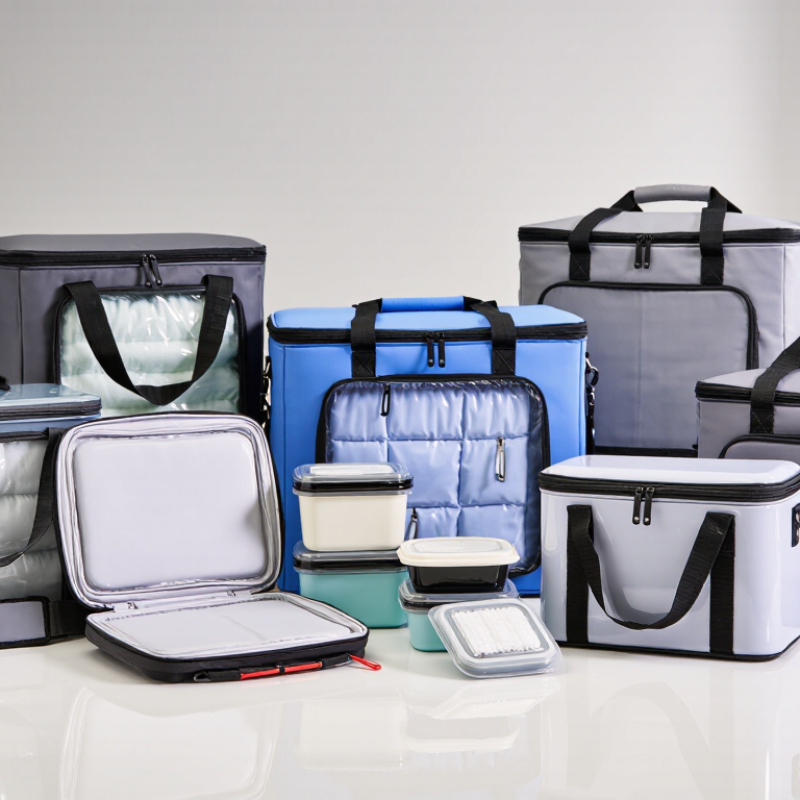
A PVC cooler bag is a flexible insulated carrier with an outer layer made from PVC or PVC-coated fabric. Inside, foam helps slow heat transfer, while a wipe-clean lining contains moisture from chilled drinks or melting ice. Construction varies by supplier, so “PVC cooler bag” does not describe one fixed insulation level. Check the lining, zipper seams, and stated capacity before choosing one.
It is useful for picnics, grocery trips, road travel, and carrying lunch. Pack cold items together, keep the bag out of direct sun, and avoid leaving it open. Small details matter. A loose zipper can let warm air in, while a damp bag stored closed may develop odors. Clean spills promptly and let the interior dry fully. PVC itself does not keep food cold; insulation and packing practices do.
PlasticsEurope’s Plastics—The Fast Facts 2023 reports that global plastics production reached 400.3 million tonnes in 2022. That figure describes the wider materials industry, not cooler-bag demand, but it highlights why buyers should examine material and construction claims carefully.
One limitation is easy to miss: a cooler bag can slow warming, but it is not a refrigerator. Check product guidance for safe storage times, especially during long outings.
Choosing China’s top ten PVC cooler bag manufacturers requires more than counting export volume. A strong evaluation begins with verified production experience. Review factory history, monthly capacity, workshop organization, and records from comparable orders. Product specialists should inspect PVC thickness, weld strength, insulation layers, zipper performance, and handle reinforcement. A cooler bag may look excellent yet leak around a corner. That small detail matters.
Independent testing and traceable quality controls add authority to the selection. Evaluators should request material reports, food-contact documentation where relevant, and inspection records for finished goods. They should compare pre-production samples with random cartons from the same order. Temperature retention, seam durability, odor, print accuracy, and load performance deserve practical checks. Factory audits should also examine worker safety, waste handling, and corrective-action records. Paperwork alone is not enough.
Reliable manufacturers communicate clearly about tooling, minimum quantities, lead times, packaging, and acceptable tolerances. Their quotations should separate material, printing, accessories, testing, and shipping costs. Fast replies help, but useful answers matter more. A transparent supplier explains limitations instead of promising everything. Selection teams should score evidence, not polished presentations. Even experienced factories can miss a detail, and one sample cannot prove every batch. Rechecking after production remains necessary.
Who are the top 10 PVC cooler bag manufacturers in China? Public data does not support a dependable ranked list. China’s National Bureau of Statistics reported 74.885 million tonnes of plastic products in 2023, but that broad category does not separate PVC cooler bags or identify their factories. A precise “top 10” ranking would therefore need verified company-level production data, which is rarely published.
For buyers, compare factories using evidence, not search-result rankings. Ask for the actual production address, recent order references, and photos of sewing, heat-sealing, and insulation work. Check sample details: PVC thickness, lining seams, zipper strength, handle stitching, and leak resistance. Request documented quality checks and confirm whether testing covers the finished bag, not just its raw materials. Small details matter.
Market reports can indicate demand, but they cannot prove which factory makes the most bags. That distinction is easy to miss. A supplier may trade products made elsewhere, while a capable factory may have little online visibility. One limitation remains: without independent audits and comparable output figures, naming ten “top” manufacturers would create false certainty. Shortlist factories by verified capability, then compare samples and delivery records before deciding.
Typical PVC density ranges are shown as material context for evaluating cooler-bag suppliers. Actual values vary by formulation; this chart does not rank manufacturers or represent company-specific data.
China’s top 10 PVC cooler bag manufacturers should be compared through evidence, not catalog photographs. Grand View Research reported steady growth in the global insulated packaging market, driven by food delivery and outdoor consumption. This demand rewards factories with stable PVC films, dense insulation, and repeatable welding. Quality checks should include seam pressure testing, zipper-cycle testing, odor inspection, and thermal-retention trials. EN 12546-2 provides a useful reference for insulated-container performance, although many soft bags need additional factory testing.
Production capacity differs sharply. A large factory may operate several automated cutting and heat-sealing lines, while a smaller specialist may deliver better control on short runs. Ask for monthly output, defect rates, lead times, and recent audit records. A practical test is simple: inspect one hundred bags from a production batch. Check stitching at the handles, corner folds, liner alignment, and drain resistance. Small details matter. Capacity claims can be inflated.
Services separate acceptable suppliers from dependable ones. Strong manufacturers provide digital mockups, material samples, pre-production approvals, carton testing, and traceable corrective actions. They should also explain PVC thickness, insulation density, food-contact suitability, and recycling limitations clearly. The 2024 McKinsey packaging research highlights growing pressure for measurable sustainability, yet PVC recycling remains complicated in mixed-material products. That weakness deserves honest discussion. A supplier offering fast replies but vague test data is not necessarily service-oriented. A slower team with documented inspections may be safer for long-term purchasing. No factory wins every measure. Your scoring model should balance quality, capacity, customization, communication, and verified delivery performance.
Choosing among the China top 10 PVC cooler bag manufacturers requires more than comparing catalog photos. Check factory experience with PVC welding, insulated lining, zipper sealing, and reinforced handles. Request recent test records for seam strength, leakage, thermal retention, and load capacity. A practical sample should survive a full day in a vehicle, not only look attractive on a screen.
Material documentation matters. The OECD Global Plastics Outlook reported that only 9% of global plastic waste was recycled in 2019. Therefore, ask whether the PVC contains restricted substances and whether suppliers can provide food-contact, REACH, or equivalent compliance documents for your target market. Confirm the fabric thickness, insulation type, and test method. “High quality” is not a measurable specification.
Production reliability is equally important. The ISO Survey 2022 recorded over one million ISO 9001 certificates worldwide, but certification alone cannot prove daily control. Review batch records, inspection points, defect rates, and corrective-action reports. Ask about minimum order quantities, sample approval, tooling charges, and realistic lead times. An unusually low quote may hide thinner PVC or weaker stitching. I would also inspect packaging waste and communication speed. Small details often expose larger problems. No supplier is perfect, and buyers should leave room for retesting before mass production.