How to Source Mens Black Cowboy Hats Wholesale?
Sourcing a Mens Black Cowboy Hat wholesale requires more than comparing catalog prices. The right supplier must balance shape, material, sizing, finishing, and dependable delivery. A black western hat may look simple on a product page, yet small details decide its retail value. Check the crown structure, brim recovery, sweatband stitching, lining quality, and color consistency under natural light. Black felt can show dust, uneven dye, and weak brushing quickly.
John B. Stetson, the pioneering American hatmaker, is often associated with this practical principle: “A good hat should protect, fit, and reflect the wearer.” That idea remains useful for wholesale buyers. A Mens Black Cowboy Hat should protect against weather, sit securely, and match the customer’s lifestyle. Ask suppliers for material specifications, size charts, production photographs, and physical samples. Request one sample before placing a large order. It may feel slower, but it can prevent expensive mistakes.
Experienced buyers also inspect packaging. A crushed crown can damage customer trust before the hat is worn. Confirm carton strength, moisture protection, labeling, and replacement policies. Ask whether the factory controls production internally or uses unknown subcontractors. That answer matters.
Do not choose only by the lowest quotation. Low prices can hide inconsistent sizing, thin felt, or unstable supply. Still, premium pricing is not automatic proof of quality. Test it.
A reliable sourcing process records every decision, from sample approval to final inspection. Some assumptions may prove wrong. That is normal. Review customer feedback, update specifications, and improve the next order. This careful approach helps retailers build a credible western-hat collection with fewer surprises.
Define the Market and Buyer Requirements for Men’s Black Cowboy Hats
Before sourcing men’s black cowboy hats wholesale, define the buyer you intend to serve.
A ranchwear retailer may need durable felt, while festival sellers often prefer lightweight straw. Ask where the hat will be worn, how often, and in which climate. Hot regions may favor breathable materials and ventilation. Cooler markets may value a firm crown and warmer felt. Keep the profile specific. “Men aged 25–45” is not enough.
Record measurable requirements before contacting suppliers.
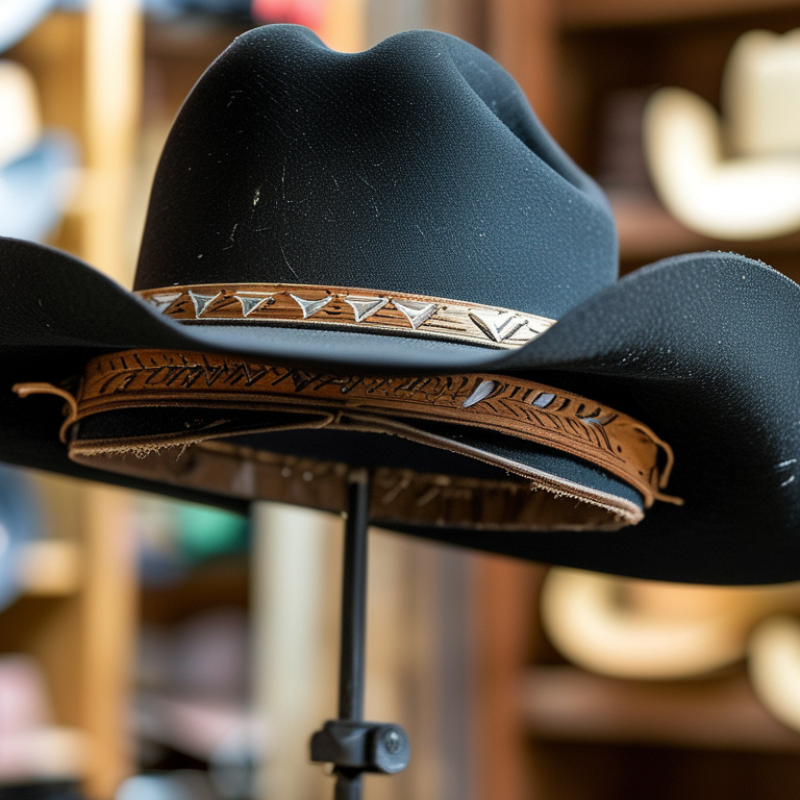
Note head sizes, crown height, brim width, hatband style, lining, edge finish, and black color tolerance. A buyer may request deep matte black, not a shiny surface. Fit still matters. Check whether the hat keeps its shape after packing and light handling. Request a pre-production sample, measurement sheet, material details, and clear photos under neutral lighting. Samples expose flaws that catalogs hide. Sometimes the first estimate is wrong.
Wholesale decisions also depend on selling conditions.
Compare expected retail price, target margin, minimum order quantity, carton space, and seasonal demand. Ask whether buyers need individual boxes or protective sleeves. Rural stores may prefer practical sizes and steady replenishment. Online sellers may need consistent photography and low return rates. Details matter. Keep written inspection criteria for stitching, odor, dents, loose bands, and size accuracy. Do not approve a large order from one attractive sample alone. A small pilot order is safer, though it can slow the launch. This tradeoff deserves honest review.
Identify Reliable Wholesale Suppliers and Manufacturing Regions
Sourcing men’s black cowboy hats wholesale starts with finding suppliers who can prove consistency, not just display attractive photos. Request their business registration, factory address, production capacity, and recent export records. A video tour can reveal useful details, such as stitching stations, hat-blocking equipment, and finished-goods storage. Still, a polished tour is not complete evidence. Ask for independent references and verify whether the listed factory actually produces hats.
Manufacturing regions offer different advantages. Northern China often provides broad material choices, flexible quantities, and efficient private-label production. Mexican workshops may offer strong Western hat skills, especially for felt shaping and leather details. United States manufacturers can support domestic production and clearer local communication, but their prices and minimum orders may be higher. These are general patterns, not guarantees. Factory capability matters more than location.
Order samples before discussing large quantities. Check crown symmetry, brim recovery, sweatband comfort, stitching tension, color depth, and odor after packaging. Black hats show lint, uneven dye, and surface scratches quickly. Ask suppliers for material specifications, dimensional tolerances, packaging tests, and production timelines. Confirm that labels, fiber content, and care information meet the destination market’s requirements. Keep written records of every change. Small mistakes become expensive at scale. I have seen attractive samples hide weak brim edges and loose bands. A second inspection is worth the delay. No supplier is perfect. Reliability comes from transparent answers, repeatable samples, and inspections before shipment.
How to Source Men's Black Cowboy Hats Wholesale?
Typical wholesale price ranges by manufacturing region
China and Vietnam are commonly considered suitable for competitive pricing and scalable production, while Mexico is often preferred for North American proximity and Western-style craftsmanship. India can be attractive for felt and wool-based products. Before placing an order, verify material composition, sample quality, production capacity, certifications, lead time, and pre-shipment inspection procedures.
Compare Hat Materials, Styles, Sizes, and Customization Options
Sourcing men’s black cowboy hats wholesale starts with material, not color. Wool felt is warm, affordable, and suitable for seasonal collections. Fur felt usually offers a smoother finish and stronger shape retention, but costs more. Straw is lighter for summer, although it may not suit cold-weather buyers. Textile Exchange’s Materials Market Report 2024 recorded global fiber production at about 124 million tonnes in 2023. This figure supports a practical question: is the supplier using durable fibers or simply chasing low prices? Request fiber composition, GSM, finishing details, and colorfastness records before ordering.
Style affects both shelf appeal and return rates. A cattleman crown gives a traditional profile, while a pinch-front crown looks sharper and often feels more contemporary. Brim widths near 3.5 to 4 inches offer a balanced wholesale option. Measure the inner sweatband, not only the external shell. A small size chart should include centimeters and US hat sizes. For customization, compare hatbands, metal-free trims, sweatband labels, crown height, brim binding, packaging, and private woven labels. Confirm whether samples match bulk production. They sometimes do not.
Tips: Order size-set samples in black, because dark surfaces reveal uneven dye, dust, and weak stitching. Ask for abrasion and shrinkage results when available. The American Society for Testing and Materials publishes relevant textile testing methods, but test coverage differs by factory. My own sourcing preference is a smaller first order. It costs more per unit, yet exposes sizing mistakes early. A perfect specification can still fail in real wear.
Verify Supplier Quality, Pricing, Minimum Orders, and Certifications
Sourcing men’s black cowboy hats wholesale requires more than comparing catalog prices. Ask for fiber composition, crown measurements, brim width, lining details, and colorfastness results. Request a physical sample before approving bulk production. Black dye can hide uneven finishing, white dust, or weak stitching. Textile Exchange’s Materials Market Report 2024 states that global fiber production reached 124 million tonnes in 2023, with polyester accounting for 57%. This makes material claims worth checking, not assuming.
Pricing should include packaging, inland freight, inspection, and customs charges. Compare landed cost, not only the factory quote. Request a tiered price sheet for 50, 100, and 500 pieces. Confirm the minimum order quantity and whether mixed sizes count toward it. Certification documents also need verification. OEKO-TEX Standard 100 evidence should match the exact fabric and production facility. ISO 9001 can indicate documented quality controls, but it does not guarantee a perfect hat. That distinction is easy to miss.
Tips:
Use a pre-shipment checklist with crown shape, brim symmetry, sweatband attachment, stitching density, and carton labels. Photograph each sample under natural light. Ask for a recent test report, certificate number, issuing body, and expiry date. A supplier avoiding these details may still offer a low price, but the risk becomes yours. My cautious view is simple: approve slowly. I have seen attractive samples fail during packing, and that possibility should remain in the buying calculation.
Arrange Samples, Negotiate Terms, and Manage Wholesale Shipping
When sourcing men's black cowboy hats wholesale, samples reveal more than photographs. Request three sizes and two brim shapes from the same production batch. Check crown recovery after gentle handling. Inspect stitching, sweatband attachment, edge binding, and color consistency under daylight. A sample should arrive in protective packaging, not a crushed carton. Measure head openings with a soft tape. Record each result. I once approved a hat with a clean finish, then noticed uneven sizing across the second carton. That mistake delayed a seasonal order.
Use a written specification before negotiating terms. Include material composition, crown height, brim width, lining, hardware, size range, tolerance, and acceptable defect rate. Ask whether the quoted price includes sampling, custom labels, inner boxes, and inspection. Confirm payment stages and production timing in plain language. Do not rely on chat messages alone. A signed purchase sheet reduces memory gaps. Negotiate a replacement process for crushed cartons or incorrect sizes. Smaller quantities may cost more, but they can protect cash flow while demand remains uncertain. Leave room for revision.
Wholesale shipping needs its own calculation. Compare carton dimensions, gross weight, port charges, insurance, and final-mile delivery. Ask for carton photos before dispatch. Use moisture barriers when storage conditions are humid. Keep black hats separated with tissue or molded supports to prevent dye transfer and brim distortion. Request tracking documents and a packing list matching carton counts. Build a realistic buffer for customs clearance and warehouse receiving. It is easy to underestimate local handling fees. Recheck them.