
How to Source Anime Character Plush in 2026?
Sourcing Anime Character Plush in 2026 requires more than comparing catalog prices. Buyers must connect character demand, supplier capability, product safety, and documented rights. A convincing design can still fail when stitching loosens, colors bleed, or the filling feels uneven. Small details matter. This guide explains how experienced buyers can move from a promising image to a dependable production decision. It focuses on traceable suppliers, clear specifications, realistic budgets, and responsible communication.
The process begins with evidence. Check a supplier’s business identity, factory history, sample quality, audit records, and customer references. Ask who owns the character rights and request appropriate authorization before production. Do not rely on copied marketplace photos. Request a preproduction sample with measured dimensions, fabric composition, embroidery placement, seam strength, stuffing density, labels, and packaging. Independent testing may be appropriate for children’s products, especially where local rules require material, flammability, or chemical compliance. Requirements differ by market, so confirm them with qualified specialists.
Reliable sourcing also includes practical forecasting. Compare minimum order quantities, tooling charges, lead times, inspection costs, shipping terms, and replacement policies. Keep every revision in writing. A supplier may promise a perfect match, yet the final plush can change after bulk cutting. That risk deserves a quality checkpoint. In practice, the cheapest quote often hides expensive corrections. Still, no checklist removes uncertainty. Samples can mislead, and production schedules can slip. Review decisions honestly, record failures, and improve the next order. Done carefully, Anime Character Plush sourcing becomes a controlled, evidence-based process rather than a hopeful purchase.
Define the Anime Character Plush You Need
How to Source Anime Character Plush in 2026?
Define the Anime Character Plush You Need
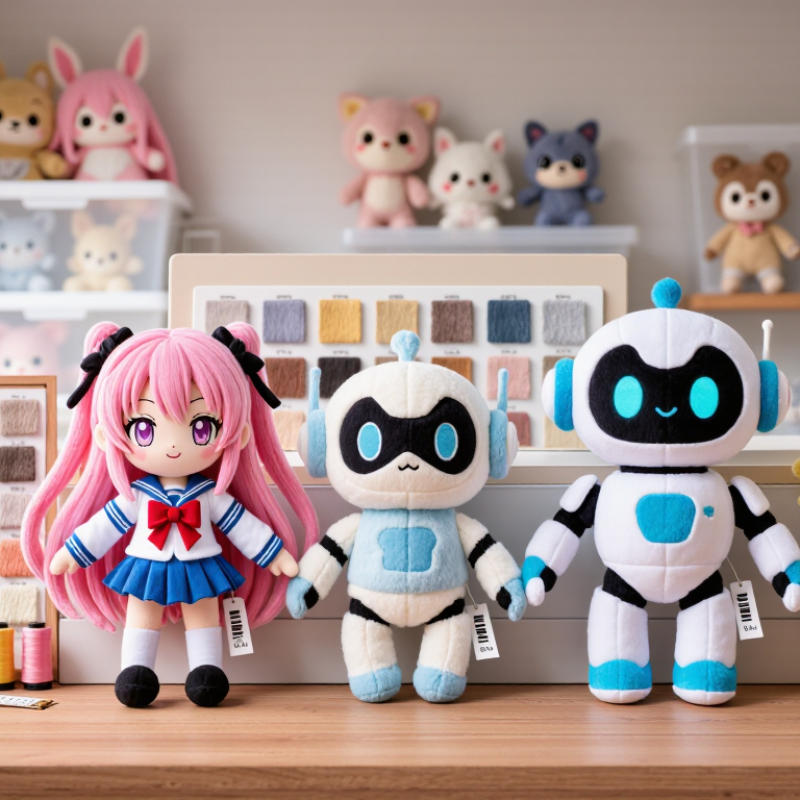
A good sourcing brief starts with the character’s identity, not the factory’s catalog. Define the character, expression, pose, size, fabric, filling, and target age group. Add a simple front, side, and back sketch. In 2023, the Association of Japanese Animations reported a global anime industry value of 3.3465 trillion yen. Grand View Research estimated the anime market at USD 28.61 billion in 2023. These figures show strong demand, but they do not guarantee sales for an unclear plush concept.
Specify measurable details. A 20-centimeter seated plush needs different proportions than a 35-centimeter standing plush. State the eye embroidery method, fabric softness, seam placement, and acceptable color tolerance. Include packaging dimensions and a target unit weight. My early briefs were too general, and sample revisions became expensive. That mistake still affects how I plan product specifications. Also confirm that you have proper authorization before developing any protected character design.
Tips: Build a one-page product sheet. Include three reference images, five must-have features, and three rejection points. Request a prototype before confirming bulk production. Check stitching, stuffing recovery, odor, loose fibers, and color accuracy under daylight. Keep a small tolerance range, because perfect screen colors rarely match physical fabric. A practical checklist may feel slow, but it prevents attractive samples from becoming unreliable inventory.
How to Source Anime Character Plush in 2026? - Define the Anime Character Plush You Need
| Specification Dimension | Recommended Definition | Practical Sourcing Requirements | 2026 Planning Benchmark |
|---|---|---|---|
| Product Format | Character plush toy with a clearly identifiable anime-style silhouette | Confirm whether the product is a sitting plush, standing plush, mascot plush, pillow plush, keychain plush, or articulated plush before requesting quotations. | Core decision Select one primary format |
| Character Definition | Original character design or properly authorized character artwork | Prepare front, side, back, facial-expression, color, accessory, and logo-placement references. Avoid using protected character artwork without documented rights. | Required Artwork and usage permission |
| Target User | Collectors, gift buyers, convention visitors, children, or general fans | Adult collector products can use more delicate accessories and display-focused details. Products intended for children require stricter safety, labeling, and durability controls. | Define early User age affects the entire specification |
| Recommended Size | 15–25 cm for a general-purpose character plush | Measure the finished product from the highest point to the lowest point. Record sitting height, standing height, width, and depth separately where the character has ears, tails, wings, or oversized clothing. | 15–20 cm: compact merchandise 20–25 cm: gift and display balance |
| Material | Short-pile polyester plush fabric for the main body | Specify fabric pile length, hand feel, color reference, colorfastness, seam strength, and resistance to shedding. Longer pile fabric may increase the difficulty of small facial details. | Short pile: approximately 1–3 mm Medium pile: approximately 4–8 mm |
| Filling | Clean, resilient polyester fiberfill | Request even filling without hard lumps, empty areas, visible fiber, or excessive compression. Define whether the product should be soft, moderately firm, or suitable for sitting display. | Moderate firmness is suitable for most character plush formats |
| Facial Details | Embroidered eyes, mouth, eyebrows, and small facial markings | Embroidery is generally more durable than glued parts. Approve stitch density, thread color, position tolerance, and facial symmetry using a physical or high-resolution sample. | Use embroidery for child-oriented products where practical |
| Accessories | Soft sewn accessories such as bows, scarves, capes, ears, tails, or removable clothing | List every accessory separately and define attachment method, dimensions, materials, color, removable parts, and spare-part requirements. Avoid sharp edges and easily detached small components for young users. | Keep accessory count low for the first production run |
| Color Control | Approved color references for fabric, embroidery, printed areas, and trims | Use physical color standards or approved color codes where possible. Require a pre-production sample because fabric texture and lighting can change the perceived color. | Approve one signed color sample before mass production |
| Construction | Reinforced seams with concealed thread ends | Check seam alignment, stitch consistency, stuffing leakage, fabric puckering, loose threads, and attachment strength. High-stress areas include ears, arms, legs, tails, handles, and clothing attachments. | Apply additional reinforcement to protruding parts |
| Safety and Compliance | Age grading and market-specific toy-safety documentation | Define the destination market before production. Request applicable test reports for mechanical and physical safety, flammability, restricted substances, small parts, labeling, and packaging. | Mandatory review Requirements vary by destination |
| Product Labeling | Care label, material information, age recommendation, warning text, and traceability details | Confirm label location, language, print durability, fiber-content format, country-of-origin rules, batch coding, and any importer or distributor information required in the target market. | Finalize labels before the production sample is approved |
| Packaging | Polybag, paper card, printed box, or display-ready packaging | Specify package dimensions, compression protection, moisture protection, barcode area, warning placement, recyclability requirements, and whether the plush must be shipped compressed or uncompressed. | Flat-packed packaging reduces shipping volume; display packaging increases presentation quality |
| Prototype Process | Artwork review → first sample → correction sample → pre-production sample | Approve measurements, colors, facial expression, stuffing density, accessories, labels, packaging, and final workmanship in writing before placing the production order. | Allow 2–4 sample rounds for a detailed character design |
| Minimum Order Quantity | Small trial order or standard production quantity based on customization level | Ask for separate quotations for sample quantity, pilot quantity, and regular production quantity. Custom fabric colors, packaging, embroidery files, and accessories may affect minimum quantities. | Common planning range: 100–1,000 pieces per design |
| Production Lead Time | Schedule from approved sample rather than from the first inquiry | Include time for material sourcing, cutting, sewing, embroidery, filling, finishing, inspection, packaging, and rework. Add contingency time for holiday periods or peak seasons. | Typical planning range: 30–75 days after approval |
| Quality Inspection | Pre-production approval plus final random inspection | Use an agreed inspection checklist covering dimensions, appearance, color, seams, stuffing, accessories, labels, packaging, carton quantity, and odor. Define acceptable defect levels in the purchase terms. | Recommended Inspect before shipment |
| Cost Structure | Separate product cost from sampling, testing, packaging, tooling, freight, and duty | Request a fully itemized quotation. A low unit price may exclude custom packaging, compliance testing, sample charges, artwork preparation, inspection, or international shipping. | Compare total landed cost, not unit price alone |
| Shipping Planning | Calculate carton dimensions, gross weight, volume, and compression method | Obtain carton packing details before selecting the shipping method. Plush products are lightweight but can be volume-sensitive, especially when packed without compression. | Use carton volume and delivery deadline to compare transport options |
| Recommended Product Brief | One-page specification sheet with reference images and measurable requirements | Include product type, size, materials, colors, character details, accessories, packaging, labeling, target market, quantity, delivery date, inspection criteria, and approval milestones. | Best practice Complete before supplier comparison |
Planning figures are indicative sourcing benchmarks for 2026. Final quantities, lead times, testing requirements, and total costs should be confirmed against the destination market, product design, order volume, packaging method, and approved production sample.