
Why Is Skin Brightening Raw Material in High Demand? The question reflects a visible shift in skincare: consumers increasingly seek products that address dullness and uneven-looking tone. A Skin Brightening Raw Material may be selected to support a more even-looking complexion. Results depend on the ingredient, formula, and consistent use. Interest also comes from expanding skincare ranges, online product discovery, and demand for targeted routines. That matters.
For formulators and ingredient buyers, demand is not only about a popular claim. They must assess identity, purity, traceability, stability, and compatibility with the finished product. A promising ingredient may behave differently in a water-based serum than in a cream. Small details count: discoloration in a clear bottle, an unexpected scent, or separation during storage can affect product quality. Evidence matters. Reliable decisions draw on relevant research, supplier records, and product-specific testing, rather than broad promises.
Manufacturers may also value consistent batches and clear technical documents when scaling formulas across product lines. Still, consistency cannot replace testing. No single ingredient suits every skin type or formulation, and visible outcomes can vary. That is easy to overlook. A useful look at this market should examine consumer demand alongside formulation quality, substantiated claims, and responsible sourcing. Interest is growing, but careful questions remain—and that tension makes the category worth exploring.
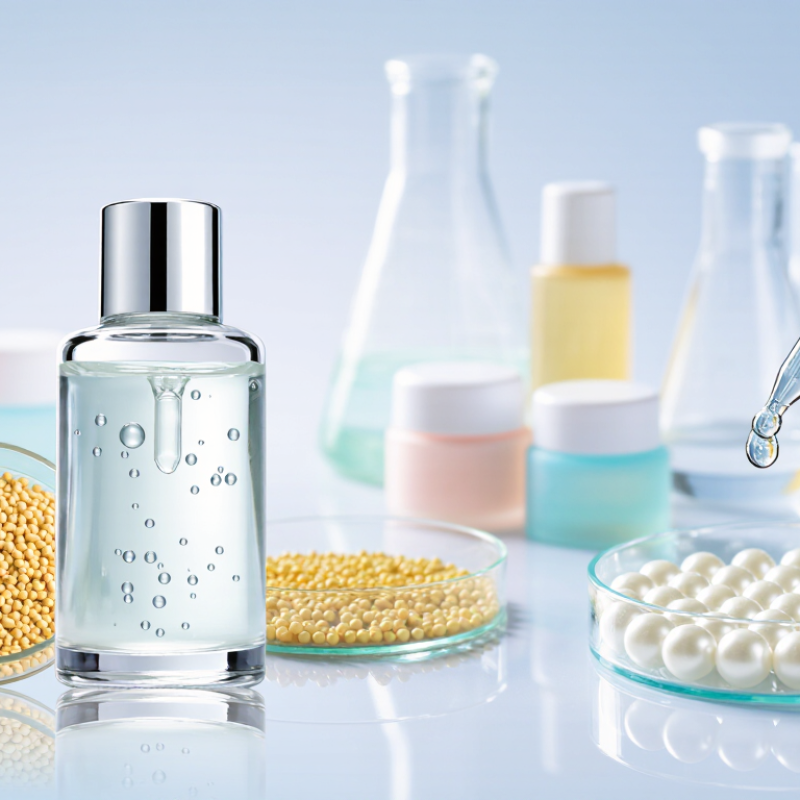
Skin-brightening raw materials are ingredients used to reduce the appearance of uneven tone, not to change a person’s natural skin color. They work through different routes. Some slow tyrosinase, an enzyme involved in melanin production; others limit pigment transfer to surface skin cells or support gradual cell renewal. Vitamin C derivatives can also help limit oxidation that makes existing pigment look darker.
Niacinamide illustrates the difference: research found it can reduce melanosome transfer, rather than directly stopping melanin production (Hakozaki et al., British Journal of Dermatology, 2002). Tyrosinase-targeting ingredients, such as arbutin, act earlier in the pigment pathway. Results are gradual. Not all work alike. A market analysis by Grand View Research estimated the global skin-lightening products market at USD 9.96 billion in 2023, reflecting broad commercial interest, though market size does not prove ingredient effectiveness.
In practice, formulation matters as much as the ingredient name. A poorly tolerated acid may cause irritation, and irritation can leave discoloration more noticeable, especially in deeper skin tones. Sunscreen helps prevent ultraviolet exposure from reinforcing pigmentation. That detail is easy to overlook. Even evidence-backed ingredients vary in strength, stability, and performance across formulas, so claims should be judged against clinical studies and the finished product—not a raw-material label alone.
Consumers are increasingly looking for products that address visible dark spots and uneven tone, rather than promising an entirely different complexion. A small mark left after a blemish can feel noticeable in bright bathroom light. That matters. It helps explain why formulators seek skin-brightening ingredients that fit everyday routines and target specific concerns.
Preferences have shifted toward clear ingredient information and products that feel gentle enough for regular use. Shoppers often compare labels, read about an ingredient’s role, and look for evidence behind product claims. They may prefer lightweight creams or serums that layer easily under sunscreen. The details matter. For manufacturers, this creates demand for raw materials with reliable quality, formulation compatibility, and safety data. A promising ingredient still needs testing in the finished product; its performance can change with concentration, packaging, and other ingredients.
There is a tension here. Many consumers want quick, dramatic changes, but visible results can take time and vary by skin type and cause of discoloration. That expectation can be unrealistic. Brightening products should not suggest that natural skin tone needs correction, and sun protection remains important when managing uneven pigmentation. More informed shoppers are asking for modest claims, readable directions, and products designed with sensitive skin in mind. Raw material demand increasingly reflects those expectations, though the industry does not always communicate them perfectly.
Which Ingredients and Benefits Shape the Market
Demand reflects consumers’ interest in more even-looking skin, not just lighter skin. Grand View Research estimated the global skin-lightening products market at USD 10.6 billion in 2023, with projected growth of 5.5% annually from 2024 to 2030. This covers finished products, not raw materials, so it signals ingredient demand indirectly.
Niacinamide is valued for helping reduce the appearance of uneven tone while supporting the skin barrier. Vitamin C is used for antioxidant support and a brighter-looking complexion. Azelaic acid and licorice-derived ingredients also appear in formulas targeting visible dark spots. Results vary. No single ingredient suits everyone.
These benefits depend on formulation, concentration, stability, and regular use. For example, vitamin C can degrade when exposed to air and light, so packaging matters. Exfoliating acids may irritate sensitive skin. “Brightening” is not a guarantee of a specific result, and persistent pigmentation may need professional assessment. The market is growing, but that does not make every trending ingredient equally effective.
Tips: Patch-test new products, introduce one active at a time, and use daily sun protection. Check ingredient lists and follow product directions. Less is often more.
Demand is rising, but a brightening claim alone is weak evidence. Buyers need ingredients with clear use levels, reliable documentation, and results relevant to real skin. Safety is not a label claim. It depends on dose, exposure, impurities, and how a formula is used.
The European Commission’s Scientific Committee on Consumer Safety assessed alpha-arbutin and concluded it is safe at up to 2% in face creams and 0.5% in body lotions, under specified conditions (SCCS, 2023). Those figures help formulators set practical limits; they do not guarantee every finished product is safe for every person. Supplier records, batch consistency, stability testing, and impurity controls still matter.
Evidence also needs context. In an 18-week clinical study, topical 5% niacinamide reduced visible hyperpigmentation (Hakozaki et al., British Journal of Dermatology, 2002). A study result is useful, but it cannot predict every user’s response. Skin tone, irritation, and consistent use can change the outcome. The less convenient truth is that ingredient selection rarely rests on one headline result. Teams should weigh published evidence against product testing and disclose what remains uncertain.
Why Is Skin Brightening Raw Material in High Demand?
Product innovation is widening the role of brightening ingredients. They now appear in facial serums, daily moisturizers, sunscreens, and body-care formulas. According to Grand View Research’s Skin Lightening Products Market Size, Share & Trends Analysis Report, the global market was valued at USD 10.6 billion in 2023. The report forecasts a 5.4% compound annual growth rate from 2024 to 2030. This measures finished products, not raw materials, but it signals sustained consumer interest. Demand is shifting. Formulators are developing targeted products for uneven tone and the look of post-acne marks, while also seeking textures suitable for everyday use.
That expansion raises technical demands. A brightening ingredient must remain stable in its formula, feel comfortable on skin, and work alongside other components. For example, a lightweight serum may need to dry without tackiness, while a body lotion must spread evenly across larger areas. These goals can conflict. A promising active may discolor, lose stability, or irritate some users; laboratory testing and appropriate safety review matter before launch. Claims should stay evidence-based and avoid promising identical results for every skin type.
Tips: Check stability, compatibility, and skin tolerance in the finished formula—not just in the raw material. Cite ingredient-specific evidence when making performance claims.
Interest in brightening ingredients is supported by demand for more even-looking skin tone and products addressing the appearance of dark spots and post-inflammatory hyperpigmentation. The table summarizes established ingredient functions and formulation opportunities without relying on market-size estimates.
| Raw Material / Ingredient | Established Cosmetic Function | Why It Is Relevant to Demand | How Product Innovation Expands Applications | Formulation and Evidence Considerations |
|---|---|---|---|---|
| Niacinamide (vitamin B3) | Can help reduce the transfer of melanosomes from melanocytes to surrounding skin cells, supporting a more even-looking complexion. | It can be incorporated into products aimed at uneven tone while also supporting barrier-focused skincare routines. | Used in serums, moisturizers, and layered routines; compatible product concepts can combine it with hydration and barrier-support ingredients. | Performance depends on the finished formula and use pattern. Avoid implying that a cosmetic product changes a person’s natural skin color. |
| Vitamin C and its derivatives | Vitamin C is an antioxidant; some forms can also influence processes involved in melanin formation. | Its antioxidant role makes it relevant to daytime routines designed to address the appearance of dullness and uneven tone. | Derivative selection and encapsulation can support different product formats, including lightweight serums and combination antioxidant products. | Stability varies by form, pH, packaging, and exposure to light and air. Finished-product testing is important for stability and performance claims. |
| Azelaic acid | Has multiple skin-care functions, including effects on tyrosinase activity and use in products for blemish-prone skin. | It can address the appearance of post-blemish marks, linking brightening applications with routines for uneven tone and blemish-prone skin. | Formulation work can improve texture and spreadability in creams, gels, and targeted products used alongside gentle cleansing and sun protection. | Concentration, product classification, and permitted claims vary by market. Tolerability should be assessed for the intended formulation and user group. |
| Alpha-arbutin | Used in cosmetic formulations to help reduce the appearance of dark spots through effects on tyrosinase, an enzyme involved in melanin production. | Its targeted role makes it suitable for spot-focused and tone-evening product concepts. | It can be incorporated into serums and lotions, or combined with complementary ingredients in multi-step routines. | Use levels and product claims should comply with current local regulations. Formula stability and ingredient compatibility require testing. |
| Kojic acid | Can inhibit tyrosinase activity and is used in some products intended to improve the appearance of uneven pigmentation. | It offers formulators another ingredient option for products focused on the appearance of dark spots. | Compatibility testing and protective packaging can help support product development across creams, lotions, and targeted treatments. | Stability and skin tolerance can be formulation-dependent. Regulatory requirements and restrictions differ among markets. |
| Licorice-root constituents | Some licorice-derived compounds, including glabridin, have been studied for effects related to tyrosinase activity and skin soothing. | The combination of tone-care and soothing positioning can suit products designed for routines focused on visible post-irritation marks. | Extract standardization and ingredient selection allow use in creams, serums, and calming products for different skin-care routines. | Extract composition varies with source and processing. Standardization, safety assessment, and evidence for the specific finished product are important. |
| Tranexamic acid | Used in topical skin-care products targeting the appearance of uneven tone; proposed mechanisms are not identical to those of tyrosinase inhibitors. | It broadens brightening formulations beyond ingredients that primarily target melanin-forming enzymes. | It can be developed for targeted serums or incorporated into multi-ingredient tone-care routines, subject to compatibility testing. | Evidence and permitted cosmetic claims vary by product and jurisdiction. Avoid presenting topical cosmetic use as equivalent to medical treatment. |
| Broad-spectrum UV filters | Help protect skin from ultraviolet radiation when used as directed; sun protection can help prevent the worsening of visible pigmentation. | Brightening routines are more complete when paired with daily sun protection, since UV exposure can contribute to uneven pigmentation. | Innovations in texture, finish, and product format can make daily use more convenient, including moisturizers or other products with sun protection. | UV filters are regulated differently across markets. Protection depends on the finished product, adequate application, and reapplication as directed. |
Note: Ingredient effects depend on concentration, formulation, use, and individual skin characteristics. Cosmetic claims should be supported by appropriate evidence, and ingredient use must comply with regulations in the market where the product is sold.