
Natural Stretch Fabric is becoming an important answer to rising demand for comfort, lower-impact materials, and everyday flexibility. Yet, the label can mislead. A fabric may stretch because of natural fiber structure, knitted loops, or added elastane. These are not identical solutions.
Textile Exchange’s Materials Market Report 2024 estimated global fiber production at 124 million tonnes in 2023. It also projects production could reach 160 million tonnes by 2030. This growth increases pressure on brands to explain fiber origins and manufacturing choices clearly. Cotton, wool, hemp, and some regenerated cellulosic fibers can provide different forms of movement. Wool offers natural crimp. Knitted cotton gains flexibility through loop construction. Hemp and linen usually stretch less, but careful spinning and fabric engineering can improve comfort.
The making process begins with fiber selection and preparation. Spinning creates yarn with controlled strength and surface character. Knitting usually delivers more stretch than stable woven construction. Weaving can still create movement through weave design, yarn twist, and finishing treatments. Manufacturers should test elongation, recovery, and dimensional stability under recognized methods, such as ASTM D4964 for textile stretch behavior.
Small details matter. A sleeve may recover poorly after repeated wear. A soft waistband may relax after washing. This is where product experience meets laboratory evidence. Natural does not automatically mean durable, biodegradable, or low-impact. That assumption deserves scrutiny. This guide examines how Natural Stretch Fabric is made, why it moves, and where its performance claims need careful verification.
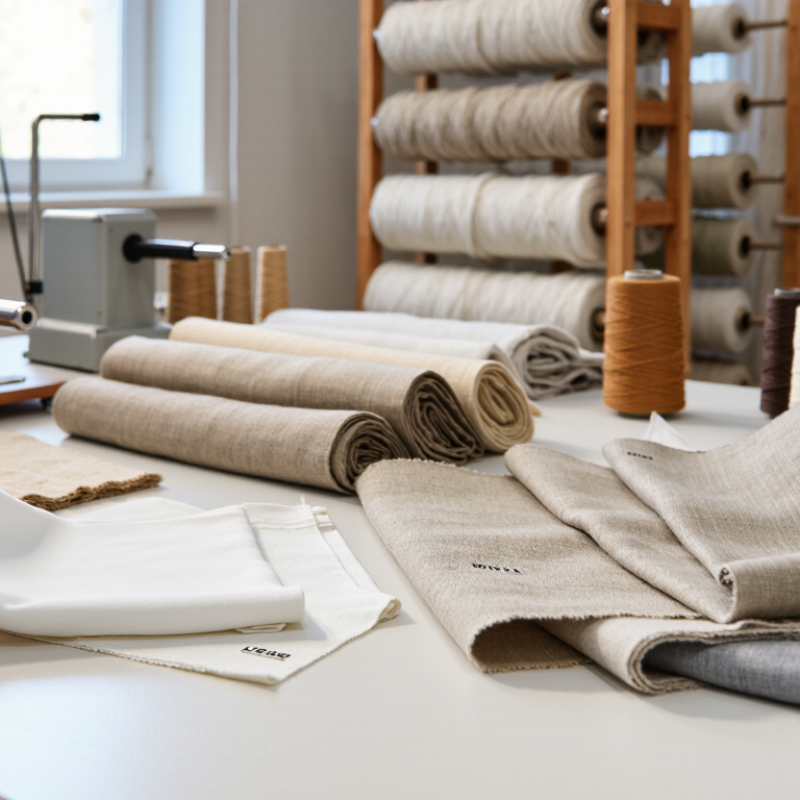
Natural stretch fabric is made mainly from plant or animal fibers, such as cotton, linen, wool, or silk. Its flexibility often comes from the fabric structure, not highly elastic polymers. Knitting creates small loops that open during movement. Woven fabrics can gain comfort through loose construction, diagonal cutting, or textured yarns. Some natural fabrics also contain a small amount of elastane, so the label needs careful reading.
The difference becomes clear when the fabric is pulled. A cotton jersey may stretch softly across the elbow, then return slowly. A wool knit can feel springy, while linen usually offers less recovery. It may crease, too. That is not a defect; it reflects the fiber’s natural behavior. Natural stretch fabrics often feel breathable and warm against the skin, but they may shrink or lose shape after poor washing.
Synthetic stretch textiles use manufactured fibers, commonly elastane, nylon, or polyester. These fibers are formed from polymers and engineered for controlled extension and recovery. A synthetic sports fabric may snap back after repeated stretching, even when damp. It can also dry quickly and resist wrinkles. However, it may feel warmer or less absorbent. The boundary is not always clean. A fabric can combine natural fibers with synthetic stretch yarns, creating a compromise rather than a purely natural textile. A simple test helps: stretch a sample, release it, and inspect its recovery after several minutes. Then wash it according to its care instructions. That result matters more than marketing language.
Natural stretch fabric gains movement from fiber structure, yarn design, or fabric construction. Wool provides the strongest natural recovery because its crimped keratin fibers act like tiny springs. According to technical information from the International Wool Textile Organisation, wool can extend by roughly 25–30% and recover its shape. That recovery depends on moisture, knit density, and finishing. Silk offers moderate extension, often around 15–20%, but it may lose shape under repeated tension. Cotton and linen feel comfortable, yet their stretch recovery remains limited. They usually need rib knitting, compact yarns, or another elastic component.
The industry context matters. Textile Exchange’s Materials Market Report 2024 recorded approximately 124 million tonnes of global fiber production in 2023. Cotton represented about 19%, while wool remained near 1%. This imbalance explains why cotton dominates natural apparel, even though wool performs better for recovery. Natural rubber can add significant stretch, but it is not a conventional textile fiber. Manufacturers may wrap it with cotton or wool yarn, then knit the structure into jersey, rib, or interlock fabric. The result feels natural, though the performance is not purely fiber-driven. That distinction is easy to miss.
Tips: Check fiber content and fabric weight, not just “natural stretch” wording. Pull a sample gently, then release it. If ripples remain around the fingers, recovery may be weak. Wash-test it before production; early samples can look convincing and still grow at the knees.
What Is Natural Stretch Fabric and How Is It Made?
Natural stretch fabric usually contains plant or animal fibers, such as cotton, linen, wool, or silk. Its flexibility comes from fiber structure, fabric construction, or a small amount of stretch fiber. The term can be confusing. Some fabrics stretch naturally without elastane, while others combine natural fibers with elastane for stronger recovery.
How Natural Stretch Fabric Is Designed and Produced Step by Step
Designers begin by choosing fibers for softness, strength, moisture control, and movement. Cotton may offer comfort, while wool can provide spring and shape retention. The fibers are cleaned, aligned, and spun into yarn. Yarn twist matters. Excessive twist can reduce softness and limit stretch.
Knitting creates flexible loops, making it common for shirts, active clothing, and relaxed garments. Woven fabric needs special structures, such as a little elastane or a crosswise stretch weave. During finishing, the fabric may be washed, softened, heat-set, or lightly brushed. Each treatment changes its touch and recovery. Too much heat can damage delicate fibers.
Quality teams then test stretch, recovery, shrinkage, colorfastness, and seam performance. A fabric may feel flexible on a roll but fail after repeated washing. That mistake is easy to miss. Testing should reflect real use, including body movement and home laundering. Natural fibers also vary between harvests, so consistent results require careful blending and process control. The process is precise, but not perfect.
Natural stretch fabric is made from plant- or animal-based fibers that either have natural extensibility or gain stretch through yarn construction, knitting, and finishing. The chart shows typical elongation at break for common natural fibers.
How it is produced: Designers select suitable natural fibers, spin them into yarn, engineer the yarn twist and blend, create a knitted or specially woven structure, apply controlled finishing, and test stretch and recovery. Wool and silk generally extend more than flax, while fabric construction often contributes more practical stretch than the fiber alone.
Data shown are representative typical elongation-at-break ranges compiled from standard textile fiber property references: cotton 7–10%, wool 25–35%, silk 15–25%, and flax 2–3%. Actual results vary with fiber quality, yarn structure, moisture, and testing conditions.
What Is Natural Stretch Fabric and How Is It Made?
Natural stretch fabric usually uses plant or animal fibers with built-in flexibility. Cotton, wool, and some hemp fabrics can stretch through fiber structure, yarn twist, or knitted construction. Manufacturers may also blend these fibers with a small amount of elastane for stronger recovery. Woven fabric often gains movement from a looser weave, while knit fabric stretches through linked loops. The process matters. Excessive heat, tight yarn tension, or harsh finishing can reduce softness and flexibility before the garment reaches the wearer.
Comfort depends on more than stretch percentage. Fine cotton can feel smooth against skin, while wool may provide warmth but irritate sensitive users. Moisture absorption also changes comfort during movement. A breathable fabric feels lighter than a dense fabric, even when both contain natural fibers. I have found that soft fabric is not always comfortable after several hours. Seams, fabric weight, and trapped heat can matter more.
Durability depends on fiber strength, yarn quality, construction, and care. Stretch performance includes both extension and recovery. A fabric that stretches easily may still become loose at the knees or elbows. Testing should examine recovery after repeated stretching, abrasion resistance, shrinkage, and color stability. Home washing can expose weaknesses quickly. Cold water helps, but it cannot repair poor recovery. A slightly firm fabric may feel less flexible at first, yet retain its shape longer. That trade-off deserves more attention.
| Fabric Type | Typical Fiber Structure | How the Stretch Is Created | Typical Two-Way Stretch | Stretch Recovery | Comfort Factors | Durability Factors | Common Uses |
|---|---|---|---|---|---|---|---|
| Cotton Rib Knit | 100% cotton or cotton-rich yarns arranged in rib columns | The knitted loops can open and close horizontally. Rib structures, such as 1x1 or 2x2 rib, provide more widthwise stretch than plain woven cotton. | Approximately 20–60% | Moderate; improves with tighter knitting but may relax after prolonged wear | Soft hand, breathable, absorbent, and comfortable against the skin. Moisture absorption can make it feel damp during heavy activity. | Good abrasion resistance when constructed densely; may shrink, pill, or lose shape if exposed to high heat or repeated tension. | Neckbands, cuffs, T-shirts, underwear, lightweight casualwear |
| Cotton Jersey | Single-knit cotton, often with a small proportion of regenerated or synthetic fiber in blended versions | The looped knit construction gives natural mechanical stretch, especially across the width. | Approximately 10–30% | Low to moderate in 100% cotton; higher when blended with elastane or resilient fibers | Lightweight, breathable, soft, and moisture-absorbent. Stretch comfort depends strongly on fabric weight and knit density. | Suitable for everyday wear, but repeated pulling can cause edge curling, bagging, or gradual shape loss. | T-shirts, sleepwear, casual dresses, children’s clothing |
| Wool Jersey | Wool fibers knitted into a single- or double-knit structure | Stretch comes from the knitted loops and the natural crimp of wool fibers, which allows the fabric to compress and extend. | Approximately 15–35% | Moderate to good; wool’s crimp helps the fabric return toward its original dimensions | Warm, breathable, moisture-buffering, and naturally elastic. Comfort depends on fiber fineness because coarse wool can feel prickly. | Good resilience and shape retention; vulnerable to felting, abrasion, moth damage, and shrinkage if washed incorrectly. | Base layers, knit dresses, sweaters, lightweight tailoring |
| Wool Crepe | Wool yarns with high twist, commonly woven into a textured crepe structure | Most of the movement comes from yarn crimp, fabric texture, and wool’s natural resilience rather than from an open knit. | Approximately 5–15% | Moderate; better in fine, well-finished fabrics than in loosely woven versions | Breathable and comfortable across changing temperatures. The textured surface helps disguise minor creasing. | Generally durable and wrinkle-resistant, but high friction can produce surface abrasion and pilling. | Dresses, skirts, trousers, suiting, structured apparel |
| Linen Knit | Linen yarns knitted into a relatively open structure, sometimes blended with cotton or other cellulosic fibers | The knit loops provide mechanical stretch; linen itself has limited elastic recovery compared with wool. | Approximately 10–25% | Low to moderate; prolonged tension may leave temporary or permanent bagging | Highly breathable, cool, and moisture-absorbent. The surface can feel crisp at first and soften with laundering. | Strong when dry and reasonably durable, but repeated bending and abrasion can weaken fibers; prone to wrinkling. | Summer tops, relaxed trousers, lightweight cardigans |
| Hemp Jersey | Hemp fibers knitted alone or blended with cotton or other fibers | Stretch is primarily mechanical and comes from the knitted loop structure rather than from high fiber elasticity. | Approximately 10–25% | Low to moderate; recovery depends on knit density and blend composition | Breathable, absorbent, and increasingly soft after washing. It can feel firmer and less smooth than cotton. | Good tensile strength and wear resistance; may become rough or lose shape if knitted too loosely. | Casual tops, relaxed dresses, underwear, lightweight active-lifestyle clothing |
| Silk Knit | Silk filaments or spun silk knitted into lightweight jersey or rib structures | The knitted construction creates most of the stretch, while silk contributes softness but limited elastic recovery. | Approximately 10–30% | Low to moderate; rib knits recover better than loose jersey structures | Very soft, smooth, breathable, and thermally comfortable. Silk can be sensitive to perspiration, water spotting, and harsh chemicals. | Strong relative to its weight, but susceptible to abrasion, snagging, sunlight degradation, and weakening when wet. | Underwear, camisoles, tops, scarves, lightweight luxury apparel |
| Natural-Fiber Stretch Blend | Cotton, wool, linen, hemp, or silk combined with a small elastane component | Natural fibers provide softness, breathability, or moisture management; elastane supplies additional extension and recovery. | Approximately 15–50% or more | Moderate to very good, depending on elastane percentage, yarn quality, and fabric construction | Balances the comfort of natural fibers with easier movement and improved fit retention. Fiber percentages determine moisture and thermal behavior. | Usually maintains shape better than a 100% natural-fiber fabric, but elastane can degrade under high heat, chlorine, oils, and prolonged ultraviolet exposure. | Jeans, fitted shirts, uniforms, sports-casual clothing, close-fitting trousers |
| Note: Stretch percentages are indicative ranges for commonly produced fabrics, measured primarily in the direction of greatest extension. Actual performance varies with fiber fineness, yarn twist, knit or weave structure, fabric weight, finishing, washing conditions, and garment design. “Natural stretch” refers to movement created by fiber properties or fabric construction; elastane-containing blends are included separately because elastane is a manufactured fiber. | |||||||
Natural stretch fabric combines plant- or animal-based fibers with flexibility from its structure or a small amount of elastane. Cotton, wool, linen, and bamboo blends are common examples. Manufacturers may knit the fibers into loops, add elastic yarn, or weave them with controlled tension. The result feels softer and more breathable than many fully synthetic fabrics, while still moving with the body.
This fabric suits everyday shirts, trousers, underwear, light jackets, and comfortable workwear. I have found that a cotton stretch shirt handles sitting and reaching better than rigid cotton. However, it may lose shape around elbows or knees after repeated wear. That weakness is easy to overlook. Tight garments also place more stress on the elastic fibers.
Wash natural stretch fabric in cool or lukewarm water with a mild detergent. High heat can weaken elasticity and cause shrinkage, especially in cotton-rich materials. Use a gentle cycle, and avoid twisting the garment by hand. Press out excess water with a towel instead. Air-dry the item flat or on a broad hanger, depending on its shape. A dryer may be convenient, but frequent heat exposure can shorten the fabric’s useful life. Keep it away from rough zippers and abrasive surfaces. Check the care label, because fiber blends behave differently. I once treated a stretch linen garment like ordinary linen and over-ironed it; the surface became noticeably flatter. A lower heat setting would have been wiser.