What Is a Hat Maker and How to Choose One?
A Hat Maker designs, shapes, and finishes headwear by combining technical skill with visual judgment. Some work with felt, straw, leather, or fabric. Others specialize in custom millinery for weddings, theatre, fashion, or everyday wear. Their work often begins with a conversation, not a sketch. A skilled maker asks about your measurements, clothing, climate, comfort, and intended occasion.
Milliner Stephen Jones once said, “A hat is a flag, a way of saying hello to the world.” This idea explains why choosing a Hat Maker deserves careful thought. The right professional should understand proportion, structure, materials, and personal style. Look closely at their portfolio. Notice the stitching, blocked crown, brim balance, lining, and finishing details. A beautiful photograph can hide weak construction.
Ask how the maker takes measurements and adjusts the design. Request clear information about materials, production time, alterations, and care. Experienced makers usually explain limitations instead of promising everything. That matters. A handmade hat may contain tiny irregularities. They can show human skill, but they should not excuse poor fit or careless finishing. I have found that clients sometimes choose dramatic designs too quickly. Later, the hat remains in a box because it feels difficult to wear. A quieter shape may serve you better. Still, personal taste cannot be measured perfectly. This guide can support your decision, but it cannot replace a thoughtful fitting, direct questions, and your own response when the hat rests on your head.
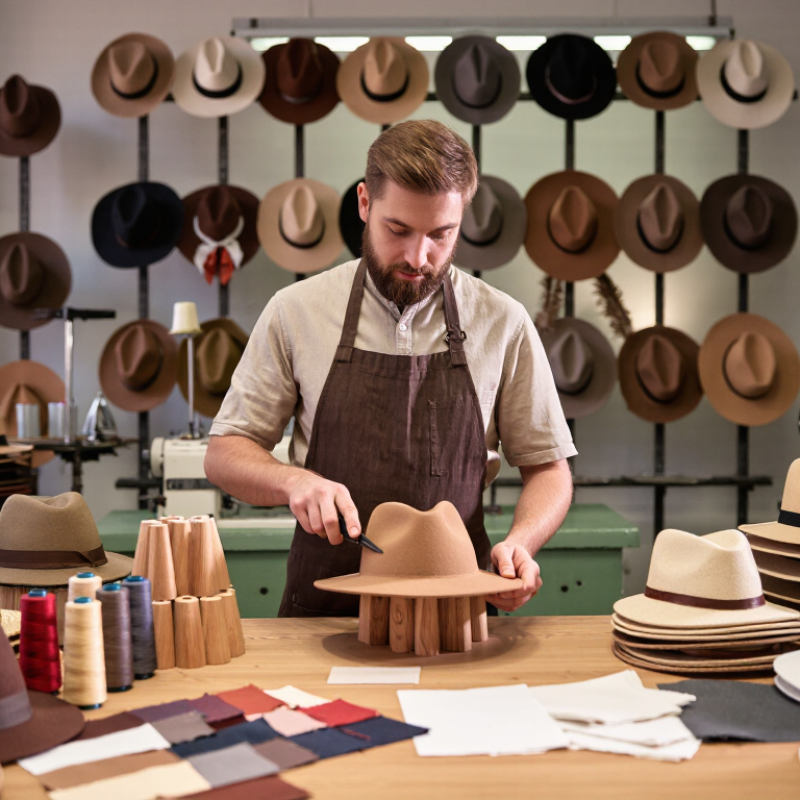
A hat maker designs and produces hats by hand or with specialized equipment. The work combines artistic judgment with practical construction skills. A maker may shape felt, braid straw, sew fabric, or block materials over a wooden form. Their job is not limited to decoration. They study head measurements, balance, comfort, weather, and the hat’s intended use. Fit matters. A beautiful hat can still fail if it slips, pinches, or blocks vision.
Professional makers usually begin with a conversation about style, clothing, season, and daily habits. They may take several measurements because head shapes are rarely perfectly symmetrical. Next, they select suitable materials and create a trial shape. Steam, pressure, stitching, and careful trimming gradually define the crown and brim. Small details matter. A slightly uneven brim may be intentional, but poor stitching should not be excused as “handmade character.”
When choosing a hat maker, review clear photographs of completed work and ask how fittings are handled. A trustworthy maker explains material limits, expected wear, care instructions, and delivery times. Ask whether adjustments are possible after the first fitting. Written details can prevent misunderstandings. However, portfolios do not show everything. Communication, patience, and honest answers often reveal more than polished images. My own preference is to value comfort over dramatic appearance, although that choice can feel too cautious for special occasions.
A hat maker designs, shapes, assembles, and finishes hats using materials such as felt, straw, wool, or fabric. The chart shows typical hands-on time for common custom hat-making stages; actual time varies by design, material, and level of decoration.
How to choose one: Compare the maker’s experience with your preferred hat style, material knowledge, fitting process, customization options, production time, and ability to explain care requirements.
A hat maker designs, shapes, and finishes headwear for a specific purpose. They may create formal hats, daily caps, protective sun hats, or theatrical pieces. Their work begins with a conversation about comfort, clothing, weather, and personal style. A skilled maker measures the head carefully, because a small error can cause pressure behind the ears.
The maker then selects suitable materials, such as felt, straw, wool, cotton, or leather. Each material behaves differently. Felt can be steamed and molded, while straw often needs controlled moisture and patient handling. The maker cuts patterns, builds the crown, shapes the brim, and attaches details by hand or machine. They also check balance, because an attractive hat can still feel awkward when worn.
Fitting is a practical part of the job. The maker may adjust the inner band, reshape the brim, or change the crown height. Real heads are not perfectly symmetrical. That can complicate the process. A responsible hat maker explains these limits instead of promising instant perfection. They should also discuss care, storage, cleaning risks, and expected durability. In my experience, the best results come from honest measurements and several fitting checks. A rushed fitting can ruin otherwise excellent craftsmanship. a modest correction often matters.
A hat maker designs and constructs headwear for practical, cultural, or personal use. Their work may include measuring, blocking, stitching, shaping, and hand-finishing. A skilled maker can create structured fedoras, soft berets, elegant cloche hats, and wide-brimmed sun hats. They may also produce fascinators, flat caps, wedding headpieces, and theatrical designs. Each type requires different materials and techniques. Felt holds a firm crown, while straw offers lighter summer protection. Silk, wool, cotton, and sinamay can create different textures and levels of formality.
During a fitting, an experienced hat maker studies your face shape, hairstyle, posture, and intended use. A practical maker also checks balance and comfort, not only appearance. For example, a wide brim needs careful support on a windy day. A delicate headpiece may require hidden combs or secure elastic. I once preferred a dramatic shape that looked impressive indoors, but it felt awkward outside. That choice needed more thought. Good advice should include maintenance, storage, weather limits, and realistic timelines.
Tips: Bring a clear idea, but stay open to adjustment. Ask which materials suit your climate and daily habits. Try sitting, walking, and turning your head during the fitting. Check the inside finish for smooth seams and comfortable edges. Do not judge a hat from the front alone. Side and rear views matter. Photos can help, although lighting sometimes makes a color appear different.
| Hat Type | Typical Materials | Common Construction or Shaping Methods | Typical Customization Options | Best Suited For | What to Ask a Hat Maker |
|---|---|---|---|---|---|
| Fedora | Wool felt, fur felt, cotton, linen, or straw | Blocking over a hat form, steaming, shaping the crown and brim, and adding a hatband | Crown height, brim width, crease style, hatband, lining, and head size | Everyday wear, business outfits, and smart-casual styling | Ask whether the maker can match the crown shape and brim proportions to your face and height. |
| Panama-Style Hat | Handwoven toquilla straw or other lightweight straw fibers | Weaving, blocking, steaming, pressing, and edge finishing | Weave grade, crown shape, brim size, edge treatment, and ribbon color | Warm-weather travel, outdoor events, and summer formalwear | Ask about the straw origin, weave quality, flexibility, and protection from moisture. |
| Cloche | Wool felt, fur felt, straw, or fabric | Blocking into a close-fitting bell shape, steaming, sewing, and decorative finishing | Face-framing depth, brim shape, trim, flowers, ribbons, and lining | Vintage-inspired outfits, formal events, and cool-weather wear | Ask how the close-fitting shape will be adjusted for your hairstyle and head measurement. |
| Beret | Wool, felt, cotton, linen, or knitted fibers | Cutting and sewing fabric panels, felting, or shaping a soft crown with a fitted band | Diameter, crown volume, band size, lining, color, and decorative details | Casual outfits, artistic styling, and light seasonal coverage | Ask how the beret should be positioned and whether the band can be made more secure. |
| Bucket Hat | Cotton, denim, canvas, nylon, wool, or quilted fabric | Cutting and sewing a soft crown and downward-sloping brim; some versions include interfacing | Brim width, reversible fabrics, lining, ventilation, chin cord, and embroidery | Casual wear, outdoor activities, and sun protection | Ask about fabric weight, washability, water resistance, and the amount of sun coverage. |
| Baseball Cap | Cotton twill, canvas, wool, polyester, or performance fabric | Usually assembled from multiple panels with a stitched visor and adjustable or fitted closure | Panel count, visor curve, closure type, fit, lining, and fabric decoration | Sportswear, casual outfits, and practical sun shading | Ask whether the cap can be made to your exact head measurement and preferred visor curve. |
| Cowboy Hat | Fur felt, wool felt, straw, leather, or palm fiber | Blocking, steaming, hand-shaping the crown and brim, edge binding, and band attachment | Crown profile, brim curve, edge finish, hatband, ventilation, and sweatband | Ranch activities, outdoor use, Western-style clothing, and themed events | Ask which material and brim shape suit your climate, activity level, and desired durability. |
| Bowler Hat | Stiff felt, wool felt, fur felt, or structured straw | Firm blocking into a rounded crown, shaping a narrow rolled brim, and adding a hatband | Crown height, brim roll, felt density, band style, lining, and fit | Historical dress, theatrical costumes, and distinctive formal styling | Ask about the firmness of the felt and whether the rounded crown will fit comfortably. |
| Top Hat | Silk plush, wool felt, fur felt, or modern synthetic materials | Structured blocking, stiffening, precise brim shaping, lining, and sweatband installation | Crown height, brim width, finish, ribbon, lining, and formal fit | Ceremonial occasions, historical outfits, stage use, and formal events | Ask whether the hat is intended for regular wear, costume use, or traditional formal dress. |
| Fascinator | Sinamay, felt, feathers, lace, silk flowers, beads, or fabric | Hand assembly on a base using stitching, wiring, adhesives, and a comb or headband | Size, angle, color palette, feathers, veiling, flowers, and attachment method | Weddings, races, cocktail events, and other dressy occasions | Ask how securely it will attach and whether the design works with your hairstyle and outfit. |
| Sun Hat | Straw, raffia, cotton, linen, canvas, or lightweight synthetic fabric | Woven construction or fabric sewing, followed by brim stiffening and edge finishing | Brim width, crown depth, chin cord, packability, lining, and ventilation | Gardening, beachwear, travel, and general sun protection | Ask about brim coverage, ventilation, packability, and how the hat performs in wind. |
A hat maker designs, blocks, shapes, and finishes headwear for a specific wearer. Choosing one requires more than admiring attractive photographs. Textile Exchange’s 2024 Materials Market Report estimates global fiber production reached 124 million tonnes in 2023. It may reach 160 million tonnes by 2030. Ask where the maker sources felt, straw, lining, and thread. Responsible material choices show practical expertise.
Inspect several finished hats in person or through detailed images. Check whether the crown is even, the brim holds its curve, and the stitching remains discreet. Try the maker’s measuring method. A soft tape should sit level around your head, without pressure. Ask how they handle asymmetry, reshaping, rain exposure, and sensitive skin. Small details matter.
Request a written timeline, fitting process, alteration policy, and final price. A skilled maker should explain trade-offs clearly, not hide behind fashion language. The U.S. Bureau of Labor Statistics projects employment for tailors, dressmakers, and custom sewers to decline by about 4% from 2023 to 2033. That makes documented experience especially valuable. Still, experience is not proof by itself. I would not treat a polished social feed as evidence of reliable workmanship. Ask for references or comparable commissions. Then notice how patiently the maker answers difficult questions. This part is often overlooked. A thoughtful maker may admit a design needs revision. That honesty can be more useful than confidence.
A hat maker designs, blocks, trims, and repairs hats for specific needs. Choosing the right one starts with your purpose. A sun hat requires different materials from a formal felt hat. Explain where and how you will wear it. Mention weather, comfort, color, and desired shape.
Review the maker’s portfolio carefully. Look for clean stitching, balanced brims, and smooth crown lines. Ask which materials they recommend and why. An experienced maker should explain breathability, durability, and care without confusing you. Request accurate measurements, including head circumference and preferred depth. A fitting sample can prevent pressure behind the ears. Small details matter.
Communication is equally important. Ask about the design process, adjustment policy, delivery schedule, and total cost. Reliable makers provide clear written details before starting. Check genuine customer feedback when available. I once underestimated crown height, and the finished hat felt awkward indoors. That mistake taught me to discuss proportions early. Do not choose only by the lowest price. Very cheap work may hide weak materials or limited revisions. Ask to see unfinished work if possible. You may notice uneven seams. That is useful evidence. A patient maker welcomes practical questions and admits when an idea will not work. Clear expectations usually produce a hat that feels personal, wearable, and technically sound.