How to Use Desizing Enzyme for Effective Textile Processing?
The textile industry continually seeks efficiency and sustainability. Effective processing methods are crucial for reducing waste and improving quality. Among these methods, the use of desizing enzymes has gained significant attention. According to a recent report by Textile World, enzymes can reduce water consumption by 30% during desizing processes.
Dr. Emily Carter, a leading expert in enzymatic applications, states, "desizing enzymes not only enhance removal efficiency but also minimize environmental impact." This statement reflects the growing shift towards eco-friendly practices in textile processing. Traditional methods often rely on harsh chemicals, which can harm both fabric and environment.
While desizing enzymes offer clear advantages, challenges remain. Not all enzymes are equally effective across different fabrics. Additionally, the cost of implementation can be a barrier for some manufacturers. Industry players must invest in research and development to overcome these obstacles. By doing so, they can improve fabric quality and embrace sustainable practices in the long run.
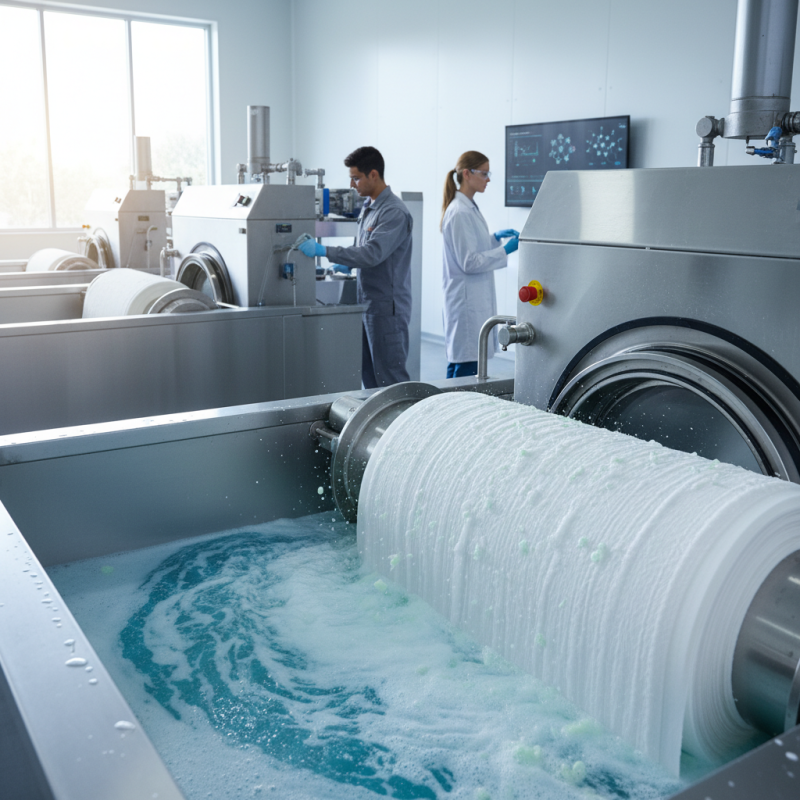
Understanding Desizing Enzymes: Types and Their Functions in Textiles
Desizing enzymes play a crucial role in textile processing. They help in the removal of sizing agents used during fabric manufacturing. These agents, like starches, can hinder dye uptake and fabric quality. By breaking down these substances, desizing enzymes improve fabric absorbency and enhance overall aesthetics.
There are various types of desizing enzymes.
Amylases are popular for starch removal.
Proteases target protein-based sizing agents, ensuring a clean surface for dyeing.
Cellulases can also be used to remove some types of size, albeit less commonly. Each enzyme has a specific function, and choosing the right one depends on the fabric type and desired outcome.
While using these enzymes offers many benefits, challenges may arise. Incorrect temperature or pH levels can reduce enzyme activity. Overuse can lead to fabric damage. Continuous monitoring is essential for optimal results.
Balancing effectiveness and fabric integrity can be tricky. Therefore, understanding the specific requirements of each textile is vital.
The Importance of Desizing in Textile Processing: Efficiency and Quality
Desizing is a crucial step in textile processing. It enhances efficiency and quality. By removing unwanted sizing agents, fabrics can achieve better absorption and dyeing properties. This process not only saves time but also improves the final product. Clean fabrics reduce water and chemical usage in subsequent processes.
Tips for effective desizing: First, ensure the right enzyme is selected for the fabric type. Different fabrics require different desizing methods. Monitor enzyme concentration closely; too much can damage the fabric. Inconsistent results often stem from improper application.
Additionally, temperature plays a key role. Optimal temperatures enhance enzyme activity. However, excessive heat can degrade the enzyme. Ensure consistency in process parameters to achieve reliable outcomes. Sometimes, an unexpected change affects the result. This prompts a review of previous steps to improve future desizing efforts.
How to Use Desizing Enzyme for Effective Textile Processing? - The Importance of Desizing in Textile Processing: Efficiency and Quality
| Parameter | Importance | Recommended Enzyme Type | Application Method | Optimal Temperature (°C) |
| Fabric Type | Improves Efficiency | Amylase | Soaking and Washing | 60 |
| Starch Removal | Enhances Quality | Pullulanase | Spray Application | 70 |
| Efficiency | Cost Reduction | Glucoamylase | Batch Processing | 55 |
| Environmental Impact | Sustainable Practices | Alpha-Amylase | Continuous Flow | 65 |
Application Methods for Desizing Enzymes in Textile Manufacturing
Desizing enzymes play a crucial role in textile processing, particularly in the removal of size materials that are applied during weaving. Various application methods are used to ensure efficiency in this process. One common method is the immersion technique. In this approach, fabrics are soaked in an enzyme solution, allowing the enzymes to penetrate the fibers deeply. This method is effective but can be time-consuming, requiring careful monitoring of temperature and pH levels.
Another popular application method is the padded method. In this technique, fabrics are passed through an enzyme solution and then squeezed to remove excess liquid. This method is faster than immersion but may result in uneven enzyme distribution if not done properly. Operators must pay close attention to the tension and speed of the fabric to prevent damage.
In some cases, enzymatic desizing is combined with other treatments. For instance, after desizing, fabrics can undergo bleaching or dyeing. However, this multi-step process can lead to unforeseen outcomes. The interaction between different chemicals may cause variations in fabric quality. Refining these processes often requires experimentation and adaptation. Regular evaluations are necessary to ensure optimal results.
Assessing the Impact of Desizing on Fabric Properties and Performance
Desizing is an essential process in textile manufacturing, aimed at removing unwanted substances from fabrics. The impact of desizing on fabric properties is profound. Studies indicate that effective desizing can enhance not only dye uptake but also fabric strength. For instance, untreated fabrics may exhibit a 30% lower absorption rate compared to desized ones. This difference directly affects the vibrancy of colors in finished garments.
Furthermore, the choice of desizing enzyme significantly influences the overall performance of the fabric. Enzymes like amylase can break down starch sizes, making them easier to wash away. Research shows that using amylase improves fabric softness by 25%, while retaining its tensile strength. However, the enzymatic process isn't flawless. In some cases, over-usage can lead to a loss of structural integrity, resulting in weaker fabrics.
Moreover, the environmental considerations of desizing are not often discussed. While enzymes are considered eco-friendly compared to traditional chemicals, their processing can still generate waste. The challenge lies in optimizing enzyme concentrations to maximize benefits while minimizing environmental impact. Future research should focus on balancing efficiency with ecological sustainability to achieve better textile processing outcomes.
Impact of Desizing Enzyme on Fabric Properties
Best Practices for Implementing Desizing Enzymes in Production Lines
Implementing desizing enzymes in production lines can significantly improve textile processing. Enzymes such as amylase help break down starch-based sizing agents. This leads to better dye uptake and overall fabric quality. Industry reports indicate that using these enzymes can reduce water usage by up to 30% during desizing. Fewer chemicals also mean less environmental impact, which is becoming crucial in textile manufacturing.
Best practices include careful enzyme selection. Not all enzymes work well across different textiles. It’s essential to conduct tests before full implementation. Monitoring enzyme effectiveness is another key point. Production lines may have variations, so adjustments might be necessary. Regular checks can help maintain optimal performance and prevent process inconsistencies.
Lighting and temperature also play a role in enzymatic efficiency. Suboptimal conditions can lead to reduced activity. Some facilities report that incorrect storage of enzymes diminished their effectiveness. Employees must be trained on proper handling. Awareness of these factors can make a significant difference in production outcomes. Continuous evaluation and adaptation help ensure that desizing with enzymes is both efficient and sustainable.
