
How to Choose UVC Sterilization Equipment?

Choosing Uvc Sterilization equipment requires more than comparing lamp power or package prices. The right decision begins with the treatment target, room dimensions, airflow, surface layout, and operating risks. A hospital corridor, dental room, laboratory bench, and water system require different designs. Shadowed areas can remain untreated. Dust can also reduce performance.

Dr. William A. Rutala, a recognized infection-prevention specialist, has stated, “No-touch disinfection technologies should be viewed as a supplement to, not a replacement for, manual cleaning.” This principle should guide every equipment evaluation. UVC devices can reduce microorganisms when the correct wavelength, exposure time, and distance are maintained. They cannot reliably disinfect surfaces hidden behind equipment or covered by organic residue. Ask suppliers for verified irradiance data, independent test results, safety controls, and maintenance instructions. Look for occupancy sensors, door interlocks, warning indicators, and clear operating procedures. Evidence matters more than impressive marketing language.

A practical assessment should include a physical walkthrough. Measure the farthest surfaces. Note shelves, wheels, cables, and reflective materials. Then compare the equipment’s validated coverage with the actual space. Some systems may perform well in controlled testing but disappoint in crowded rooms. That gap deserves attention. Operators also need training, because incorrect placement can create false confidence. A reflective mistake may be overlooked. Record cleaning times, lamp-life changes, and performance checks after installation. The best choice is not always the strongest device. It is the system that delivers measurable UVC exposure, fits the workflow, and supports safe, repeatable use. Even a careful selection can need revision after real-world observation.
How to Choose UVC Sterilization Equipment?

Define the Sterilization Goal and Target Microorganisms

Before choosing UVC sterilization equipment, define what must be controlled. Air, water, and exposed surfaces require different treatment designs. A hospital air system may target airborne bacteria and viruses, while a water unit may address bacteria, protozoa, and certain viruses. The target changes the required UVC dose, exposure time, and equipment layout.

Name the microorganisms clearly. Do not rely on the phrase “kills germs.” Identify species or representative organisms, then set a measurable reduction target, such as a three-log or five-log decrease. Microbial resistance varies widely. Some spores need more energy than common vegetative bacteria. Organic residue, dust, surface texture, and shadows can also reduce UVC performance. Clean surfaces matter.

From practical testing, line-of-sight exposure is often underestimated. A lamp may look powerful, yet hidden areas receive little usable radiation. I have seen equipment perform well in open tests but poorly after installation. That gap needs attention. Request dose mapping, sensor calibration records, and independent validation data. Check whether the test conditions match your real airflow, water clarity, distance, and operating temperature. A reliable specification should state the tested organisms, delivered dose, exposure conditions, and maintenance requirements. If these details remain vague, the equipment may be unsuitable, even when its advertised output appears impressive. Recheck the assumptions.

Compare UVC Equipment Types and Their Operating Principles

How to Choose UVC Sterilization Equipment?

UVC equipment works through dose, not lamp power alone. Dose equals irradiance multiplied by exposure time, according to CIE 155:2003. Compare three common types: air, surface, and water systems. Air units use lamps inside ducts or upper-room fixtures. They treat moving air, where airflow speed directly affects exposure. Surface units need clear line-of-sight. Shadows, dust, and uneven surfaces can reduce performance. Water reactors expose flowing water inside a closed chamber. Their design controls turbulence, flow rate, and delivered dose.

Lamp technology also matters. Low-pressure mercury lamps commonly emit near 254 nanometres. UVC LEDs can operate around 260–280 nanometres and support compact designs. Excimer sources may use shorter wavelengths, but safety assessment becomes more demanding. The 2023 ASHRAE Handbook—HVAC Applications describes UVGI as a supplementary control, not a replacement for ventilation or filtration. That distinction is important.

Check independent test data, not only rated wattage. The U.S. EPA Ultraviolet Disinfection Guidance Manual evaluates doses around 40 mJ/cm² for specific drinking-water pathogen claims. This is not a universal setting. Measure actual irradiance at the target point. Include lamp aging, sensor calibration, airflow, and cleaning access. A room may look clean. It can still contain shaded zones. My practical concern is often overlooked: operators may trust a display more than verified dose. That needs reflection. A well-designed system records operating hours and signals reduced output before treatment quietly becomes ineffective.

Evaluate Dose, Coverage, Exposure Time, and Safety Controls

Choosing UVC sterilization equipment requires more than comparing lamp power. The delivered dose matters. Dose depends on irradiance and exposure time at the target surface. A strong source may still produce weak results at a distance.

Measure the dose where contamination is most likely, not only near the lamp. Use a calibrated UVC radiometer during commissioning and scheduled checks. Consider shadows, surface texture, airflow, and equipment placement. Complex shapes may hide areas from direct UVC exposure. Reflective surfaces can improve coverage, but they should not replace measurement. In practical evaluations, the weakest exposure point often determines performance. That detail is easy to miss.

Exposure time must match the measured dose and the intended application. Automatic timers can help, but they cannot correct poor coverage. Look for door interlocks, motion sensors, warning indicators, emergency shutoffs, and secure operating enclosures. These controls should be tested regularly, not merely listed in a manual. Staff need clear procedures for setup, cleaning, maintenance, and fault reporting. Personal protective equipment may support procedures, but it should not compensate for weak engineering controls. No shortcuts here.

Ask for test records, calibration information, maintenance intervals, and realistic performance data. Independent verification adds credibility. Materials also require review because repeated UVC exposure may discolor plastics or weaken seals. One uncertainty remains: laboratory results may not represent a busy operating environment. Recheck performance after installation, especially when room layouts or surfaces change.

Check Installation Conditions, Maintenance, and Validation Methods

How to Choose UVC Sterilization Equipment?

Installation conditions decide whether UVC equipment performs well. Measure room volume, ceiling height, airflow direction, occupancy, and shadowed surfaces before purchasing. The 2023 ASHRAE Handbook—HVAC Applications explains that upper-room UVGI can provide several equivalent air changes per hour when air mixing is effective. Poor mixing can leave stagnant zones. That risk is easy to underestimate.

Choose equipment with controlled exposure, shielding, interlocks, and clear irradiance specifications. ISO 15858:2016 identifies essential safety information for UV-C devices, including exposure hazards and protective measures. During installation, keep lamps away from plastics and sensitive finishes unless compatibility is documented. A tidy ceiling layout is not enough. Air movement matters more than appearance.

Maintenance should include scheduled cleaning, lamp-output checks, and replacement based on measured performance, not operating hours alone. Dust can reduce ultraviolet transmission. The U.S. Environmental Protection Agency notes that delivered UV dose depends on irradiance and exposure time. Validation should therefore use a calibrated radiometer, traceable to a recognized laboratory, at representative points. For critical applications, independent microbiological testing can supplement physical measurements. The 2023 CDC environmental infection-control guidance treats UVGI as a supplementary control, not a substitute for ventilation and cleaning. That distinction deserves attention. In practice, many plans validate a new lamp, then forget airflow changes, aging, or dirty surfaces. Rechecking after commissioning and during operation is less convenient, but far more credible.

Select Equipment Based on Compliance, Cost, and Long-Term Performance

How to Choose UVC Sterilization Equipment?

Compliance should guide the purchase, not attractive lamp power. Check photobiological safety, electrical protection, shielding, interlocks, and documented irradiance measurements. ISO 15858 defines safety requirements for UV-C devices, while IEC 62471 evaluates optical radiation risks. The World Health Organization reports that effective infection prevention programs can reduce healthcare-associated infections by 35% to 70%. UVC supports these programs, but it cannot replace cleaning, filtration, or controlled airflow.

Cost requires a wider calculation. Compare lamp replacement, energy use, calibration, downtime, and trained labor. A unit with a low purchase price may become expensive after one year. Ask for measured dose at the target surface, not only rated wattage. The CDC notes that UVGI performance depends on exposure time, intensity, humidity, distance, and shadowing. In real rooms, dust and blocked surfaces can reduce results. I have seen strong lamps deliver weak outcomes because airflow bypassed the treatment zone. That detail is easy to miss.

Tips: Request test records, maintenance intervals, and warranty conditions. Confirm sensors can verify output during operation. Keep a simple log of runtime, cleaning, lamp age, and measured irradiance. Avoid accepting “99.9%” claims without test conditions, organism data, and exposure details. A qualified engineer should review the layout before installation. Even careful selection can need revision after field testing.

How to Choose UVC Sterilization Equipment? - Select Equipment Based on Compliance, Cost, and Long-Term Performance

Equipment Type Typical Application Common UV-C Characteristics Recommended Validation Data Compliance Priorities Indicative Cost Level Long-Term Performance Factors
Enclosed UV-C Cabinet Small instruments, tools, containers, and controlled-surface treatment Usually low-pressure mercury lamps near 253.7 nm; direct line-of-sight exposure; shadowing can reduce delivered dose Radiometer-based dose mapping, exposure-time verification, lamp-output monitoring, and confirmation of load arrangement Interlocked door, shielding, emergency stop, electrical safety, UV-C exposure warnings, and photobiological safety assessment Low to Medium Lamp aging, reflector cleanliness, replacement-part availability, timer accuracy, and ease of cleaning
Room Upper-Air UV-C System Occupied rooms where air disinfection is required, such as healthcare, education, and commercial spaces Typically uses shielded fixtures that irradiate the upper-room air zone; effectiveness depends on air mixing and room height Room-specific irradiance survey, airflow and mixing assessment, occupied-zone exposure measurements, and equivalent air-change evaluation Photobiological safety, installation height, shielding, access control, warning labels, and conformity with applicable electrical requirements Medium Ventilation performance, dust accumulation, lamp depreciation, occupant safety, and scheduled irradiance checks
HVAC In-Duct UV-C Module Air-handling units, supply ducts, cooling coils, drain pans, and recirculated-air systems Installed inside ductwork or air-handling equipment; dose depends on lamp output, air velocity, exposure length, and surface reflectivity Duct velocity calculation, irradiance or dose modeling, coil-surface inspection, airflow-pressure impact, and post-installation verification Service-door interlocks, UV-C leakage prevention, electrical certification, maintenance access, and HVAC code requirements Medium to High Lamp life, airflow changes, filter loading, coil fouling, sensor calibration, energy use, and safe maintenance procedures
Water UV-C Reactor Drinking water, process water, wastewater polishing, and point-of-use treatment Usually operates near 254 nm; performance is strongly affected by UV transmittance, turbidity, flow rate, and reactor hydraulics Validated reduction-equivalent dose, UV transmittance, flow-rate limits, sensor readings, and microbial challenge or bioassay data where required Applicable water-treatment standards, hygienic materials, pressure rating, electrical safety, fail-safe controls, and local regulatory approval Medium to High Quartz-sleeve fouling, lamp replacement, UV sensor calibration, water-quality pretreatment, flow control, and alarm history
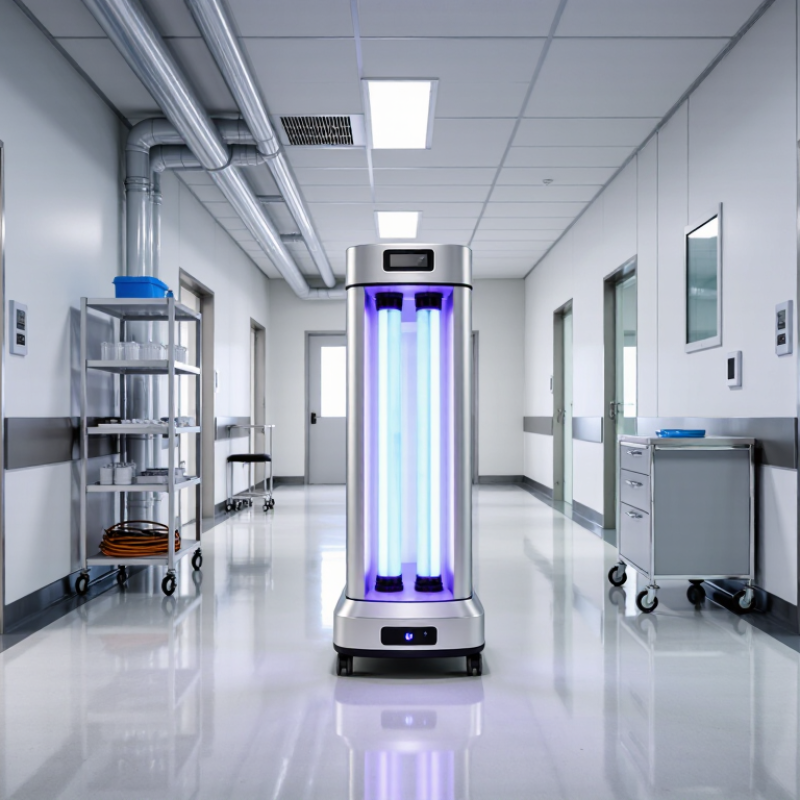
Robotic or Fixed Surface UV-C System Unoccupied-room treatment for selected hard, non-porous surfaces Direct exposure is required; distance, angle, surface type, and shadowing significantly influence the delivered dose Surface-specific dose mapping, treatment-cycle repeatability, occupancy detection, and verification under representative room layouts Motion or door interlocks, remote emergency stop, occupancy detection, access control, warning signage, and UV-C leakage testing High Navigation reliability, lamp output, battery condition, software updates, room-layout changes, and operator training
Low-Pressure Amalgam UV-C System Higher-flow air or water systems requiring greater lamp power density Broadly similar germicidal wavelength to low-pressure mercury lamps, with higher output per lamp over a wider operating-temperature range Output verification across operating conditions, dose calculation, flow validation, sensor calibration, and failure-alarm testing Electrical safety, shielding, mercury-containing lamp handling, environmental disposal requirements, and application-specific standards Medium to High Lamp replacement logistics, mercury disposal, sleeve or reflector maintenance, monitoring accuracy, and system uptime
Selection note: Cost levels are indicative relative categories rather than quotations. Final selection should be based on the required validated UV-C dose, application-specific regulations, installation conditions, maintenance resources, and documented safety controls. UV-C treatment does not replace cleaning, filtration, ventilation, or other required infection-control measures.