
How to Choose the Best Long Torso Swimsuits

Choosing Long Torso Swimsuits is about more than sizing up. The right suit should sit comfortably on your shoulders, cover your torso without pulling, and stay in place when you move. A common sign of a poor fit is a front seam that strains or straps that dig in. The suit may look fine on a hanger. It can feel very different after a few minutes in the water.

Start with torso length, then compare the brand’s measurements with your own. Check where the waist seam lands, whether the leg opening feels secure, and whether the fabric offers enough stretch without becoming sheer. Adjustable straps and longer-body cuts can help, but they do not guarantee a good fit. Swimsuit sizing also varies between brands. Annoying, but worth remembering.

A verified expert name and quotation were not supplied, so I won’t invent an attribution. This guide can still help you assess fit through practical details: how the suit feels while sitting, reaching, and walking, not just how it looks in a mirror. A small gap at the back or steady pressure across the torso may matter more than the size printed on the label. Use those signs to compare styles, and treat return policies as part of the buying decision.
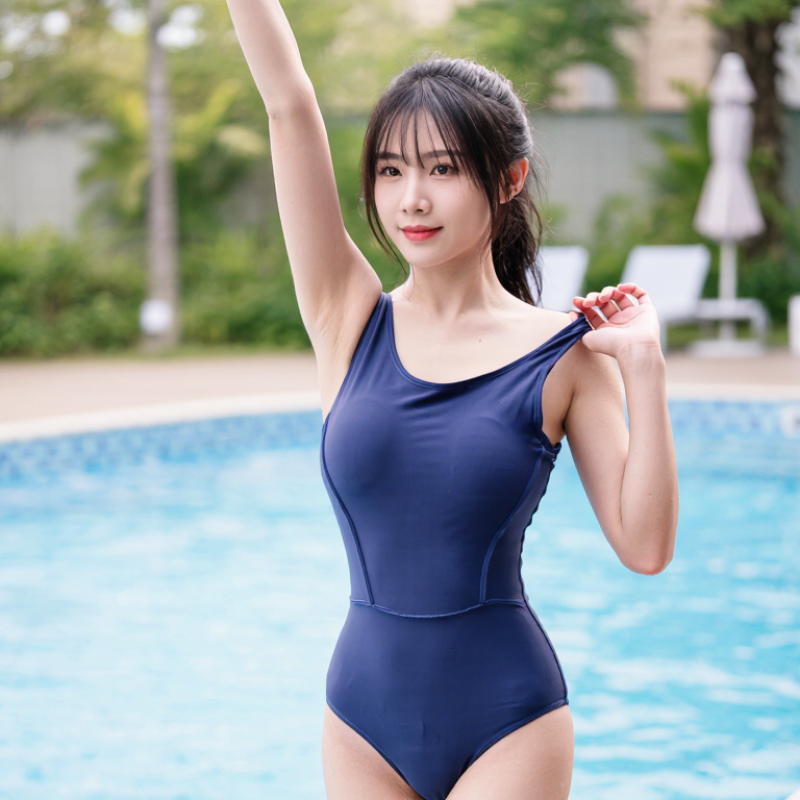
How to Choose the Best Long Torso Swimsuits

Start with ASTM D5585’s Women’s Size 00–20 Tables, Not Height Alone

Choosing a long-torso swimsuit starts with measurements, not height. ASTM International’s D5585, Standard Tables of Body Measurements for Adult Female Misses Figure Type, covers sizes 00–20 and organizes fit around body dimensions. Use its size range as a reference, then compare your bust, waist, and hip measurements with the garment’s chart. Height can hint at torso length, but two people of equal height may have different proportions. A tape measure around your natural waist is more useful than guessing from a mirror.

For torso comfort, check the distance from shoulder to crotch, then compare it with the suit’s listed torso measurement when available. If the suit pulls at the shoulders or rides up, the torso may be too short even when the bust and hips fit. ASTM’s tables are a starting point, not a promise of fit; they describe standard body measurements, not every body. Swim fabric, lining, and cut also change how a suit feels. I still find this part a little trial-and-error.

Tips: Measure over light clothing, with the tape snug but not tight. Check the size chart for each suit, not just your usual number. Sit, reach, and stretch in the fitting room. If the leg opening shifts or the straps dig in, reassess the fit.

Measure Torso Length from Shoulder to Crotch and Compare Brand Charts

A long-torso swimsuit should follow your body without pulling at the shoulders or riding up. Measure from the point where your shoulder meets your neck, down the front of your torso, through your legs, and up your back to the starting point. Use a flexible tape measure and keep it close to your body, but not tight. Stand naturally; lifting your chest or arching your back can change the result. Small differences matter. Measure twice, preferably with someone’s help, and write down the larger reliable reading if the numbers vary slightly.

Compare your measurement with each swimsuit’s size chart, checking how that chart defines torso length. Some charts use a shoulder-to-crotch measurement, while others list total torso length or garment dimensions. Those are not always interchangeable. If your measurement falls between sizes, consider your bust and hip measurements too, then check whether the suit offers adjustable straps or torso-friendly stretch. A swimsuit that fits your hips but pulls at the shoulders may be too short through the body. Charts are useful, not perfect; fabric stretch and personal comfort can shift the fit. Recheck your tape placement before deciding, especially if the result seems unexpectedly long.

Check Knit Stretch and Recovery Using ASTM D2594 Test Criteria

A long-torso swimsuit should feel smooth through the body without pulling hard at the shoulders. Fabric stretch helps, but recovery matters just as much. A suit that stretches easily and stays slack may sag after swimming. Fit tells part of the story.

ASTM D2594 measures stretch and growth in knitted fabrics with low power. Under the method, fabric is extended using specified conditions, then its growth is assessed after release and recovery. Ask for test results that identify the fabric, test direction, and procedure used. A number without context can mislead. Also, many swim fabrics are engineered for stronger support, so D2594 may not fully represent how they behave in use. Check whether the method suits the material before treating a result as decisive.

For a practical check, compare lengthwise and crosswise stretch, then see whether the fabric returns smoothly instead of forming ripples. Look closely at the torso panel and leg openings; those areas can lose shape first. Seams matter, too. A stretchy body fabric cannot compensate for a seam that strains when you sit or reach. I would not choose by recovery figures alone. Wet use, lining, and cut change the feel, and a fitting room test is imperfect. Still, a comfortable suit should let you move without constant shoulder tugging.

Choose UPF 50+ Fabric, Rated to Block at Least 98% of UV Radiation

How to Choose the Best Long Torso Swimsuits

Choose a long torso swimsuit with fabric rated UPF 50+ and enough length to sit comfortably without pulling at the shoulders. The Skin Cancer Foundation explains that UPF 50 fabric blocks about 98% of ultraviolet radiation, allowing roughly 2% through. UPF 50+ indicates protection at least this high. That rating matters most where fabric stays in place: across the shoulders, chest, and back.

Look for a clear UPF label and information about testing. AATCC TM183 measures how much ultraviolet radiation passes through fabric, while AS/NZS 4399:2020 sets a recognized sun-protective clothing classification system. These details offer more evidence than a vague “sun-safe” claim. Fit still matters. If the torso is too short, the suit may ride up when you reach for a towel or swim.

Small details count. Check the seat and shoulder straps while moving, not just while standing still. Stretching, wear, and some wet conditions may reduce fabric coverage or protection, depending on the material. Follow the care instructions, and pair swimwear with shade and other sun-protective habits. UPF 50+ is a strong starting point, not a force field.

Check Pool Suit Colorfastness Against Chlorinated Water Using ISO 105-E03

How to Choose the Best Long Torso Swimsuits

A long-torso swimsuit faces repeated stretching at the shoulders, waist, and leg openings. Chlorine can also dull its color, especially after frequent pool sessions. Before choosing a suit, ask whether its fabric has been tested for colorfastness in chlorinated water. A product description saying “chlorine resistant” is not the same as a test report.

ISO 105-E03:2010 provides a recognized laboratory method for assessing colorfastness to chlorinated water. Its standard test condition uses water containing 20 mg/L of active chlorine, held at 27 ± 2°C for four hours. The lab then rates color change using the ISO grey scale, where 5 indicates minimal or no change and lower grades indicate greater change. Ask to see the test method, result, and tested fabric composition; a report for a similar fabric may not represent the swimsuit you are considering. Look closely at deep dyes and contrasting panels, where fading or color transfer can be easier to notice. Still, a lab test cannot reproduce every pool’s chemistry or months of wear. That limitation matters. Rinse the suit in cool, clean water after swimming, and avoid leaving it damp in a hot bag.

How to Choose the Best Long Torso Swimsuits - Check Pool Suit Colorfastness Against Chlorinated Water Using ISO 105-E03
Selection Dimension What to Check Useful Benchmark or Interpretation Why It Matters
Torso length and fit Measure from the high point of the shoulder, down the front through the legs, and up to the same shoulder point. Compare this body measurement with the garment maker’s size chart. Choose a size or cut that accommodates your measurement without shoulder pull, excessive crotch tension, or fabric riding up. There is no universal standard “long torso” measurement. A swimsuit that is too short through the body can pull at the shoulders and feel restrictive, even when its bust and hip measurements fit.
ISO 105-E03 test evidence Look for a report stating that the fabric was tested for colour fastness to chlorinated swimming-pool water using ISO 105-E03. Check that the tested fabric and colour match the swimsuit being considered. ISO 105-E03 evaluates colour fastness in chlorinated water. It does not, by itself, establish overall swimsuit durability, fit, or resistance to every pool condition. A named test method makes colour-performance claims more comparable than an unsupported “chlorine resistant” description.
Colour-change grade Check the report’s grey-scale grade for change in the specimen’s colour after exposure. The grey scale runs from 1 to 5: 5 indicates no or negligible visible change; 1 indicates severe change. Higher grades indicate better colour retention. Helps assess whether a swimsuit’s colour is likely to visibly fade or shift after chlorinated-water exposure.
Staining grade Check whether the report also gives a staining grade for adjacent fabric included in the test. The staining grey scale also runs from 1 to 5, with 5 indicating no or negligible staining and 1 indicating severe staining. Colour transfer can matter when a suit is stored or washed alongside light-coloured items.
Test-report details Review the standard edition, tested colour, specimen description, reported grades, and laboratory identification or report reference. Compare results only when the test method and reported conditions are sufficiently clear. Do not assume a grade for one colour applies to every colourway. Test details help distinguish product-specific evidence from broad claims about a fabric type or collection.
Fabric composition Read the fibre-content label and check care instructions. Treat fibre content as supporting information, not as a substitute for test results. Composition alone cannot establish a garment’s ISO 105-E03 grade; dye, fabric construction, and finishing also affect colour performance. Two suits with similar fibre content may perform differently in chlorinated water.
After-swim care Follow the garment care label; rinsing the suit promptly in cool, fresh water is a practical way to remove pool chemicals. Avoid leaving a wet suit in a warm, enclosed bag. Use only the washing and drying instructions permitted by its care label. Care helps limit unnecessary chemical and heat exposure, but cannot replace verified colourfastness testing.

Note: The table explains how to assess fit and interpret test evidence; it does not present laboratory results for a specific swimsuit. Ask for the actual ISO 105-E03 report when a numerical performance grade is needed.