
Choosing a Balm Lip Tint manufacturer in 2026 takes more than comparing sample colors and unit prices. The right partner should understand how a balmy texture, visible tint, and comfortable wear depend on both formula and packaging. Ask how the manufacturer evaluates shade consistency, texture, scent, and product stability across batches. Details matter.
Request samples made with the proposed formula and packaging, not just a showroom favorite. Check how the tint applies in daylight, whether it feels comfortable after several hours, and how the product performs in its actual container. A neat first impression is useful, but it cannot replace documented quality checks. Ask for evidence.
A reliable manufacturer should explain its development process, minimum order quantities, production timeline, and quality-control steps in plain language. Review relevant ingredient documentation and ask how product claims are supported. Requirements can vary by market, so confirm that the planned product and labeling are suitable for each intended destination. Avoid relying on vague promises such as “clean” or “long-lasting” without asking what they mean in practice.
Communication is another useful test. Notice whether the team answers specific questions, flags trade-offs, and records agreed changes to shade or packaging. A low quote may look attractive until extra testing, tooling, or delays appear. And even a strong supplier may not be right for every brand. This guide explores practical ways to compare Balm Lip Tint manufacturers, assess their capabilities, and make a decision based on evidence rather than polished sales materials.
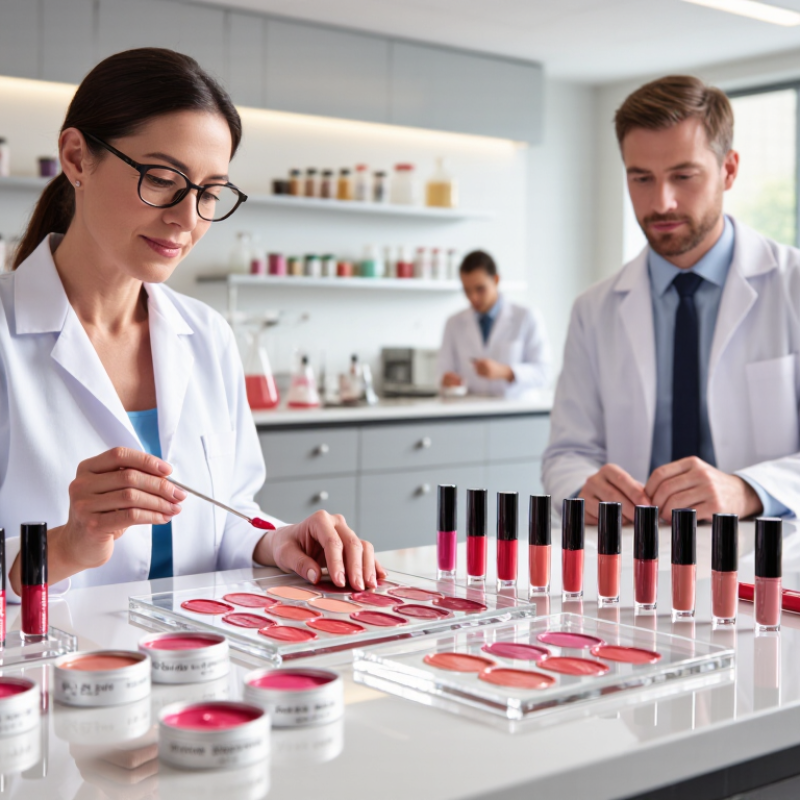
Before screening manufacturers, define what “balm tint” means for your product. Specify the base texture, coverage, finish, and expected wear; “soft and hydrating” alone is not a usable brief. Note whether the formula should feel waxy or cushiony, how much color one swipe should deposit, and whether it may transfer onto a cup. Grand View Research estimated the global lip-care products market at USD 2.09 billion in 2023 and forecast 5.9% annual growth through 2030. That broad category includes products beyond tinted balms, but it signals a competitive shelf. Small differences matter.
Build a shade brief before requesting samples. List target shades, undertones, opacity, and the skin-tone range each shade should suit. Provide physical references when possible, plus L*a*b* color targets and an agreed ΔE tolerance under specified lighting. McKinsey’s 2023 beauty-market report projected roughly 6% annual growth through 2027, making clear product definition useful when comparing suppliers. Ask candidates how they control pigment dispersion, batch-to-batch color, and stability in the intended packaging. Test samples on lips, not just white cards; balm bases can shift perceived color. I’ve seen shade names create false confidence. They are not specifications. Record the actual sample, application amount, and wear conditions, then screen manufacturers against those requirements.
Choosing a balm lip tint manufacturer in 2026 means checking how its GMP system works on the production floor. ISO 22716 provides cosmetics GMP guidelines for production, control, storage, and shipment. Ask how the factory applies them to pigment dispersion, filling temperatures, equipment cleaning, and batch records. A polished manual proves little. Look for records that match actual practice.
Cosmetics Europe’s 2024 Market Performance report puts the European cosmetics and personal care market at €96 billion in 2023. That figure describes market value, not product safety, but it shows the scale of the sector. For a lip tint, request traceability from incoming oils and pigments through finished batches. Check whether staff record deviations, investigate causes, and document corrective actions. Ask to review a recent, anonymized batch file.
Walk through the site, if possible. Check labeled raw-material containers, clean filling nozzles, and separate storage for approved and quarantined materials. Ask how the manufacturer evaluates packaging compatibility and keeps retention samples. Paper is not practice. An ISO 22716 certificate can support due diligence, but it cannot replace a site audit or clear answers about the product’s specific process. One gap may matter.
A balm lip tint may contain little water, but that alone does not establish microbiological safety. Oils, waxes, pigments, filling equipment, and a reused applicator all deserve attention.
Ask the manufacturer for ISO 17516 results on the finished product, with the tested batch, laboratory, and applicable microbial category identified. Lip products may fall under the standard’s category for products used on mucous membranes; confirm the classification with a qualified assessor rather than assuming a less stringent limit. Check that specified microorganisms were assessed, not just the overall count. Details matter.
ISO 11930 challenge testing evaluates whether a product’s preservation system can control introduced microorganisms over time. Ask for the report on the actual formula, or a technically justified representative formula, and verify that its acceptance criteria are stated.
A low-water balm may need a documented risk-based explanation if the manufacturer considers conventional challenge testing unsuitable. “It’s anhydrous” is not enough. Review packaging too: a jar repeatedly opened by fingers presents different exposure from a sealed tube with a narrow nozzle. Reports should match the product and pack you plan to source, not an older prototype.
A gap worth questioning: good paperwork cannot prove every production batch was handled well, so also request routine hygiene monitoring and batch-release records.
When choosing a balm lip tint manufacturer in 2026, ask how it handles U.S. MoCRA records—not just whether it has them. Facility registration generally needs renewal every two years, while the responsible person must renew each cosmetic product listing annually. Ask for the latest filing dates and a written schedule for upcoming renewals. Check that the registered facility is the site actually making your tint, especially if production moves between locations. Small-business exemptions may apply in some cases, so confirm whether the manufacturer or product qualifies rather than assuming.
Then compare the product listing with the balm tint you plan to sell. Shade names, product identity, and manufacturing details should be consistent across records and supply documents. Request a clear explanation of who submits updates when a formula or facility changes. Keep copies of relevant confirmations, and have a qualified U.S. regulatory specialist review unclear responsibilities. A registration number alone is not proof of FDA approval. That distinction matters. I would also ask how the manufacturer tracks annual deadlines; a polished document can still be outdated. These checks take time, but they can reveal gaps before packaging is printed or a launch date is set.
When choosing a balm lip tint manufacturer for the EU market, ask how the product’s Cosmetic Product Safety Report (CPSR) will be prepared and maintained. Regulation (EC) No 1223/2009 requires a safety assessment before a cosmetic product is placed on the market. The assessment must be completed by a suitably qualified safety assessor and reflect the finished formula, not just a list of ingredients.
For a lip tint, the review should consider foreseeable use, including small amounts being swallowed. Ask whether the safety file includes relevant ingredient data, product stability, packaging compatibility, and microbiological quality where applicable. Details matter. Request clear records linking the assessed formula to the samples and production batches you review. A polished document alone proves little if it describes a different shade or base.
The EU Responsible Person remains accountable for required product documentation; a factory cannot replace that role. Confirm who supplies the CPSR, who keeps the Product Information File, and how changes trigger reassessment. Even a slight pigment or fragrance adjustment can matter. One awkward gap often appears here: timelines for document updates are vague. Get the process in writing, and have an independent regulatory specialist review the file when necessary.
| Evaluation Area | What to Confirm | Useful Evidence to Request | EU Compliance Context |
|---|---|---|---|
| Cosmetic Product Safety Report (CPSR) | A safety assessment is completed for the finished balm lip tint, its intended use, formulation, and foreseeable exposure before the product is placed on the EU market. | The CPSR for the final formula, including Part A safety information and Part B safety assessment, with the assessor’s qualifications documented. | Regulation (EC) No 1223/2009, Article 10 and Annex I, requires a safety assessment and CPSR. The safety assessor must hold the qualifications specified in Article 10. |
| EU Responsible Person | Identify the Responsible Person established in the EU and confirm that the role is formally accepted for the product. | Written confirmation of the Responsible Person’s identity and address, plus a clear allocation of regulatory responsibilities. | A cosmetic product may be placed on the EU market only when it has an EU-established Responsible Person. The contract manufacturer is not automatically the Responsible Person. |
| Product Information File (PIF) | The product records are complete, accessible to the Responsible Person, and maintained for the required period. | A PIF index covering the product description, CPSR, manufacturing method and GMP statement, evidence supporting claims, and relevant testing records. | Article 11 requires a PIF to be kept readily accessible at the Responsible Person’s address and retained for 10 years after the last batch is placed on the market. |
| Formula and Colorant Review | Check every ingredient against applicable EU restrictions and confirm that each colorant is permitted for the intended cosmetic use. | A full INCI formula, ingredient specifications, colorant identity and applicable conditions of use, and a documented restricted-substance review. | The Regulation’s annexes include prohibited and restricted substances, permitted colorants, preservatives, and UV filters. A colorant’s permitted use must be checked against its listing and conditions in Annex IV. |
| Testing and Product-Specific Safety | Ask how stability, microbiological quality, packaging compatibility, and foreseeable consumer exposure are assessed for the specific formula and pack. | Relevant test protocols and reports, product and packaging specifications, and a rationale for any tests judged unnecessary based on the product’s characteristics and risk. | The CPSR must consider relevant product characteristics and exposure. Regulation 1223/2009 does not prescribe one universal test panel for every lip tint; the safety assessment should be product-specific. |
| Good Manufacturing Practice (GMP) | Review how the manufacturer controls production, hygiene, batch consistency, deviations, and traceability. | GMP procedures, batch records, quality-control specifications, deviation and change-control processes, and audit or certification information where available. | Article 8 requires cosmetic products to be manufactured in accordance with GMP. Compliance with the harmonised standard EN ISO 22716 gives a presumption of conformity with the GMP requirement. |
| Label and Claims Readiness | Confirm that the proposed packaging information is complete and that product claims are supported by appropriate evidence. | A draft label review covering required particulars, language needs for target markets, ingredient listing, and substantiation for proposed claims. | Article 19 sets cosmetic labelling requirements. Cosmetic claims must also comply with the common criteria in Commission Regulation (EU) No 655/2013. |
| CPNP Notification and Market Launch | Agree who will submit the product notification and ensure it is completed before the product is placed on the EU market. | Confirmation of the notification workflow, responsible party, required product data, and completion record for the Cosmetic Products Notification Portal (CPNP). | Article 13 requires notification through the CPNP before placing a cosmetic product on the market. Notification is not an EU approval or certification of the product. |