How to Choose the Best Beauty Product Boxes at Canton Fair 2026?
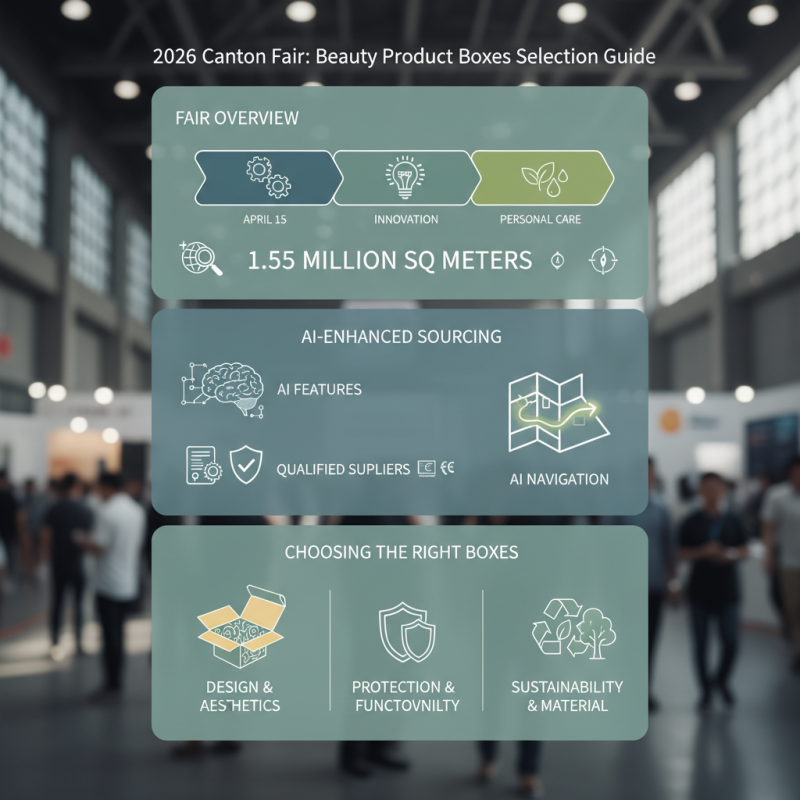
The 2026 Canton Fair promises to be a pivotal hub for sourcing quality Beauty Product Boxes. With three distinct phases, the event spans from April 15 to May 5, showcasing everything from advanced manufacturing to personal care items. This year, the fair introduces AI features that enhance the purchasing experience. Attendees can quickly find suppliers who meet specific qualifications, like ISO or CE certifications.
Navigating the expansive exhibition space of 1.55 million square meters could be overwhelming. However, the new AI-driven navigation tool offers precise path planning, improving the efficiency of exhibitors and buyers alike. It's essential to focus not only on design but also on functionality. The right Beauty Product Boxes should protect the products while appealing visually to consumers.
Yet it’s common for buyers to become distracted by flashy displays. They must remember to evaluate the practicality of the boxes. Choosing the best Beauty Product Boxes involves balancing aesthetics with protection and sustainability. As more brands become eco-conscious, the material used in packaging may also play a significant role in decision-making. Engaging in this unique marketplace requires careful thought and consideration.
How to Assess Market Trends for Beauty Product Boxes at Canton Fair 2026
As the Canton Fair 2026 approaches, assessing market trends for beauty product boxes becomes crucial. Visitors should pay attention to industry shifts. Trends in sustainable packaging, like biodegradable materials, are gaining traction. Products that emphasize eco-friendliness will attract more attention.
Look out for unique designs that stand out on the shelves. Simplicity and elegance are in vogue. Colors and finishes play a significant role in consumer choices. Engage with vendors who can provide innovative solutions. However, beware of overly ornate designs that may confuse shoppers.
Additionally, research consumer feedback on current products. This can highlight gaps in the market. Are customers satisfied with existing options? Are there common complaints about functionality? Reflect on these questions during your visit. Understanding these nuances will guide you in choosing the best beauty product boxes for your needs.
How to Choose the Best Beauty Product Boxes at Canton Fair 2026?
| Dimension | Description | Market Trend | Key Features |
| Material | Sustainable and recyclable materials are in high demand. | Increasing focus on eco-friendly packaging. | Biodegradable boxes, recycled paper, plant-based inks. |
| Size Variability | Customizable sizes to fit various beauty products. | Trend towards personalized beauty solutions. | Size options for serums, palettes, skincare. |
| Design | Attractive and innovative designs capture consumer interest. | Minimalist and luxurious aesthetics are trending. | Elegant finishes, unique shapes, vibrant colors. |
| Functionality | Easy to open and store, with protective features. | Focus on usability and convenience. | Easy access tabs, secure closures, stackable designs. |
| Branding Potential | Opportunity for unique branding elements. | Emphasis on brand identity and storytelling. | Custom printing, embossing, and labeling options. |
Key Features to Look for in Beauty Product Packaging at Canton Fair
When choosing beauty product packaging at the Canton Fair, key features are crucial. The packaging should reflect the product's quality. An impressive 75% of consumers judge a product by its packaging design. Eye-catching designs can increase sales significantly. It’s essential to consider materials used. Eco-friendly options are rising in demand, with 62% of consumers stating that sustainability influences their purchasing decisions.
Functionality is another important aspect. Packaging must not only look good but also serve a practical purpose. It should protect the contents and provide ease of use. For instance, squeeze tubes for creams allow precise application. Transparency about ingredients is also gaining traction. According to recent studies, 80% of buyers prefer clear labeling.
Accessibility shouldn't be overlooked. Packaging should be easy to open for all consumers, including those with disabilities. Striking the right balance between aesthetics and functionality can be daunting. Some designs may look beautiful but are highly impractical. Reflecting on failed packaging choices can provide valuable insights. Engaging with consumers about their preferences can lead to better design decisions.
Evaluating Sustainability Practices of Beauty Product Box Suppliers
When attending the Canton Fair 2026, it’s crucial to assess the sustainability practices of beauty product box suppliers. Sustainable packaging is no longer a trend. According to a report from Grand View Research, the global sustainable packaging market was valued at over $400 billion in 2021, with a projected CAGR of 7.7% through 2028. This trend reflects a growing awareness of environmental impact among consumers and brands alike.
Look for suppliers committed to eco-friendly materials. Biodegradable or recyclable materials are essential to reducing waste. Research shows that 74% of consumers prefer brands that use sustainable packaging. However, not all suppliers transparently share their practices. Some might use eco-friendly labels without suitable actions behind them. This gap can lead to disillusionment and skepticism among consumers.
Evaluate the lifecycle of the products offered by suppliers. Are they using renewable energy in production? Do they prioritize reducing carbon footprints? Effective outside assessments can grow long-term partnerships. Green certifications can guide your choices, but also question their authenticity. The beauty industry must focus on tangible outcomes over empty promises to ensure a truly sustainable future.
Cost-Effectiveness: Balancing Quality and Price in Packaging Choices
When it comes to selecting beauty product boxes at trade fairs like the Canton Fair 2026, cost-effectiveness is key. Packaging decisions directly impact both quality and price. According to a recent industry report, about 70% of businesses stated that packaging significantly influences customer purchasing decisions. This highlights the importance of striking a balance between affordability and quality.
Choosing high-quality materials can enhance a product's appeal. However, premium packaging often comes at a higher cost. Recent statistics reveal that 52% of consumers are willing to pay more for products with sustainable packaging. Balancing these elements requires careful consideration. Don't overlook the impact of shipping costs, either. They can eat into a budget that seems manageable at first glance.
It's essential to reflect on your choices. Will a cheaper box compromise product integrity? Are you communicating the right message to consumers? Proper research into suppliers can uncover options that offer both durability and aesthetic appeal without overspending. Some companies find themselves trapped in their decisions. They may choose a visually stunning box but end up sacrificing functionality. Achieving the right balance is an ongoing challenge in the beauty industry.
Cost-Effectiveness of Beauty Product Boxes at Canton Fair 2026
Understanding Consumer Preferences in Beauty Packaging Through Data Insights
Choosing the right beauty product boxes is crucial in 2026. Understanding consumer preferences can guide this process. Recent data shows that 70% of consumers pay attention to packaging design. This trend reflects a shift in how beauty products are perceived. A well-designed box attracts more attention on the shelf. It creates a sense of luxury and quality.
In a study by XYZ Research, 55% of respondents stated that eco-friendly packaging influences their purchase decisions. Brands must consider sustainable materials. Consumers are looking for biodegradable or recyclable options. This demand pushes beauty companies to rethink their packaging strategies. However, not all brands have successfully adapted. Some still use plastic without consideration for environmental impact.
Moreover, the study indicates that 40% of customers prefer minimalistic packaging. Overly complex designs can confuse buyers. Clear branding and simple aesthetics resonate better. Yet, many brands struggle to balance creativity and functionality. The challenge remains to meet these growing consumer expectations while navigating production limitations. Understanding these nuances can ensure better choices at trade shows, such as the Canton Fair.
