
China Top Vegetarian Flavor Enhancer Supplier?
Choosing a China Top Vegetarian Flavor Enhancer Supplier requires more than comparing prices or reading polished brochures. Food manufacturers need reliable taste, stable quality, and clear documentation. A suitable supplier should understand plant-based formulations, including soups, sauces, snacks, meat alternatives, and ready-to-eat meals.
Vegetarian Flavor Enhancer products may include yeast extracts, mushroom concentrates, fermented ingredients, amino-acid blends, or other permitted flavoring systems. Each option behaves differently in a recipe. One may create a round umami note. Another may add excessive saltiness or leave a bitter aftertaste. Small differences become obvious in a hot soup or a soy-based burger.
Dr. Kantha Shelke, a food scientist and food industry expert, has often stressed, “Taste is king.” That principle remains practical here. A supplier should provide representative samples, technical data, allergen information, batch details, and manufacturing certifications. Traceability matters when ingredients travel across borders.
Experience also means testing the enhancer in the final application. A sample can perform well in water but fail after heating, freezing, or storage. This is where supplier claims need careful review. A certificate is valuable, but it cannot replace sensory testing.
China offers many capable ingredient manufacturers, yet “top supplier” is not a universal label. The best choice depends on formulation goals, production volume, target market, and regulatory requirements. I may still overlook a promising supplier if I rely only on online information. That is why this guide compares practical evidence, not marketing language, to identify dependable Vegetarian Flavor Enhancer partners.
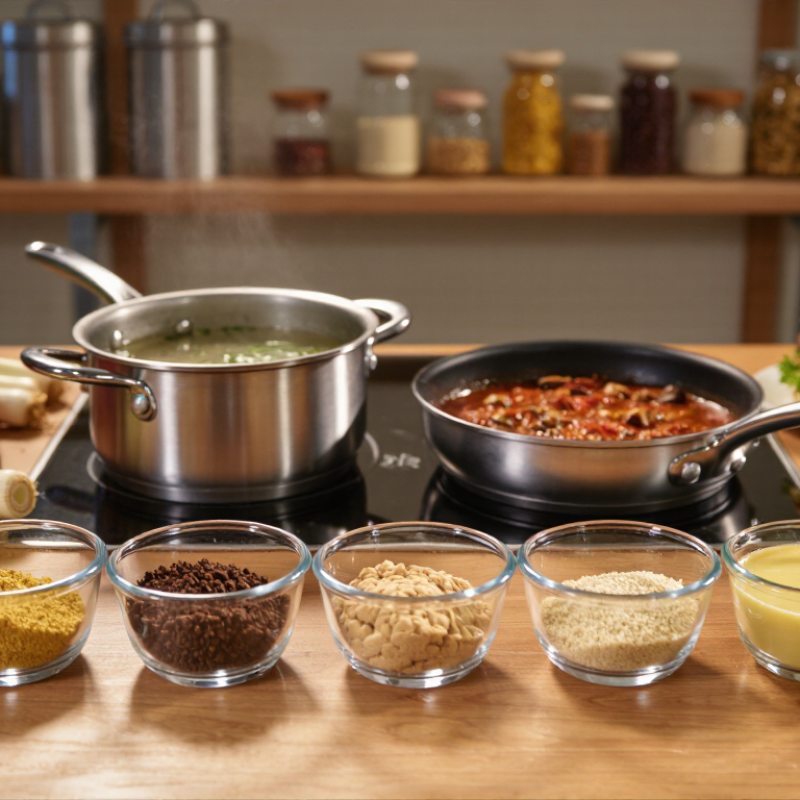
What Is a Vegetarian Flavor Enhancer? Codex INS 621–635 Explained
A vegetarian flavor enhancer is a food ingredient used to strengthen savory taste without relying on meat stock. Codex INS numbers identify additives, but they do not automatically prove vegetarian suitability. Source matters.
INS 621 is monosodium glutamate, commonly produced through microbial fermentation. INS 622 to 625 describe related glutamates, including potassium, calcium, ammonium, and magnesium salts. INS 626 to 635 cover guanylates, inosinates, and 5’-ribonucleotides. These compounds can create fuller umami in soups, sauces, snacks, and plant-based foods. However, some nucleotide ingredients may come from fermentation, while others can have different raw material histories. The number alone is not enough.
A reliable supplier should provide a current specification sheet, production-flow details, allergen information, and a clear vegetarian declaration. Ask whether the fermentation medium contains animal-derived nutrients. Also check the final product’s carrier materials and processing aids. This is where mistakes happen.
Practical testing matters. A small sample can reveal bitterness, lingering saltiness, or weak performance after heating. Taste is not always predictable. I would compare the enhancer in the finished recipe, not only in water. Regulatory acceptance and labeling rules may differ by market, so purchasing teams should verify local requirements before approval. “Vegetarian” sounds simple, but documentation must support it.
| Codex INS No. | Common Name | Codex Functional Class | Typical Source or Production Route | Vegetarian Suitability | Typical Food Applications | Key Verification Point for Buyers |
|---|---|---|---|---|---|---|
| INS 621 | Monosodium L-glutamate (MSG) | Flavour enhancer | Usually produced by microbial fermentation of carbohydrate feedstocks, followed by purification and crystallisation. | Generally suitable | Soups, sauces, savoury seasonings, snacks, prepared foods and meat-free products. | Confirm fermentation feedstock, processing aids, allergen controls and vegetarian documentation. |
| INS 622 | Monopotassium L-glutamate | Flavour enhancer | Potassium salt of glutamic acid; commonly manufactured from fermented glutamic acid. | Generally suitable | Reduced-sodium seasonings, soups, sauces and savoury dry blends. | Check the source of glutamic acid and the final product specification. |
| INS 623 | Calcium diglutamate | Flavour enhancer | Calcium salt of glutamic acid, generally obtained through chemical neutralisation of fermented glutamic acid. | Generally suitable | Savoury seasoning systems and specialised flavour-enhancement applications. | Request confirmation that the glutamate intermediate is fermentation-derived and free from animal processing materials. |
| INS 624 | Monoammonium glutamate | Flavour enhancer | Ammonium salt of glutamic acid; normally produced from glutamic acid and ammonium compounds. | Generally suitable | Selected savoury seasonings and processed-food formulations. | Verify the manufacturing route, residual specifications and regulatory acceptance in the destination market. |
| INS 625 | Magnesium diglutamate | Flavour enhancer | Magnesium salt of glutamic acid; production commonly uses glutamic acid from microbial fermentation. | Generally suitable | Specialty savoury blends and formulated foods. | Confirm source documentation because commercial availability and approved uses may vary by market. |
| INS 626 | Guanylic acid | Flavour enhancer | 5′-Guanosine monophosphate; may be obtained from yeast or other microbial sources, depending on the process. | Process-dependent | Soups, gravies, sauces, savoury snacks and seasoning blends, often with glutamates. | Confirm that the source is yeast or microbial rather than animal-derived, and request a vegetarian statement. |
| INS 627 | Disodium guanylate | Flavour enhancer | Disodium salt of 5′-guanylic acid; commonly available from microbial or yeast-based production. | Process-dependent | Instant noodles, savoury snacks, soups, sauces and compound seasonings. | Check the 5′-guanylate source and whether the supplier can provide vegetarian or vegan process confirmation. |
| INS 628 | Dipotassium guanylate | Flavour enhancer | Potassium salt of 5′-guanylic acid, generally linked to yeast or microbial production routes. | Process-dependent | Reduced-sodium savoury systems and seasoning formulations. | Verify the production organism, culture medium and processing aids. |
| INS 629 | Calcium guanylate | Flavour enhancer | Calcium salt of 5′-guanylic acid; source suitability depends on whether the acid is microbial or animal-derived. | Process-dependent | Specialty savoury products and compound flavour-enhancer systems. | Obtain a documented source declaration and confirm compliance with the target market’s additive rules. |
| INS 630 | Inosinic acid | Flavour enhancer | 5′-Inosinic acid; can be produced from animal tissues or, for some products, by microbial or fermentation-based routes. | Process-dependent | Savoury seasonings, soups, sauces, snacks and umami blends. | Do not assume vegetarian status; confirm the exact raw material and manufacturing route. |
| INS 631 | Disodium inosinate | Flavour enhancer | Disodium salt of 5′-inosinic acid; traditionally associated with meat or fish sources, although non-animal routes may exist. | Process-dependent | Instant soups, noodles, snack seasonings, sauces and savoury ready meals. | Require written confirmation of non-animal origin for vegetarian formulations. |
| INS 632 | Dipotassium inosinate | Flavour enhancer | Potassium salt of 5′-inosinic acid; production source may be animal-derived or fermentation-based. | Process-dependent | Reduced-sodium savoury products and seasoning systems. | Check source, fermentation details and cross-contact controls before making a vegetarian claim. |
| INS 633 | Calcium inosinate | Flavour enhancer | Calcium salt of 5′-inosinic acid; vegetarian status depends on the origin of the inosinic acid. | Process-dependent | Specialty savoury formulations and compound flavour-enhancer blends. | Request a non-animal-origin declaration and product-specific technical documentation. |
| INS 634 | Calcium 5′-ribonucleotides | Flavour enhancer | Calcium salts of 5′-ribonucleotides, typically used as a mixture of nucleotide flavour enhancers. | Process-dependent | Savoury seasonings, soups, sauces and snack flavourings. | Identify the component nucleotides and verify whether all raw materials and carriers are vegetarian. |
| INS 635 | Disodium 5′-ribonucleotides | Flavour enhancer | Disodium salts of 5′-ribonucleotides, commonly used with glutamates to create a stronger umami profile. | Process-dependent | Instant noodles, savoury snacks, soups, sauces, bouillons and dry seasoning blends. | Confirm the source of each nucleotide, carrier ingredients, allergen status and vegetarian suitability. |