What is Cast Stainless Steel and Its Benefits?
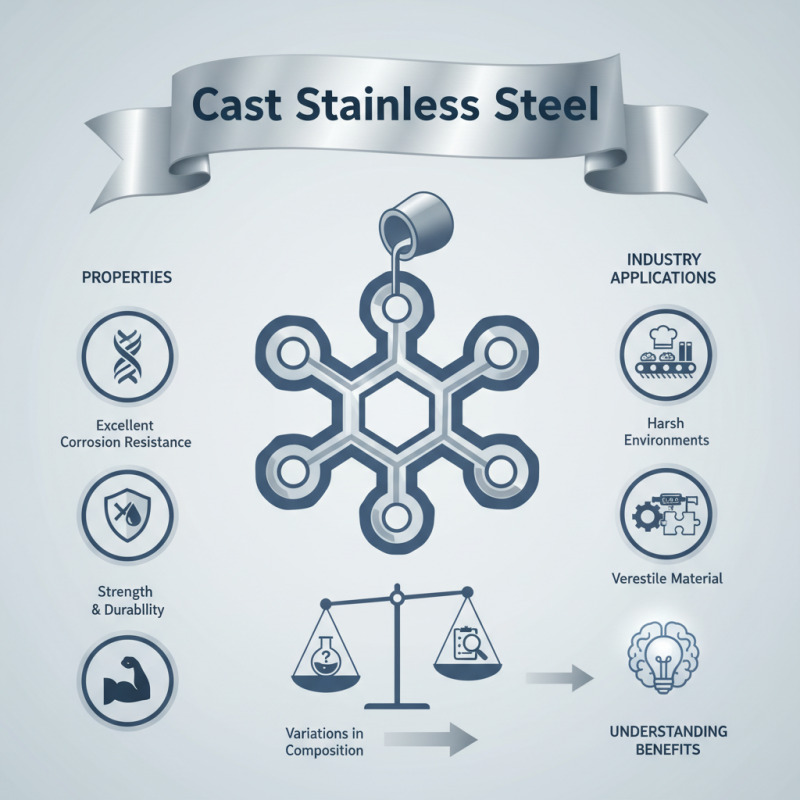
cast stainless steel is a versatile material widely used in various industries. Its unique properties make it a preferred choice for many applications. Unlike traditional stainless steel, cast stainless steel provides intricate shapes and designs. This manufacturing process allows for intricate geometries with excellent corrosion resistance.
Many industries benefit from cast stainless steel's advantages. For example, the food processing industry requires materials that resist rust and contamination. Cast stainless steel meets these requirements perfectly. Additionally, its strength and durability make it suitable for components in harsh environments.
However, not all cast stainless steel is the same. Variations in composition can lead to differences in performance. It's essential to consider these factors when selecting the right type. Understanding the benefits of cast stainless steel can lead to more informed choices.
What is Cast Stainless Steel and How is it Made?
Cast stainless steel is an alloy known for its unique properties and versatility. It is created through a process called casting. In this process, molten stainless steel is poured into a mold and allowed to cool. This method enables intricate designs and shapes that are often difficult to achieve with other methods. The resulting structure retains strength while offering resistance to corrosion and heat.
The manufacturing process involves several steps. First, the raw materials—primarily iron, chromium, and nickel—are melted at high temperatures. Then, other elements may be added to enhance specific properties. Once melted, the alloy is poured into molds. After cooling, each casting is removed and inspected for defects. Sometimes, this inspection reveals flaws that require refining or reworking, indicating an area for improvement in quality control.
While cast stainless steel has many advantages, such as durability and aesthetic appeal, challenges remain. The cooling rate can affect the final properties. Additionally, variations in the casting process can lead to inconsistencies. These aspects highlight the need for continual development and testing in the field of metallurgy. Balancing quality and efficiency is essential to refine the process further and achieve the desired results.
Properties and Composition of Cast Stainless Steel
Cast stainless steel is a unique material with distinct properties and composition. It is primarily composed of iron, chromium, and nickel. Chromium gives it corrosion resistance, while nickel enhances its strength. Molybdenum may also be added to improve performance in harsher environments. These elements blend together, forming a robust structure that can withstand various conditions.
The manufacturing process involves pouring molten metal into molds, allowing complex shapes to form. This method offers versatility and design freedom. However, the composition can affect the quality of the final product. Inconsistent alloy ratios may lead to weakness or brittleness. Careful attention to detail is essential during production.
Cast stainless steel is known for its durability and aesthetic appeal. It can be used in kitchenware, industrial equipment, and art pieces. Despite its advantages, there are challenges. Some grades may not be suitable for every application. Knowing which alloy to choose can be tricky. Users often need guidance to avoid mistakes. Proper understanding is crucial for leveraging its full potential.
Cast Stainless Steel Properties and Their Benefits
This bar chart illustrates the key properties of cast stainless steel, showcasing its corrosion resistance, tensile strength, ductility, weldability, and heat resistance. These attributes make cast stainless steel an ideal material for various applications, particularly in environments where durability and resilience are critical.
Applications of Cast Stainless Steel in Various Industries
Cast stainless steel plays a significant role in various industries, due to its unique properties. It combines strength with corrosion resistance. These features make it essential for applications in chemical processing, food production, and marine environments. According to a report by Research and Markets, the global stainless steel market is projected to reach $150 billion by 2025. This growth is driven by increasing demand across different sectors.
In the food industry, cast stainless steel is vital. Equipment made from this material resists rust and maintains hygiene. The FDA approves many cast stainless steel products for food contact. This ensures safety and compliance in food processing plants. Also, in marine applications, components resist salty water corrosion. Ships and offshore platforms benefit from this durability.
Tips: When choosing cast stainless steel, consider the specific environment. Different grades may be required for distinct applications. Not all stainless steels hold up equally well in all settings. Assess your needs carefully to avoid costly errors. Make informed decisions to enhance safety and efficiency in your projects.
Benefits of Using Cast Stainless Steel for Manufacturing
Cast stainless steel offers numerous benefits for manufacturing processes. One of the most notable advantages is its excellent corrosion resistance. This quality ensures durability in harsh environments, which is vital for many industries. Additionally, this material can withstand high temperatures. This makes it suitable for applications in aerospace, automotive, and chemical processing.
Another benefit is its complex shape capability. The casting process allows for intricate designs. Manufacturers can create detailed components that meet specific needs. However, achieving the desired precision can be a challenge. There may be instances of imperfections in the casting. These flaws require careful inspection and sometimes additional machining, which can add time to the manufacturing cycle.
Moreover, cast stainless steel can reduce overall weight without losing strength. This is especially beneficial for industries focused on efficiency. Many engineers are drawn to this material for its versatility. It allows for creativity in design. Despite its advantages, it is essential for manufacturers to understand its limitations. Costs can be higher compared to other materials. Balancing benefits against these factors is crucial for successful production.
Comparison of Cast Stainless Steel with Other Materials
Cast stainless steel offers unique advantages over traditional materials like carbon steel and aluminum. It is known for its high corrosion resistance, making it ideal for harsh environments. The Global Stainless Steel Market Report indicates that cast stainless steel is growing steadily, with demand expected to rise by 4.5% annually. This growth is driven by industries such as automotive and construction, where durability is essential.
When compared to carbon steel, cast stainless steel proves to be superior in resisting rust and wear. While carbon steel can fail in corrosive settings, cast stainless steel maintains its integrity. However, it can be more expensive upfront. In contrast, aluminum is lighter and more malleable, which is beneficial for specific applications. Yet, it lacks the strength needed for heavy-duty uses.
Some drawbacks exist. Cast stainless steel can be difficult to machine. This may lead to higher production costs and longer lead times. Additionally, while its performance is impressive, not all grades of cast stainless steel are equal. Manufacturers must choose the right grade based on the intended use to avoid premature failure.