Who Is the Best Round Elastic Cord Supplier in China?
Finding the best Round Elastic Cord supplier in China takes more than comparing prices or browsing product photos. Buyers need to understand how a cord performs in its intended use, from garment closures to craft projects and equipment ties. A polished catalog helps, but it cannot replace clear specifications and responsive communication.
Start by checking the cord’s diameter, material composition, stretch, recovery, and available colors. Ask how the supplier controls consistency between production batches. A small sample can reveal details that a product listing may miss, such as surface feel, fraying, or uneven thickness. Test it under realistic conditions. One quick pull is not enough.
Request written information about minimum order quantities, sample costs, production lead times, packaging, and quality checks. If a supplier provides test reports or certificates, confirm which product and batch they cover. Compare answers, not just numbers. A low quote may exclude important requirements, while a long specification sheet does not guarantee dependable results.
No checklist removes every uncertainty. Even an experienced buyer may overlook a detail, so record questions and verify important claims before placing a large order. This guide explores practical ways to assess Chinese suppliers, compare their capabilities, and choose a partner suited to your product, budget, and delivery needs. The right choice is not always the largest factory or the cheapest offer. It is the supplier whose evidence, communication, and product samples match your requirements.
What Round Elastic Cord Is and How It Is Made
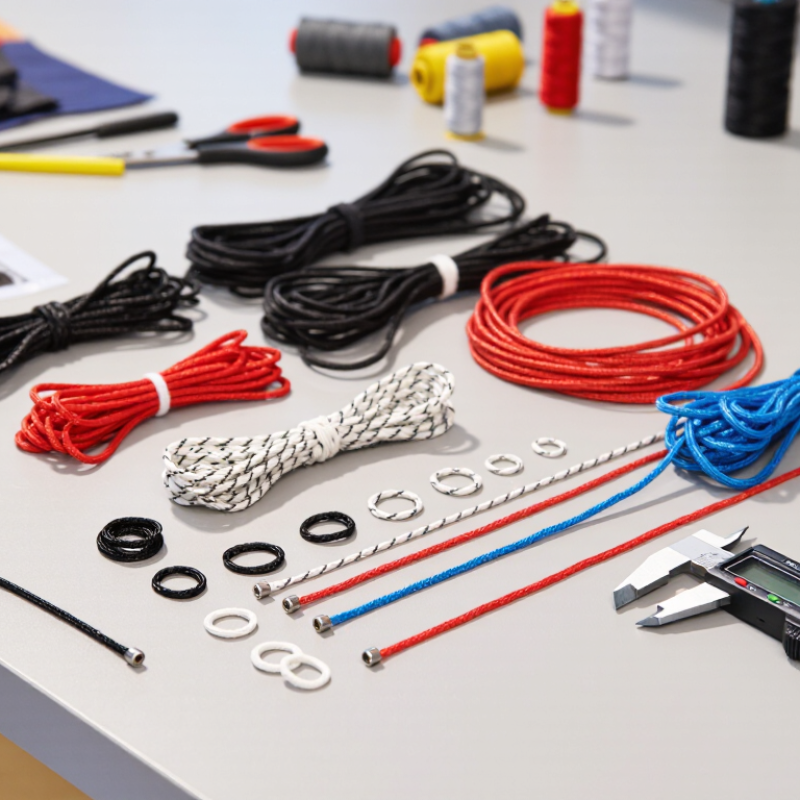
Round elastic cord is a flexible line built around an elastic core and covered with textile yarns. The core is commonly latex or elastane; polyester or nylon covers can improve abrasion resistance and handling. Its rounded profile suits drawcords, hems, closures, and lightweight equipment. Small details matter.
Production starts by feeding the elastic core under controlled tension. Covering yarns are wrapped, braided, or knitted around it, depending on the desired feel and construction. Machines regulate feed speed and yarn tension. If either varies too much, the cord may have thin spots or stretch unevenly. Some cords are heat-set to help stabilize their shape, though settings depend on the materials and equipment.
Quality checks may include measuring diameter, inspecting surface coverage, and testing stretch and recovery. A practical sample test is simple: stretch a short length repeatedly, then check for fraying or slow recovery. Specifications vary by use. A smooth surface alone proves little; I would want to see test results as well as a confident product description.
Who Is the Best Round Elastic Cord Supplier in China?
Common Nominal Cord Diameters
Round elastic cord is commonly made with an elastic core, often rubber, covered by braided or knitted yarn such as polyester or nylon. Suppliers may offer nominal diameters such as 2, 3, 4, 5, 6, and 8 mm; availability and measured diameter can vary by construction and manufacturer. Compare samples, material specifications, and test results when choosing a supplier.
Common Uses and Key Cord Specifications
Round elastic cord is used in drawstring bags, garment hoods, craft projects, and light-duty outdoor covers. Its round shape slides through casings and eyelets with less snagging than many flat elastics. For a small pouch, a soft cord may feel comfortable and thread easily. For a canopy tie, stronger stretch recovery matters more. It depends on the job.
Key specifications include diameter, core material, braided or knitted cover, stretch range, and breaking strength. Common diameters vary by application, so measure the channel or eyelet before choosing. A cord that is too thick can jam; one that is too thin may wear quickly. Check whether the stated diameter is nominal, since actual measurements can vary slightly. Ask for test data when load or repeated stretching is important. Small differences matter.
Weather exposure also deserves attention. Sunlight, moisture, and temperature changes can affect elasticity and cover wear, but performance depends on the cord’s materials and construction. Request samples and test them in the intended setup. Pull, release, and repeat the motion. Not always obvious. A cord can feel strong by hand yet lose tension after frequent use. That detail is easy to overlook when comparing suppliers.
How to Evaluate a Chinese Round Elastic Cord Supplier
Evaluating a Chinese round elastic cord supplier starts with a precise specification. State the cord diameter, core material, covering yarn, color, and target stretch. Ask how diameter is measured and what tolerance the factory can maintain. A difference of half a millimeter may affect how cord feeds through a narrow channel. Small details matter.
Request samples from a normal production run, not only a hand-picked prototype. Stretch the cord repeatedly, then check whether it returns to its original length and whether the cover slips or frays. Ask for test conditions and recent quality records; a claim of “high elasticity” means little without them. If possible, compare samples from separate batches. Consistency is the real test.
Also examine production capacity, lead times, packaging, and how defects are handled. Clear answers are useful, but written specifications and inspection records are more dependable. A video call or factory visit can help clarify equipment and workflow, though neither replaces sample testing. Communication may seem smooth at first. Check it under pressure. Ask how the supplier reports delays or changes in materials. One point is easy to overlook: even experienced buyers sometimes approve a sample before checking performance after storage. Include that check in your evaluation.
Manufacturing Quality, Certifications, and Compliance
When comparing round elastic cord suppliers in China, examine process controls, not just catalog photos. Ask how each production lot is checked for diameter, stretch, recovery, and breaking strength. A capable manufacturer should provide inspection records linked to a batch number. Request samples in the actual color and construction. Small differences matter. Cord that looks even on a spool may lose tension after repeated pulling.
Certifications should match the product and its destination market. Review the scope and validity dates of any quality-management certificate. For material or chemical requirements, request relevant, current test reports and confirm they cover the actual cord supplied. Check that material details and product documents are consistent. A polished certificate alone is not proof that every shipment meets the same standard.
Tips: Send a written specification with diameter tolerances, stretch range, and color requirements. Approve a production sample, then test goods from a later batch. Keep a labeled reference sample. One passed sample cannot guarantee perfect consistency; that is worth remembering. Ask how the supplier handles out-of-specification lots before placing a large order.
Choosing the Best Supplier for Your Requirements
Choosing a round elastic cord supplier in China starts with the job the cord must do. A cord for a drawstring bag may need different stretch and recovery from one used in outdoor gear. Specify the finished diameter, core and sheath materials, color, target elongation, and expected use. Small details matter. Ask how diameter is measured and what tolerance production can maintain. A clear answer is more useful than a broad promise.
Request samples made to the proposed specification, then test them under realistic conditions. Measure a marked length before and after repeated stretching. Check whether the sheath shifts, the cord frays, or recovery becomes uneven.
Ask for relevant material or test documentation, plus details on batch consistency, lead time, minimum order quantity, and packaging. Ask for evidence. Communication is part of quality: note whether the supplier confirms changes in writing and flags limits early. A sample can look excellent while a later batch differs, so confirm how production lots are checked. No checklist removes every risk; even careful testing may miss performance changes after long exposure to sunlight or moisture. That uncertainty deserves a direct conversation before ordering.
