
Best Private Label Makeup Manufacturers in 2026

Choosing among the Best Private Label Makeup Manufacturers in 2026 takes more than comparing product photos or prices. A polished website cannot show how a lipstick feels after hours of wear, or how a foundation shade looks in daylight. Private Label Makeup Manufacturers vary in formulation options, minimum order quantities, sampling processes, packaging support, and production timelines. Those details can shape a launch as much as the product itself.

This guide explores manufacturers through practical criteria: product range, customization, quality controls, communication, and the clarity of their documentation. Ask for samples, review ingredient and testing information, and confirm which services are included before committing. Check that claims and product plans meet the requirements that apply in your intended markets. Small details matter. A cap that loosens in transit or a shade name that promises too much can create avoidable problems.

There is no universal winner. A startup testing a small collection may value flexible order quantities, while an established brand may need dependable capacity and consistent batches. Neither choice is automatically better. Manufacturer information can also change, and online descriptions do not replace direct verification. Treat any shortlist as a starting point, compare written terms, and ask specific questions about timelines, revisions, and quality checks. Some uncertainty remains until samples arrive—that is worth admitting. The aim is to help you make a more informed choice, not to promise a perfect partnership.
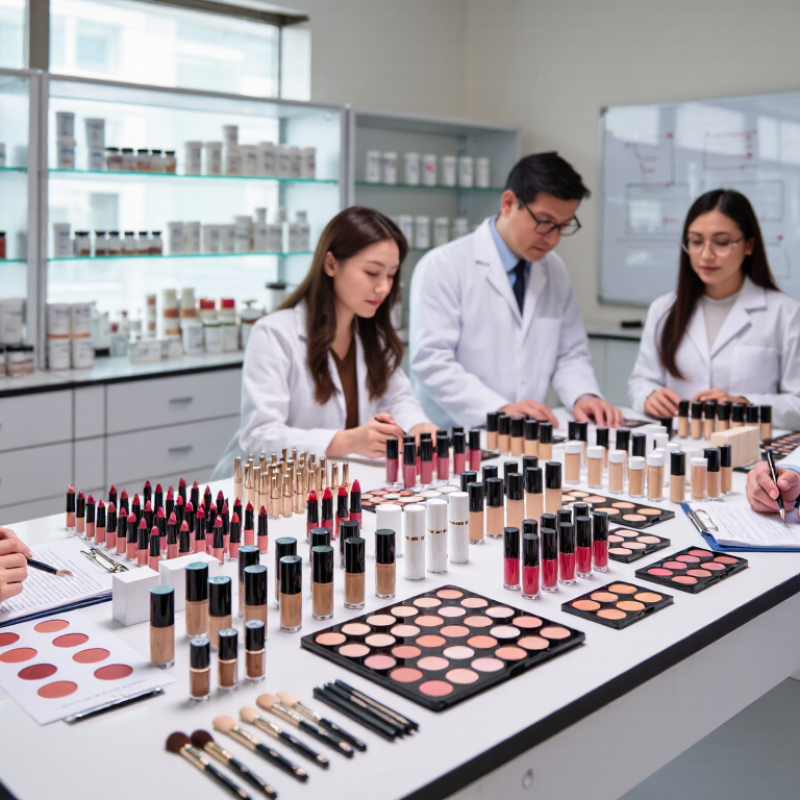
Best Private Label Makeup Manufacturers in 2026

2026 Market Context: Beauty’s Projected $590B Global Value by 2030

Beauty’s projected $590 billion global value by 2030 points to a market with room for new makeup concepts, but growth is not automatic. Forecasts are estimates, not promises. Shoppers still expect comfortable textures, dependable color, and packaging that works in a handbag, not just on a screen.

For private label businesses, that scale can make focused product lines more practical. A manufacturer may help develop a small starter range, such as a foundation shade set, cream blush, and everyday lip color. Ask how shade matching is assessed under different lighting. Request samples, ingredient and quality documentation, and clear information about minimum order quantities and production timelines. Details matter.

Consistency takes work. A sample can feel smooth while a later batch wears differently, so discuss batch controls and how concerns are handled before placing a large order. Check that product testing and labeling support the markets where products will be sold. Do not assume every factory offers the same level of technical guidance. Sometimes the less glamorous questions reveal the most: who checks color variation, and what happens when packaging arrives late? Manufacturers can support a strong launch, but the product choices and customer trust remain the seller’s responsibility.

How Private-Label Makeup Works: OEM, ODM, and 3 Production Stages

Private-label makeup lets a retailer sell products made by a specialist manufacturer under its own label. In 2026, buyers should distinguish OEM from ODM before requesting quotes. OEM generally means the buyer supplies a formula or detailed specification, while the manufacturer produces it. ODM usually starts with a manufacturer’s existing formula, which can be adjusted for shade, texture, or packaging. Terminology varies between suppliers, so ask what each service includes.

The work moves through three practical stages. Stage one is the product brief: define the product type, target shade range, finish, order volume, packaging, and budget. A precise brief reduces avoidable revisions. Stage two is development and sampling. Review texture, color payoff, scent, and how the product wears after several hours. Keep dated sample notes; “make it softer” is not very actionable. Stage three is scale-up and quality control. Confirm approved specifications, packaging proofs, batch checks, and delivery timelines before production begins.

A good manufacturer should explain testing, ingredient documentation, minimum order quantities, and what happens when a sample changes during scale-up. Ask for written acceptance criteria, not just a reassuring call. Small details matter. A cap that loosens in a handbag can undo a polished launch. Samples also have limits: a lab batch may feel different from a full production run, so leave time to assess production samples. Even experienced teams sometimes underestimate revision time.

Comparing Top Manufacturers by MOQ, Product Range, and ISO 22716

Choosing a private label makeup manufacturer in 2026 is less about a glossy catalog and more about fit. MOQ affects cash flow, storage, and how easily you can test demand. Ask whether minimums apply per shade, formula, or total order. That detail changes the economics. Small runs may still carry setup fees, so request a complete quote.

Compare product range by checking which formulas and formats are ready for customization. A supplier may offer foundation, lipstick, and mascara, but not every option will suit your target price or packaging. Request samples in the intended component, then assess texture, color consistency, and how the product applies. Feel matters. A broad catalog is not automatically a better match.

ISO 22716 is a useful signal when assessing cosmetic good manufacturing practices, but verify the certificate’s scope, issuing body, and current validity directly. Ask how batches are documented, how changes are approved, and what quality records you can review. A certificate alone cannot answer every question. Some details may remain unclear until a sample run, which is a real limitation. Compare MOQ, relevant product range, and verifiable quality practices together, rather than treating any one measure as decisive.

U.S. FDA MoCRA: Biennial Facility Registration and Annual Product Listings

For private-label makeup, MoCRA filing responsibilities should be agreed upon before production begins. A facility that manufactures or processes cosmetics for U.S. distribution may need to register with the FDA, unless an exemption applies. Registration must be renewed every two years. The facility operator, not automatically the product’s brand owner, is responsible for keeping that registration current. Small detail. Confirm the facility’s legal name, address, and registration status before artwork and launch dates are locked.

Product listings follow a separate schedule. The responsible person named on the label generally submits each cosmetic product to the FDA, including its ingredients and the manufacturing facilities involved. New products generally must be listed within 120 days after marketing begins, with updates submitted annually. A formula change, new shade, or revised facility record can complicate the process, so teams should document who checks each update. A shared spreadsheet helps, but it can still become outdated when launch plans shift.

Registration and listing are not FDA approval or a safety endorsement. Private-label partners should keep dated copies of submissions, confirm filing roles in writing, and leave time to resolve missing information. One easy-to-miss issue is assuming a manufacturer’s registration covers every product listing. It does not. Verify both records with the responsible parties, and consult qualified regulatory counsel when requirements are unclear.

EU Market Access: Regulation 1223/2009, Safety Reports, and CPNP Notification

Entering the EU market requires more than a finished formula and attractive packaging. Regulation (EC) No 1223/2009 sets requirements for cosmetic products placed on the EU market. Before sale, each product needs a qualified safety assessment and a Cosmetic Product Safety Report (CPSR). The assessment should reflect the actual formula, intended use, exposure, and target users.

Small details matter.

A private label manufacturer may supply ingredient data, stability results, and packaging specifications, but these documents do not automatically complete the compliance file. An EU-established Responsible Person must be designated, and the Product Information File must be available at the required address. Before the product is placed on the market, its Responsible Person must submit a notification through the Cosmetic Products Notification Portal (CPNP).

CPNP notification is not regulatory approval. Keep that clear.

Ask potential manufacturers how they document formula changes, shade variations, and packaging updates. A change that seems minor can affect the safety assessment or supporting records. Request clear timelines and identify who supplies each document; vague answers often create delays. The paperwork can feel repetitive, and a checklist may still miss a detail. Review the evidence with a qualified EU cosmetics safety assessor before launch.

Article Source: