
In 2026, global buyers will evaluate Poly Net Fabric through performance, compliance, and supply reliability. The right mesh can improve airflow, product protection, and production efficiency. The wrong choice may stretch, clog, fade, or fail during installation.
This guide examines common Poly Net Fabric types, including knitted netting, woven mesh, raschel mesh, shade netting, and reinforced barrier fabric. Each structure creates different results. Knitted mesh offers flexibility for agricultural covers and protective screens. Woven mesh provides more stable openings for filtration, packaging, and industrial separation. Raschel mesh can deliver useful shade control while remaining lightweight and easy to handle. Reinforced options suit demanding outdoor applications where edge strength matters.
Real purchasing decisions require more than a fabric name. Buyers should review polymer grade, denier, mesh opening, weight, tensile strength, UV stability, color consistency, and roll dimensions. A supplier’s sample should be tested under realistic heat, moisture, tension, and handling conditions. Ask for current technical data, inspection records, and traceable production details. Certifications may support market access, but their value depends on scope and verification.
No fabric suits every market. Cost often attracts attention first. It should not control the entire decision. Some low-priced meshes may create higher replacement and labor costs later. Even experienced buyers can overlook packaging damage or inconsistent roll lengths. That deserves reflection. This overview offers a practical starting point, not a substitute for application testing or professional compliance advice. With careful comparison, global buyers can choose a net fabric that balances durability, function, and responsible sourcing.
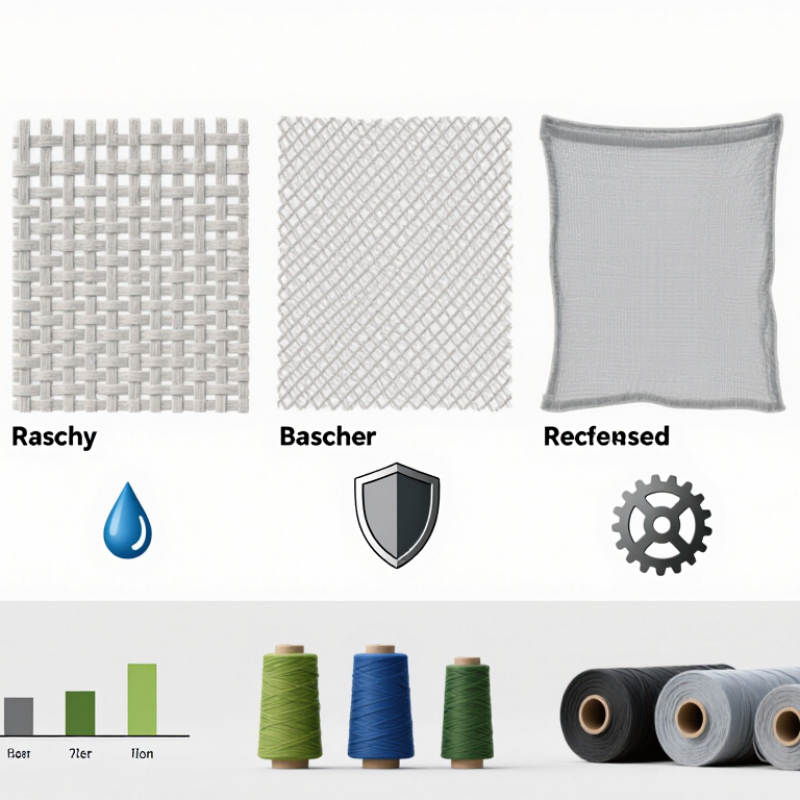
Poly net fabric is an open textile made from polymer-based yarns, commonly polyester or polypropylene. Its mesh allows air, water, or light to pass through while providing controlled coverage. Buyers often encounter knitted, woven, and knotted constructions, each with different handling properties.
Knitted poly net fabric uses interlocking loops, giving it useful flexibility and recovery. Woven mesh forms yarns at right angles, creating stable openings and consistent dimensions. Knotted netting relies on joined intersections, which can improve load distribution in demanding applications. Mesh size, yarn diameter, coating, and edge finishing all affect performance. Small details matter.
Core performance includes tensile strength, tear resistance, UV stability, abrasion resistance, and dimensional consistency. Outdoor samples should be tested after simulated sunlight exposure, not judged by appearance alone. Moisture resistance can support agricultural covers, filtration layers, protective screens, and industrial separation systems. However, a denser mesh is not automatically better. It may restrict airflow and add unnecessary weight.
In practical sourcing, I measure aperture size at several points because production variation can occur. I also check roll edges, yarn uniformity, and joining quality. A fabric that performs well in a showroom may behave differently under tension, heat, or repeated washing. This is where specifications need careful review. Some assumptions deserve challenging. Surface strength alone cannot predict long-term service life. Suppliers should provide test methods, tolerances, and representative samples before large-scale purchasing.
2026 Top Poly Net Fabric Types for Global Buyers
Main Poly Net Fabric Types and Their Distinctive Characteristics
Polyester net fabric offers stable dimensions, good abrasion resistance, and reliable outdoor performance. Its tighter structure suits filtration, protective covers, agricultural screens, and industrial panels. It usually keeps its shape better than softer polymers. However, prolonged sunlight can still weaken untreated polyester, so buyers should verify UV testing data.
Polypropylene net fabric is lightweight, moisture resistant, and economical for packaging, crop support, and temporary barriers. It floats in water and resists many common chemicals. Polyethylene net fabric provides useful flexibility and impact resistance. It is often selected for shade screens, safety mesh, and storage applications. Its softer touch can improve handling, but excessive stretching may change the aperture size.
Nylon net fabric is not always grouped with polyolefin nets, yet it remains important in technical sourcing. It has high tensile strength and excellent flexibility, especially in ropes, sports equipment, and fine mesh products. Moisture absorption can affect its dimensions, though. Knitted netting feels more flexible, while woven netting offers sharper openings and better dimensional control. Buyers should compare mesh size, yarn diameter, GSM, edge finishing, UV stability, and breaking strength. A sample may look perfect under warehouse lighting. Field conditions can tell a different story.
| Fabric Type | Common Polymer | Construction | Typical Opening or Weight Range | Distinctive Characteristics | Typical Applications | Main Buying Considerations |
|---|---|---|---|---|---|---|
| HDPE Knitted Net | High-density polyethylene | Warp-knitted or raschel construction | Approx. 30–95% shade factor; commonly 50–240 g/m² | Lightweight, flexible, moisture-resistant and resistant to many common chemicals. UV stabilization can extend outdoor service life. | Agricultural shade, windbreaks, scaffolding protection, privacy screening and temporary barriers | Confirm UV package, shade percentage, tear strength, roll width and edge reinforcement. |
| PP Knitted Net | Polypropylene | Knitted tape or monofilament mesh | Approx. 40–90% shade factor; commonly 45–180 g/m² | Low density, economical, hydrophobic and easy to handle. It has lower heat resistance than polyester and normally requires UV stabilization for outdoor use. | Crop protection, garden screens, packaging nets, temporary covers and erosion-control products | Check UV resistance, melting-point requirements, stitch stability and resistance to repeated folding. |
| Polyester Mesh Net | Polyester, usually PET | Woven, knitted or warp-knitted mesh | Approx. 0.2–5 mm openings; commonly 50–250 g/m² | Higher tensile strength, dimensional stability and heat resistance than many polyolefin nets. It generally holds its shape well under load. | Industrial filtration, sports screens, protective covers, printing mesh and architectural applications | Specify filament type, mesh count, aperture tolerance, coating, seam strength and operating temperature. |
| Nylon Mesh Net | Polyamide, commonly nylon 6 or nylon 6,6 | Woven or knitted monofilament mesh | Approx. 0.1–3 mm openings; commonly 40–300 g/m² | Good abrasion resistance, toughness and flexibility. Nylon absorbs more moisture than polyester and may require UV protection for prolonged outdoor exposure. | Fishing nets, screening, sieving, sports equipment, industrial filters and lightweight restraint nets | Evaluate wet strength, moisture absorption, UV stability, mesh accuracy and chemical compatibility. |
| Woven Polyethylene Net | HDPE or LDPE | Cross-laminated or leno-woven tape/monofilament fabric | Approx. 20–90% open area; commonly 60–250 g/m² | Good tear resistance and dimensional control, with low water absorption. Woven structures are less stretchable than many knitted structures. | Cargo covers, construction safety screens, agricultural barriers, packaging and ground covers | Check tape thickness, coating or lamination, selvedge quality, load rating and wind permeability. |
| Anti-Insect Net | HDPE, polyester or polypropylene | Fine knitted mesh | Approx. 0.15–0.90 mm openings; commonly 30–150 g/m² | Designed to exclude selected insects while allowing airflow and light transmission. Finer mesh usually increases ventilation resistance. | Greenhouses, nursery tunnels, fruit protection and crop pest management | Match aperture size to target pest, and verify light transmission, airflow, UV life and seam performance. |
| Shade Net | Usually HDPE or polypropylene | Knitted tape, monofilament or combination structure | Approx. 30–95% shade factor; commonly 50–220 g/m² | Reduces solar radiation and heat load while retaining airflow. Shade performance depends on color, construction and installation angle. | Horticulture, livestock shelters, outdoor recreation, building façades and privacy screens | Specify tested shade factor, color fastness, UV stabilization, width, fastening method and wind load. |
| Raschel Warp-Knitted Net | HDPE, polyester or polypropylene | Warp-knitted fabric with stable loops and engineered openings | Approx. 20–95% open or shaded area; commonly 45–250 g/m² | Efficient for continuous production, with good pattern uniformity, fray resistance and design flexibility. Performance varies substantially by yarn and stitch pattern. | Agricultural nets, safety screens, sports barriers, privacy fabrics and technical textiles | Request construction details, stitch density, tensile data, UV test method and finished-width tolerance. |
| Debris and Safety Net | HDPE or polypropylene | Heavy-duty knitted or woven mesh | Commonly 50–200 g/m²; opening size selected for containment and airflow | Helps contain light debris and reduce wind exposure around work areas. It is not automatically equivalent to a certified fall-arrest system. | Construction façades, scaffolding, sports enclosures and temporary site separation | Verify applicable safety standards, impact performance, fire requirements, UV life and anchoring specifications. |
Note: Opening size, shade factor, weight and service life are indicative ranges. Actual values depend on polymer grade, yarn diameter, knitting or weaving pattern, additives, color and finishing process.
2026 Top Poly Net Fabric Types for Global Buyers
How to Compare Poly Net Fabrics by Use, Weight, Mesh, and Finish
Poly net fabric choices should start with the job, not the color card. Garden covers need sunlight control and airflow. Safety screens need stable openings and strong edge resistance. Packaging nets often require softness, low weight, and clean cutting. I have learned that a fabric suitable for shade may fail when exposed to repeated pulling.
Weight provides a useful starting point. Lightweight netting may improve handling and reduce shipping costs. Heavier fabric usually offers better tear resistance and longer service in demanding environments. Ask for GSM data, roll width, tensile strength, and shrinkage results. Do not rely on thickness alone. Two fabrics can feel similar but perform very differently.
Mesh size controls airflow, visibility, particle passage, and protection. Measure the opening, not only the supplier’s mesh label. A small difference can affect ventilation around plants or equipment. Finish also deserves close attention. Coatings may improve water resistance, UV stability, or surface smoothness. However, some finishes can reduce flexibility or complicate recycling. Request a physical swatch and test it under actual conditions. Pull the edges, wash a sample, and inspect sunlight exposure. Small tests reveal expensive mistakes.
I once focused too heavily on tear strength. The fabric was strong, but its stiff finish made installation frustrating. That choice looked efficient on paper. It was not. Reliable comparison combines intended use, GSM, mesh opening, finish, and handling behavior.
Global buyers should compare poly net fabric by polymer, construction, and end use. Common options include HDPE shade netting, polypropylene mesh, polyester netting with polymer coatings, and knitted or woven structures. Each type behaves differently under sunlight, tension, moisture, and repeated washing. Request the fabric weight, mesh opening, yarn diameter, tensile strength, UV-resistance data, and colorfastness results. A clear technical sheet prevents costly assumptions.
Quality control should connect every roll to a production batch and test record. Ask for an ISO 9001-based quality system, independent laboratory reports, and a documented inspection procedure. For consumer or textile applications, verify chemical testing against the destination market’s requirements, such as restricted substances, heavy metals, and formaldehyde limits. Food-contact or children’s products require stricter, product-specific evidence. A certificate alone is not proof. Scope, issue date, laboratory accreditation, and tested material must match the order. In practice, paperwork can look cleaner than the fabric.
Tips: Order a sample before approving bulk production. Measure mesh openings at several points, not just one. Rub the surface with a damp white cloth. Inspect knots, selvedges, coating consistency, and roll length. Ask how UV testing reflects your climate. Coastal heat and intense sunlight may expose weaknesses quickly. Keep approved samples and signed specifications. Small details matter. I would also allow a modest tolerance, because production is rarely perfectly uniform.
Representative commercial shade-factor ranges for common polyethylene net fabrics. Actual performance varies with yarn denier, knitting or weaving construction, color, coating, and UV stabilizer content.
Global buyer checks: Request laboratory test reports for tensile strength, dimensional stability, and UV aging. Common references include ISO 13934-1 for textile tensile properties and ISO 4892-3 for accelerated weathering. Depending on the destination market and end use, also verify REACH requirements, product traceability, and applicable safety or agricultural regulations.
In 2026, poly net fabric sourcing is less about finding the lowest quote. It is about matching mesh structure to the intended use. Raschel net suits shade and crop-support applications. Knotted net offers firm holding strength. Extruded mesh can reduce weight in packaging and filtration projects. Ask for denier, aperture, width, roll length, UV treatment, and edge finish. A sample roll reveals flaws that photos hide.
Pricing usually changes with polymer costs, yarn denier, mesh opening, coating, and order volume. A thin 10-millimeter mesh may look inexpensive, yet reinforced edges can sharply increase landed cost. Request itemized quotations, tooling charges, packing details, and realistic production lead times. Compare delivered cost, not only factory price. Currency changes and freight remain difficult to predict. Leave a contingency.
Customization should begin with a written specification and a physical reference sample. Confirm color tolerance, tensile strength, tear resistance, seam behavior, and outdoor aging results. Suppliers should provide traceable test records, inspection procedures, and clear answers about rejected goods. I prefer a small trial order before annual volume commitments. It exposes communication gaps early. Still, one test cannot prove long-term performance. That limitation deserves attention. A capable supplier discusses failure openly rather than promising perfection. In practice, responsiveness after sampling can matter as much as the first quotation.